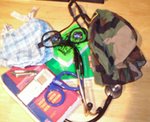
A short while back, some of my pre-med students asked me about memories of medical school. I thought it might be fun to write about some of those here as well as residency experience so here goes from the beginning...
My medical school had a classical curriculum with problem-based-learning intergrated. We had the typical first-year, second-year types of classes. Lectures went from 0800h to 1600h daily. We had some Tuesdays or Thursdays when we would be able to get out earlier but we spent loads of time in class (way more than students currently attending). Some of my classes had computer-based-learning exercises and some had laboratory projects that had to be completed. In short, school was the equivalent of a full-time job with much time spent on weekends reviewing and keeping up with the pace. The best thing was that all of my classes were very interesting.
My first lecture of medical school was in Biochemistry. The professor essentially covered an entire Organic Chemistry course in a 50-minute lecture. The material was extremely detailed and presented in volumes. This particular professor had a reputation for "rocket" lecture delivery and he got the job done. The great thing was that I understood everything well and could see that this was the basis of the next 50-minute lecture which started off with lipid biochemistry.
My next class was the first part of Gross Anatomy. Our lecture was on surface anatomy and types of neurons. Each lecture was 50 minutes followed by a 10-minute break. I think those 50-minute lectures were the beginning of my 50-minute attention span. After lunch, Gross Anatomy lab started with a brief introduction and then a long laboratory on the vertebral column. We were all given bone boxes (containing human bones) to take home for further study. Every bone was present except the skull bones. Needless to say, we were required to learn every bone and every part of every bone.
By the time the day was done, I had received the equivalent of about 3 weeks worth of undergraduate lectures on one day. Since I had my syllabi, I knew what would be covered in lecture and I knew what readings and material would have to be previewed for the next days lecture. After each lecture was completed, I would quickly fill in any gaps in my notes and briefly scan through my notes for completeness. Over lunch, I would start to memorize as much of my morning lecture as possible too. We had an hour for lunch so I would grab something quick and then spend the rest of the time pouring over my notes.
On the way home, I would study some more or just watch people. I took public transportation because I didn't want to worry about driving. My commute time was my time to relax and think about the day or plan my evening. When I got home, I would grab my gym bag so that I could get a quick swim in before dinner. I would dine with my fiance and then hit the books for a couple of hours. By that time, it would be around 8pm so I would go to bed. I would wake up at 2am and study until 6 am. I would then take a shower and get off to school.
When I was studying, I would finish studying the material that had been presented that day. I would then review the lectures for the day before and preview the materials for the next day's lecture. On the weekend, I would review the entire week's lectures in addition to reviewing an entire week's dissection in the Gross Anatomy lab.
I made study tapes to drill structures and notes so that I could listen to them while I was walking or running. I would also make concept maps and fill them in on large sheets of paper as I went through biochemistry. I always wanted to keep the "big" picture in mind as I studied.
We had an exam week about every five weeks during the semester. There would be two "reading" days (read catch up) and then exams would begin. For Gross Anatomy, we would have the lecture exam in the morning and the laboratory practical exam in the afternoon. Between the exams, I would go to the art museum and get completely away from campus. I couldn't stand to be around people who were so stressed about the exams.
In addition to Anatomy and Biochemistry, we had lectures in Psychiatry and Introduction to the Practice of Medicine. The Psychiatry lectures were always interesting and covered topics like development, personality disorders, sexuality, psychiatric drugs and the roles of various types of psychiatrists. Lectures in the practice of medicine covered topics like law and medicine, types of practices, alternative and complimentary medicine, history of medicine and medical education models. Psychiatry and Introduction to Medicine provided a bit of relief from the rigor of Biochemistry and Gross Anatomy but we were tested on these subjects so they required our attention too.
Our first semester ran from the middle of August to the second week of December. I can promise that the time goes by very quickly and soon Christmas vacation upon us. At the end of the first semester, we were done with Gross Anatomy and Biochemistry but still had more lectures in Psychiatry and Practice of Medicine. In addition, we had Histology, Microbiology/Immunology and Neuroscience lectures too. Second semester had a bit more material and more lectures. In addition, we had to dissect brains and spinal cords in Neuroanatomy. We were also given slide boxes with every type of tissue for histology. We would learn to recognize tissues and electron micrographs of every type of cell.
By the time second semester is over, we had learned a huge amount of material. Most people were happy to get exams done and get home for the summer. I was selected to become an instructor for the students who would be coming into our pre-matriculation program. I would be teaching Biochemistry primarily in addition to Gross Anatomy and Immunology. It was an honor to be asked to instruct in this program and I knew that I would enjoy working with these students.
The students who participated in the prematriculation program were medical and dental students with a conditional acceptance into medical or dental school. By successfully completing this program, these students are offered a seat in the school that they were conditionally admitted to. During this rigorous summer, we gave study tips, extensive reviews and got to know some very determined folks. In addition, these students have a huge head start when the actual courses start because they have been exposed to the material. It is a great program and I enjoyed the summer. In addition, we, the instructors are paid very nicely and can get some research done at the same time.
I finished my first year strong with honors and a much stronger interest in medicine than before I started school. When I looked back on all that I had learned, I was amazed. Little did I know that second year had even more to learn and would build upon my foundation of first year.
07 January 2007


06 January 2007
Internship or PGY-1
After graduation was complete and I had finished filling out all of those thank-you notes for presents and good thoughts, I turned my attention to making preparations for my move to my residency location. Over my four years of medical school, I had accumulated loads of books and papers. The first thing that I did was toss out any papers that would not be helpful to my little sibs back at medical school. The next thing I did was get rid of the rest of my books and USMLE Prep materials. My little sibs split the lot of them.
We started packing on a small scale but quickly realized that we still had too much "junk". I even had boxes of things that I had accumulated and had left unpacked for my previous move that had taken place at the beginning of my third year of medical school. I had moved to be located closer to the clinical affiliated hospitals to shorten my commute. A forty-five minute commute was OK for medical school because I could study on the subway but I wanted to spend no more than 20 minutes if I was going to drive.
I made a couple of trips to the location of my residency. I took one of my best friends so that we could scout out some great places to live. She helped me pick out a wonderful three-bedroom home that was located in a wooded area with plenty of jogging and bike trails. Since I have a couple of dogs, I wanted a spot where they could get some exercise and I could get outside. I found the perfect place and I loved living about 1,000 feet from a beautiful lake with woods and streams all around.
After the move, I had one day to get to orientation. I was still in the midst to unpacking on orientation day. I had completed my criminal background check and drug testing. I had also finished completing the materials for my license and smooth move to the local medical society. Orientation started early with mugs of strong coffee and plenty of folks who looked as scared as I was. We received our pagers, our lab coats and our directories. The second day of orientation is where we received our departmental information including our rotation schedule.
I started with Vascular Surgery. These patients are among the sickest in the hospital. I quickly got into the routine of rounding in the early morning (0400h), getting my notes written and then getting ready for rounding with the team. The team, which consisted of the fellows, the surgical chief resident, a mid-level resident, two interns and four medical students would then round. It was the duty of the interns to write every order and plan after we presented our pre-round findings to the fellow and chief.
The residents and students would head off to the operating room while the interns would get orders and discharges done. We would follow up on all labs and studies and then get the discharges completed. I quickly learned to "pre-discharge", get the orders ready and then make one click to send them to the computer. The computer would print all instructions and prescriptions for me to sign. My dictations would be done at that time too.
Once the daily ward work was underway, one of us would try to get some OR cases while the other intern waited for new admissions and post-ops back from the OR. We would also follow up on all information that came from consultants and all studies as the patients returned. When the patients came back from the OR, it was my job to get them settled in and follow up on what had taken place during surgery. I would look at the OR reports, anesthesia notes and any history and physical information. I would also start a note sheet for tomorrow's note and check all orders.
By the evening, the fellow would leave and I would report all studies and findings to the chief resident. He or she would add orders or give me the plans for the next day. If anyone was headed for surgery, they would need to have preoperative orders placed for things like nothing by mouth after midnight. Periodically during the day, I would visit each room and find out how the patient was getting along. I would also do things like debride (clean off dead tissue) wounds and follow vital signs and labs. If I was not on call, I would leave the hospital around 6pm after reporting to the on-call intern. If I was on-call, I would receive report from the services that I covered.
I had the unique opportunity of covering cardiac, thoracic and vascular when I was on call. The other interns only covered one other service and their own. At first, the cardiac patients were scary but later, I fell into taking care of them just as I took care of my own vascular patients. My patients were the sickest patients on the three services and I knew them best.
After vascular, I rotated as intern through surgical oncology and colo-rectal surgery. My program director was very impressed with my work so he decided to change my schedule to include a month as Surgical Intensive Care Unit resident. Usually, this rotation would go to a second year resident but a couple of interns managed to get this rotation. I was fortunate because the other two residents on this rotation with me were second year anesthesia residents. They taught me how to place internal jugular central lines and to float Swan-Ganz catheters. The nephrology fellow taught me to place temporary hemodialysis catheters and how to calculate fluid balance. I already know loads about mechanical ventilation but I learned even more from the critical care specialists. It was a great month for me.
I was then invited to spend a couple of months at the Veterans hospital. This was an away rotation that was totally awesome because there was so much operative experience. I honed my surgical skills and could hold my own in the ICU. My chief resident was very comfortable with my work and left me in charge of the service (as an intern no less) when he needed to go out of town. At first, it was scary but I learned that I could trust my instincts. My attending physicians were great teachers and things hummed along for me.
I went through another rotation on Vascular and then Thoracic. I made a deal with the other interns in that I would do all of the dictations and discharges if they would pull chest tubes and work out discharge planning. They hated to dictate and I had become very efficient at getting these things taken care of thanks to the VA hospital. My fellows were great to work with also. I was very comfortable calling them at home and updating. One of the most demanding fellows turned out to be one of my best teachers. He showed me how to sew down grafts.
I finished my year as Night Float intern. I covered all of the General surgery patients. There was an intern for Trauma who took care of the Trauma patients and did all admissions. If he or she was busy, I would admit patients and follow up on studies. I learned to anticipate problems and get them taken care of. I also learned to do make things happen that needed to happen. I made great friends with the night radiography technicians who would get studies completed for me and placed in front of the radiologists before I could get down to the department. They were great folks to work with.
As I headed into second year, I knew that second year would be my worst year. As a more senior resident, I would expected to play bigger role in keeping the service running. Since I would still somewhat junior, I still had a huge learning curve too. All in all, my intern year was great. Some of my chief residents and fellows were very difficult to work with but I always stepped up to the plate and got the job done.
Being a good intern is being anal about every detail of your patient's care. It took a few months to learn the "ins and outs" of good patient care but I took careful notes and operated every chance that I could. The nursing staff also gave me high marks for getting things done and keeping the services under control. The hours are long and sometimes the work seemed endless but there was a learning point to every task. Intern year went quickly but I felt in control of my learning.
Subscribe to:
Posts (Atom)