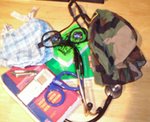
There are mornings after a night of weekend call, that I find myself thinking about what I actually "do" when it comes to the practice of medicine. My first encounter with a patient on a call night is usually in the Emergency Department after one of the interns or Emergency Room physicians has asked for a surgical evaluation. Many times, especially if the patient presents in a complicated manner, the Emergency Room resident or attending will call me directly and bypass the junior resident. This is not because the junior resident is incapable of making an evaluation, but largely to save time.
When I get one of these calls, I usually beep the junior resident and we see the patient together with the junior resident taking the lead. It the junior is in the middle of something else, I will start the evaluation and fill them in when they break free of what is demanding their attention at the time. In general, I have no problem "picking up the slack" when a patient needs to be seen earlier rather than later. I also try to pull a medical student or two if there is something of an educational note (definitely in these cases) that I believe will contribute to their learning.
I generally will introduce myself to the patient and begin to ask questions. Last night, I found myself face to face with a gentleman who had a cold right leg. "Mr J, how long has your leg been like this?". "I don't know doc, I think since this morning. It started turning color about four hours ago". "Doc, I don't want to lose my leg." He began to plead with me not to "cut off" his leg. At this point, I begin to set in motion a series of orders to get anticoagulation underway for this gentleman. I also phone my vascular surgery attending who is heading in to the hospital. The interventional radiology fellow has the angio suite ready to go in case we need his services but a thorough examination of this gentleman spoke OR to me rather than angio. I quickly thought about my surgical approach and how I would do the embolectomy (removal of a blood clot) from a branch of the femoral artery by common femoral artery approach.
I reassure Mr J, that we are going to do everything possible to attempt to get some blood flow to his leg. I also explain the procedures and strategy which he accepts and understands. I am careful to explain that we have a very short window of time which may have already passed since he does not know how long his leg has been without blood flow. In cases like these, we treat aggressively unless we are sure that the time span is too long to be successful in the prevention of irreversible injury. Since nerves are the most susceptible to ischemic injury, level of pain is a fairly good indicator of injury. This gentleman had a fair amount of pain but not an overwhelming amount of pain.
As the patient was being prepped and anesthetized, I spoke with his wife who had now arrived and was in the surgical waiting room with the couple's son. She was certain that this problem had occurred no more than three hours ago (more encouraging for me) and that they had taken the time to speak with their primary care physician who encouraged them to call EMS and get to the hospital as soon as possible. I made a mental note to notify the primary care physician as soon as we were done with this case.
Back in the OR, my attending and I scrubbed and examined our operating field. I had asked the surgical technicians to "prep" the entire extremity as minimally, we would remove the clot but we might need to do more. The angio fellow stood by as we would assess our blood flow by intra-operative angiography. I made my incision and carefully threaded a Fogarty catheter into the vessel. I inflated the balloon and withdrew removing several large clumps of clot at the same time. Upon removal of the clot, there was a rush of fresh arterial blood which we promptly controlled. I continued to pass the catheter down both the superficial and profunda femoral arteries until we obtained a strong pulse at both the dorsalis pedis and posterior tibial areas. I also had good backbleeding too.
We shot a quick angiogram which showed both vessels to be open and I closed the arterotomy in the common femoral artery and closed the small incision that I had made to gain access to the artery. The patient would continue to receive heparin anticoagulant therapy and we would watch for signs of re-ischemia and reperfusion injury. The patient was transferred to the vascular intensive care unit.
I spoke with his wife and spoke with the patient's primary care physician. We would closely monitor this gentleman for signs of reperfusion injury. He might need additional angiographic studies once this immediate threat to limb had passed. I left him early this morning in the hands of the vascular service as I rounded on my patients and headed home. I have called the unit a couple of times and the patient's pulses are strong. It looks like this gentleman will go home with two legs.
What do we do? I performed an intervention that restored blood flow to a gentleman's leg. In the back of my mind, I remembered this man pleading with me to save his leg. I was also very careful to explain that even with the surgery, he might lose this leg at a later date. The fact that we were able to restore blood flow is a great sign that all will go well. In this gentleman's case, the loss of blood flow to his leg was sudden but because of his age (early 70s) he is likely to have some degree of atherosclerotic vessel disease that may need further intervention.
You see a patient in the emergency room and in many cases, you become a significant part of their lives. Your evaluation skills, your procedural skills and your experience immediately kick in and you do what you have been trained to do. The process is almost gradual and you do not realize that it is even happening. That process comes with seeing hundreds of patients and learning the best course of therapy for their problems. The process comes from hours of reading about the pathology of your patient and why you would choose a particular intervention.
I have a very strong interest in vascular surgery. To me, it is a wonderful branch of surgery with many elegant procedures and cases. I also love the patient population that is likely to come in contact with a vascular surgery (middle-aged to elderly gentleman with atherosclerotic vessel disease). These patient generally have multiple medical problems including hypertension, diabetes and some degree of lung disease (former smokers).
When a patient squeezes your hand, looks you in the eye and asks you to save a foot or leg, you know that you are going to do everything possible to do just that. Most of my best vascular cases have taken place in the Veteran's Hospital where vascular disease abounds. There just isn't a better population of patients that need the best care than veterans. This is what I "do" in medicine.
22 April 2007


10 April 2007
Burnout
I was answering a question from a student on the Student Doctor Network Forums http://www.studentdoctor.net (Click on the "Forums" link from the home page) that dealt with "burnout". It's that sensation that you can't see "the end in sight" and that dealing with your high stress is taking a major toll on both your mental and physical health. Many students find themselves in the middle of a depression that seems to add to the stress. Depression is one of the first ways the mind attempts to handle high stress. This cycle becomes a circle of perpetual positive gain unless you find a way to break the cycle.
I certainly remember days when I felt as if I had 36 hours of work to cram into 24 hours. When this happens, I remind myself that I need to stop, get some organization and eliminate some of the small "stuff". By small stuff, I mean things that are "low yield" in terms of contribution to the major tasks at hand.
There are things and actions that MUST be done daily. Eating, sleeping, showering and taking care of other physical needs come to mind in terms of the "MUST BE DONE" category. If you are employed, you can add work/study and its necessary tasks. There are things that are optional but necessary like physical exercise that make the other tasks go well but if skipped, are not the end of the world. Then there are the "small stuff" like cleaning out your closet, sink, bedroom etc, that are great to do if you have time but can be postponed to vacation/downtime with few consequences.
One of the biggest problems with the "small stuff" is that it becomes the thing that you find yourself doing with the "major stuff" becomes overwhelming. This can greatly add to your stress level but you are looking for relief and anything that IS relief is a temporarly welcome.
Other actions that can greatly add to your stress is that little "inner voice" that keeps telling you that you "should be " doing something or "should be better" at work/study. The problem with that little voice is that it gets louder and louder the more stress that you find yourself under. As that project/exam nears, that "little voice" becomes a "constant shout". This is another sign that you need to change something and break the cycle.
The first thing to do is organize your tasks. What do you HAVE to get done? What is the time frame? How much have you actually accomplished towards your major task? You can list your tasks on a sheet of paper and rate them as A, B, C in terms of importance. Your A tasks HAVE to be done; B tasks are good to do and C tasks carry little penalty of not done.
Take each A task and figure out how long it will take you accomplish each one. Your study schedule can be arranged around your class schedule and thus you want to have time to preview, listen to lecture, quick review, study and preview... Get your A tasks taken care of first and be sure to put in some "break time". It is not efficient to pencil-in "Study Biochemistry 5 hours" because you will be saturated with Biochemistry after 1 hour (for me it was 50 minutes and I AM a Biochemist!). After one hour, take a ten-minute break, get some water, stretch, walk around, get some fresh air and then come back to your desk refreshed.
Check off your subjects as you get them done. This psychologically gives you a boost because you have a sense of accomplishment. Don't beat yourself because you can't look out the window and recite every enzyme of the Citric Acid Cycle complete with affinity constants. Your goal is to understand your studies well enough to apply them. For example: Sorbitol is an alcohol sugar that is produed by enzymatic/chemical reduction of an aldehyde group on a monosaccharide. It provides sweetness but does not increse blood levels of glucose or insulin. This makes sorbital a good sweetner for diabetics. The concepts are alcohol sugar, elevation of insulin/glucose in a diabetic and reduction of an aldose. In addition, since it contains more -OH groups than other monosaccharides, too much sorbitol can produce diarrhea too. Stop, try to link your lectures and keep the concepts in mind as you study. How does this fit into the big picture? Instead of rote memorization that puts information into your short term memory, go for understanding of concepts that links your short term memory with your long term memory.
Finally, do at least 30 minutes of physical exercise. Do something that you like and vary your routine. Take a brisk walk or walk up two flights of stairs and come down one. Do three 10-minute intervals of physical exertion if you can't find 30 minutes in one block. Lean against the wall and stretch/breathe and laugh. This gets rid of stress and helps to keep you calm and focused. Use your 30-minute exercise period to let your mind go anywhere. Don't try to study during this time, let this be your cheap "play time". Remember "recess" when you were a child in elementary school. You didn't combine "recess" with study back then. Don't combine your exercise with study either for at least 30 minutes. After that, you put on your earphones and listen to drill/study tapes but do at least 30 minutes free of school work.
Keep your life organized as much as possible. Know how much underwear you have and get your laundry done before you run out. Lay out tomorrow's clothes the night before so you have them ready in case you get rushed or oversleep. Pack a light lunch the night before (you can make a PB & J on your study break) instead of loading up on heavy and high fat foods that drag you down and decrease your alertness in the afternoon. Fold your laundry and stretch at the same time.
Finally, get yourself a mantra that you can repeat to yourself over and over when you find that you are starting to hear that "should be " inner voice. You know, the only thing that you "should be" is yourself. Forgive yourself (this means that you give yourself permission to move on) if you make (a mistake or mistakes) and keep moving forward. Just because you did something wrong yesterday is not a good reason to do the same wrong thing today. Change your behavior now and change your thinking now. By doing this, you world will change and you won't know who "Burnout" is.
Subscribe to:
Posts (Atom)