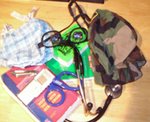
Many people have asked me, "What was medical school actually like?" "What was you day-to-day schedule?". I will attempt to describe my first day in medical school from the time I woke up to the time I fell asleep in this essay.
I woke up at my usual time of 4:30AM. I was raised on a farm and getting up early is as much a part of my life as brushing my teeth every morning and evening. I am fortunate that I actually have always had less of a sleep schedule than most of my buddies and thus, I generally awaken around 4:30AM without the need of an alarm clock. I also roll out of bed and hit the shower while my single cup of "Joe" is brewing.
Over coffee, I usually catch up with the newspaper (online) and then I headed out the door for my walk to the subway station. This walk generally took about 20-minutes and was a built-in source of exercise for me for the first couple of weeks of medical school. My coursework on the first day consisted of Introduction to the Practice of Medicine Class at 8:AM- 10AM, Psychiatry at 10AM to noon. Lunch was from 12 noon to 1PM. Afternoon was Gross Anatomy Lecture from 1PM-3PM and Gross Anatomy Lab from 3PM to 5pm.
All of our lectures were in 50-minute blocks with 10 minutes of break in between each lecture. This allowed us to get a drink, walk around and prepare for the incoming lecturer. It also allowed the media person to set up in between the lectures as our lectures were available for download and all PowerPoints were down-loadable from out seats. Most of us took notes on the Powerpoint slide sheets or just listened in class.
Our syllabi had been handed out during orientation so that we knew the objectives and content with each lecturer. We also knew which textbook readings were to be covered. My Introduction to the Practice of Medicine course had a syllabus that contained an outline of the lecture. There was no text reading for this opening lecture that included the duties of a physician, how to fill out a death certificate and how to gather and interpret vital statistics for a locale such as birth rates, death rates and rates of disease.
With all of my syllabi and text books, I would remove the covers, take the books to Kinko's and have the bindings removed. I would then have three-holes punched and I would place these sheets in large 3-ring binders. I had a binder for each course. In the evening before each course, I would remove the syllabus sheets for that course, remove any textbook pages that I thought I might need and place them in a small 3-ring notebook along with sheets of lined notebook paper (for taking notes). This was the notebook that I brought with me to school. I would have the subject matter divided by separators so that I had all of my information with me for the day.
I would download my PowerPoint slides and place copies of these in my subject notebook when I got back home for the day. My lecture notes (or copies of note service) would also go into each subject note book. My textbook pages would go back into that textbook three-ring binder.
On my first day, I took notes and placed them in my Introduction to the Practice of Medicine binder when I arrived home at the end of the day. For psychiatry, again, the lecturer had no slides but discussed Erickson's stages of development and Piaget. I took notes but knew that detailed explanations of these subjects were in my textbook.
For Gross Anatomy, I had the text pages with me and made notes in the margins of the material presented by the lecturer. I also made a few notes on photocopies of my Netter plates for use in our lab. During Gross Anatomy lab, I had my list of structures that I had made from scanning the dissector. I had also reviewed the relevant plates in my Netter atlas and had made photocopies of these plates. My photocopies were stapled to my list of structures.
In our first Gross anatomy lab, we studied the bones of the vertebral system and skeletal structures. We were also given instruction in how to work with the diener to keep our cadavers in good condition for the entire semester. We were also introduced to our cadavers and our tank groups (each was six people).
After lab was over, I took the subway back home (45-minutes) and walked from the subway station to my house. I then took an hour, made dinner, ate and begin to study and review the material from the first day's lecturers. As I studied, I made notes an questions in the margins of my books, syllabi and note sheets. Since most of my notes were typed, I printed these out and placed them in my subject binders. I also studied and memorized the relevant bone structures using my bone box that was issued to me during the first day of Gross Anatomy laboratory.
My next task was to preview the notes for the next day's subjects and do any readings/problems that had been assigned. After my previewing, my textbook pages, relevant notes and syllabi pages were placed in my daily notebook which went into my backpack. My next days courses were Biochemistry, Microbiology and Microbiology lab.
My day ended about 11 PM and I hit the bed because I knew that my next day would be starting at 4:30 AM. Since Tuesdays and Thursdays were shorter days (class started at 8AM but ended at 4PM) I actually had an extra hour on these days. We also had a Microbiology Discussion session on Tuesdays and a Biochemistry Case Discussion session on Thursdays where we would discuss clinical cases from the standpoint of these subjects. Our instructors would bring a case, present it and then we would discuss these cases in detail from the standpoint of the basic science involved.
When we started to actually dissect the cadavers, my Mondays, Wednesdays and Fridays included 2-3 hours of dissection in the evening after class was done. I would get some dinner at school and then get into the dissection laboratory to study and complete dissections. The extra dissection/study moved my bedtime back to after midnight on these nights.
I also studied in the dissection laboratory and with my study group on Saturdays. We would have an early breakfast (at one of the nearby churches to help them raise funds) and then study and quiz each other until noon. We would then study and quiz each other in the Gross Anatomy lab after lunch and generally until 3 or 4pm. After that, we would do another group session in Biochemistry and Micro and then head home around 8pm.
Sunday's were generally my day of rest. I would spend a couple hours in the evening putting together my materials for my Monday classes but most of my studies would be completed in the time that I had put in Monday through Saturday.
If this amount of study time seems extreme, it was extreme in some ways. I would not stop until I felt I had mastered the material. I also made the crucial mistake of neglecting my physical conditioning in favor of my studies when I should have incorporated my studies into my physical conditioning routine. I ended up gaining a considerable amount of weight but my grades were excellent. At this point in my life, I know that I have to strike a balance and now I am in excellent physical condition with no neglect to my academics/reading.
Medical school was all about balancing my studies with my life. I learned to multi-task and I learned how to focus on getting things mastered and completed. I also learned the value of discipline. My schedule didn't allow much "downtime" but the "downtime" that I had was utilized to an ultimate degree.
It becomes easy to procrastinate in medical school because the days are long and the material seems voluminous. I fought procrastination by asking myself, "Why are you avoiding getting on with this task?". Since I never had a good answer for this question, I just broke the task into smaller tasks and checked them off until they were done.
As I have said in other posts on this blog, the telly went by the wayside. I would spend a bit of time on Sunday scanning the log for shows that might be of interest. I would program my recorder for the shows of interest and watch them the next Sunday if I felt like a bit of relaxation. In most cases, my relaxation became hanging out with my classmates and the telly wasn't much entertainment. I still tape shows that I love or documentaries that might be of interest to my students as I am teaching more these days.
Other things that tended to waste my time in medical school were phone conversations. I seldom use my telephone more than 5 minutes per week and tend to use e-mail communication more. I also pick and choose the meetings that I attend. Many times, academic committee meetings can be a total waste of time and energy and thus, I pick and choose whenever possible. If something is mandatory, the organizers generally will time the meetings around the schedules of those folks who are attending.
One of my medicine professors encouraged us to read the case reports in the New England Journal of Medicine every week from the first day of medical school. He said that we might not understand all of the aspects of each case but that this habit would prove invaluable as we moved through the curriculum. He was totally "on the money" with this one. I can't tell you how studying and reading these cases helped me on all steps of USMLE and in residency too.
Medicine requires that you read and keep up with the journals of your discipline. I strive to read selected articles in New England Journal of Medicine, Journal of American Medical Association weekly. I also read American Surgeon and Archives of Surgery regularly along with Nature Medicine (excellent articles to be found in this journal). I keep a computer log of the articles that I have read and their sources. This keeps me current with the literature as much as possible.
Showing posts with label first-year. Show all posts
Showing posts with label first-year. Show all posts
16 June 2007


07 January 2007
First Year of Medical School
A short while back, some of my pre-med students asked me about memories of medical school. I thought it might be fun to write about some of those here as well as residency experience so here goes from the beginning...
My medical school had a classical curriculum with problem-based-learning intergrated. We had the typical first-year, second-year types of classes. Lectures went from 0800h to 1600h daily. We had some Tuesdays or Thursdays when we would be able to get out earlier but we spent loads of time in class (way more than students currently attending). Some of my classes had computer-based-learning exercises and some had laboratory projects that had to be completed. In short, school was the equivalent of a full-time job with much time spent on weekends reviewing and keeping up with the pace. The best thing was that all of my classes were very interesting.
My first lecture of medical school was in Biochemistry. The professor essentially covered an entire Organic Chemistry course in a 50-minute lecture. The material was extremely detailed and presented in volumes. This particular professor had a reputation for "rocket" lecture delivery and he got the job done. The great thing was that I understood everything well and could see that this was the basis of the next 50-minute lecture which started off with lipid biochemistry.
My next class was the first part of Gross Anatomy. Our lecture was on surface anatomy and types of neurons. Each lecture was 50 minutes followed by a 10-minute break. I think those 50-minute lectures were the beginning of my 50-minute attention span. After lunch, Gross Anatomy lab started with a brief introduction and then a long laboratory on the vertebral column. We were all given bone boxes (containing human bones) to take home for further study. Every bone was present except the skull bones. Needless to say, we were required to learn every bone and every part of every bone.
By the time the day was done, I had received the equivalent of about 3 weeks worth of undergraduate lectures on one day. Since I had my syllabi, I knew what would be covered in lecture and I knew what readings and material would have to be previewed for the next days lecture. After each lecture was completed, I would quickly fill in any gaps in my notes and briefly scan through my notes for completeness. Over lunch, I would start to memorize as much of my morning lecture as possible too. We had an hour for lunch so I would grab something quick and then spend the rest of the time pouring over my notes.
On the way home, I would study some more or just watch people. I took public transportation because I didn't want to worry about driving. My commute time was my time to relax and think about the day or plan my evening. When I got home, I would grab my gym bag so that I could get a quick swim in before dinner. I would dine with my fiance and then hit the books for a couple of hours. By that time, it would be around 8pm so I would go to bed. I would wake up at 2am and study until 6 am. I would then take a shower and get off to school.
When I was studying, I would finish studying the material that had been presented that day. I would then review the lectures for the day before and preview the materials for the next day's lecture. On the weekend, I would review the entire week's lectures in addition to reviewing an entire week's dissection in the Gross Anatomy lab.
I made study tapes to drill structures and notes so that I could listen to them while I was walking or running. I would also make concept maps and fill them in on large sheets of paper as I went through biochemistry. I always wanted to keep the "big" picture in mind as I studied.
We had an exam week about every five weeks during the semester. There would be two "reading" days (read catch up) and then exams would begin. For Gross Anatomy, we would have the lecture exam in the morning and the laboratory practical exam in the afternoon. Between the exams, I would go to the art museum and get completely away from campus. I couldn't stand to be around people who were so stressed about the exams.
In addition to Anatomy and Biochemistry, we had lectures in Psychiatry and Introduction to the Practice of Medicine. The Psychiatry lectures were always interesting and covered topics like development, personality disorders, sexuality, psychiatric drugs and the roles of various types of psychiatrists. Lectures in the practice of medicine covered topics like law and medicine, types of practices, alternative and complimentary medicine, history of medicine and medical education models. Psychiatry and Introduction to Medicine provided a bit of relief from the rigor of Biochemistry and Gross Anatomy but we were tested on these subjects so they required our attention too.
Our first semester ran from the middle of August to the second week of December. I can promise that the time goes by very quickly and soon Christmas vacation upon us. At the end of the first semester, we were done with Gross Anatomy and Biochemistry but still had more lectures in Psychiatry and Practice of Medicine. In addition, we had Histology, Microbiology/Immunology and Neuroscience lectures too. Second semester had a bit more material and more lectures. In addition, we had to dissect brains and spinal cords in Neuroanatomy. We were also given slide boxes with every type of tissue for histology. We would learn to recognize tissues and electron micrographs of every type of cell.
By the time second semester is over, we had learned a huge amount of material. Most people were happy to get exams done and get home for the summer. I was selected to become an instructor for the students who would be coming into our pre-matriculation program. I would be teaching Biochemistry primarily in addition to Gross Anatomy and Immunology. It was an honor to be asked to instruct in this program and I knew that I would enjoy working with these students.
The students who participated in the prematriculation program were medical and dental students with a conditional acceptance into medical or dental school. By successfully completing this program, these students are offered a seat in the school that they were conditionally admitted to. During this rigorous summer, we gave study tips, extensive reviews and got to know some very determined folks. In addition, these students have a huge head start when the actual courses start because they have been exposed to the material. It is a great program and I enjoyed the summer. In addition, we, the instructors are paid very nicely and can get some research done at the same time.
I finished my first year strong with honors and a much stronger interest in medicine than before I started school. When I looked back on all that I had learned, I was amazed. Little did I know that second year had even more to learn and would build upon my foundation of first year.
My medical school had a classical curriculum with problem-based-learning intergrated. We had the typical first-year, second-year types of classes. Lectures went from 0800h to 1600h daily. We had some Tuesdays or Thursdays when we would be able to get out earlier but we spent loads of time in class (way more than students currently attending). Some of my classes had computer-based-learning exercises and some had laboratory projects that had to be completed. In short, school was the equivalent of a full-time job with much time spent on weekends reviewing and keeping up with the pace. The best thing was that all of my classes were very interesting.
My first lecture of medical school was in Biochemistry. The professor essentially covered an entire Organic Chemistry course in a 50-minute lecture. The material was extremely detailed and presented in volumes. This particular professor had a reputation for "rocket" lecture delivery and he got the job done. The great thing was that I understood everything well and could see that this was the basis of the next 50-minute lecture which started off with lipid biochemistry.
My next class was the first part of Gross Anatomy. Our lecture was on surface anatomy and types of neurons. Each lecture was 50 minutes followed by a 10-minute break. I think those 50-minute lectures were the beginning of my 50-minute attention span. After lunch, Gross Anatomy lab started with a brief introduction and then a long laboratory on the vertebral column. We were all given bone boxes (containing human bones) to take home for further study. Every bone was present except the skull bones. Needless to say, we were required to learn every bone and every part of every bone.
By the time the day was done, I had received the equivalent of about 3 weeks worth of undergraduate lectures on one day. Since I had my syllabi, I knew what would be covered in lecture and I knew what readings and material would have to be previewed for the next days lecture. After each lecture was completed, I would quickly fill in any gaps in my notes and briefly scan through my notes for completeness. Over lunch, I would start to memorize as much of my morning lecture as possible too. We had an hour for lunch so I would grab something quick and then spend the rest of the time pouring over my notes.
On the way home, I would study some more or just watch people. I took public transportation because I didn't want to worry about driving. My commute time was my time to relax and think about the day or plan my evening. When I got home, I would grab my gym bag so that I could get a quick swim in before dinner. I would dine with my fiance and then hit the books for a couple of hours. By that time, it would be around 8pm so I would go to bed. I would wake up at 2am and study until 6 am. I would then take a shower and get off to school.
When I was studying, I would finish studying the material that had been presented that day. I would then review the lectures for the day before and preview the materials for the next day's lecture. On the weekend, I would review the entire week's lectures in addition to reviewing an entire week's dissection in the Gross Anatomy lab.
I made study tapes to drill structures and notes so that I could listen to them while I was walking or running. I would also make concept maps and fill them in on large sheets of paper as I went through biochemistry. I always wanted to keep the "big" picture in mind as I studied.
We had an exam week about every five weeks during the semester. There would be two "reading" days (read catch up) and then exams would begin. For Gross Anatomy, we would have the lecture exam in the morning and the laboratory practical exam in the afternoon. Between the exams, I would go to the art museum and get completely away from campus. I couldn't stand to be around people who were so stressed about the exams.
In addition to Anatomy and Biochemistry, we had lectures in Psychiatry and Introduction to the Practice of Medicine. The Psychiatry lectures were always interesting and covered topics like development, personality disorders, sexuality, psychiatric drugs and the roles of various types of psychiatrists. Lectures in the practice of medicine covered topics like law and medicine, types of practices, alternative and complimentary medicine, history of medicine and medical education models. Psychiatry and Introduction to Medicine provided a bit of relief from the rigor of Biochemistry and Gross Anatomy but we were tested on these subjects so they required our attention too.
Our first semester ran from the middle of August to the second week of December. I can promise that the time goes by very quickly and soon Christmas vacation upon us. At the end of the first semester, we were done with Gross Anatomy and Biochemistry but still had more lectures in Psychiatry and Practice of Medicine. In addition, we had Histology, Microbiology/Immunology and Neuroscience lectures too. Second semester had a bit more material and more lectures. In addition, we had to dissect brains and spinal cords in Neuroanatomy. We were also given slide boxes with every type of tissue for histology. We would learn to recognize tissues and electron micrographs of every type of cell.
By the time second semester is over, we had learned a huge amount of material. Most people were happy to get exams done and get home for the summer. I was selected to become an instructor for the students who would be coming into our pre-matriculation program. I would be teaching Biochemistry primarily in addition to Gross Anatomy and Immunology. It was an honor to be asked to instruct in this program and I knew that I would enjoy working with these students.
The students who participated in the prematriculation program were medical and dental students with a conditional acceptance into medical or dental school. By successfully completing this program, these students are offered a seat in the school that they were conditionally admitted to. During this rigorous summer, we gave study tips, extensive reviews and got to know some very determined folks. In addition, these students have a huge head start when the actual courses start because they have been exposed to the material. It is a great program and I enjoyed the summer. In addition, we, the instructors are paid very nicely and can get some research done at the same time.
I finished my first year strong with honors and a much stronger interest in medicine than before I started school. When I looked back on all that I had learned, I was amazed. Little did I know that second year had even more to learn and would build upon my foundation of first year.
Subscribe to:
Posts (Atom)