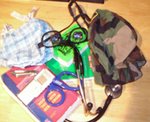
Many times, third-year medical students will have to spend a portion of their required surgical clinical clerkship on Cardiothoracic Surgery. This portion of your surgery clerkship can provide a good informational background for anyone going into medicine, pediatrics or surgery. For the medicine, emergency medicine and anesthesia folks, you get first hand experience with the actions of pressors such as dopamine and dobutamine and other cardio pharmaceuticals in the postop management of these patients. You see the real-time effects of agents like nipride and nitroglycerine because most cardiac surgery patient will have pulmonary artery catheters in place in the immediate post-operative period. For those anticipating entering pediatrics, you will get a chance to see some of the effects of the congenital heart disease entities and how repairs are undertaken. For those entering the surgical specialties, you can develop an understanding of some specialized surgical techniques in addition to becoming familiar with the surgical intensive care unit.
Approaching the Rotation
The first step in any clinical rotation is to have good reference materials so that you understand the language that these surgeons will be using. For cardiothoracic surgery, I strongly recommend the following: Essentials of the Surgical Subspecialties by Lawrence, Cardiac Surgery Secrets by Solotoski or Handbook of Patient Care in Cardiac Surgery by Vlahakes. Any of these books will provide a solid background into the types of pathology that you will encounter in your rotation. The Lawrence book includes good sections on the thoracic elements of this rotation which are not included in the other books. In addition, you need the usual pocket books such as the Pocket Pharmacopeia or Epocrates which may be used to look up dosages of medications and the Maxwell Book which outlines SOAP charting, brief operative notes and discharge summary writing.
The players on any cardiothoracic service are the Cardiothoracic attending surgeon, the resident or fellow surgeon, the intern and you the medical student. You need to understand your role as both a member of the team and as a student of medicine/surgery. This means that in many cases, this busy service will require that you become very proactive in terms of getting the information that you need. You should thoroughly understand the following for every case that you encounter on this service (or any service for that matter):
• The relevant pathology of the underlying disease entity
• The relevant anatomy of the underlying disease entity
• The “gold-standard” of diagnosing the disease entity
• The accepted treatment of the disease entity
• For surgery- the surgical approach and performance of the operative procedure
• For surgery – the postoperative disposition and management of the patient
In the case of a patient that is undergoing a coronary artery bypass graft procedure, you need to understand the indications for the procedure, how the diagnosis of coronary artery disease was obtained (how to read the cath report), where is the disease (in which arteries), the relevant surgical anatomy, how the case is done including the operative approach, how cardiopulmonary bypass works, the effects of the cardiopulmonary bypass pump on the patient and how these effects are managed in the postoperative period, how to read and interpret data from the pulmonary artery catheter, where the grafts for bypass were obtained and how they were utilized and the care of the patient both in the intensive care unit and on the postop ward before discharge home. You should also know why the patient is discharged on certain medications and what you may expect to see and evaluate in the clinic when the patient returns for postoperative care.
Armed with that knowledge, you should make sure that you observe (you probably won’t be actually scrubbing in these cases)the preparation for anesthesia, how the chest is opened and closed, that you see how the grafts are harvested (done by a surgical resident) and how that wound is closed, how the grafts are sewn I place (best to use the camera overhead for this observation rather than try to look over the shoulder of the surgeons, how the pacemaker wires are placed, how the patient is placed on and taken off the cardiopulmonary bypass pump, how the chest tubes are placed in the chest cavity and how blood is evacuated from the chest cavity when the sternal wires are placed. Placement of the sternal wires is also a good opportunity for you to observe an interesting procedure.
After the case, you should accompany the patient to the intensive care unit and you should carefully note and observe the data that is obtained from the pulmonary artery catheter, the arterial line and the 12-lead ECG. You should look at the pre-operative ECG and compare the two. Another good exercise is to note where the grafts were placed and the number of minutes of pump time and any circulatory arrest time. You thoroughly familiarize yourself with the preoperative workup and the postoperative course of every patient that is on your service. Look at things like electrolyte replacement, ventilator weaning, urine output and transfer from the intensive care unit. This is also a good time to learn how to remove chest tubes and arterial lines. You should observe the conversion of the pulmonary artery catheter to a central venous line but leave the rewiring duties to a resident. If you anticipate entering a surgical subspecialty, you might observe these procedures but you should never perform these procedures as a medical student.
In addition to the routine patients, you may get an opportunity to observe some trauma that involved the cardiothoracic service. You may see the repairs of lung lacerations, penetrating cardiac injuries and the relief of cardiac tamponade from a traumatic injury to the chest. It is always interesting to see a patient who is admitted to the emergency department with a stab wound to the chest, knife in placed, rushed off to the operating room where the object is removed and the repair completed with survival of the patient. These are some of the most interesting cases. You may also see how damaged cardiac valves are replaced and how congenital heart defects are repaired. All of these cases are under the practice of a cardiothoracic surgeon.
The thoracic cases may afford you an opportunity to scrub in on the procedures. In the case of the video-assisted thoracic (thorascopic) lung procedures, you will have a good view of lung pathology. You can follow the patient from biopsy (in the case of a tumor) or chest wall abnormalities/problems through the repair. These cases will have interesting anatomy and will have excellent postoperative observations and challenges that will teach you many good skills. You can learn about chest tube management and the physiology of the chest cavity. You will also learn about pain management and the prevention of major postoperative complications as these patients may often be a challenge in terms of pain relief. You may get a chance to observe a thoracentesis or placement of a chest tube.
This rotation can teach you many important skills and hone your ability to understand the critical care of patients. It is an excellent learning opportunity for you. You may not get much hands-op operative experience but you can be invaluable in the post-operative care of these patients.
Showing posts with label medical school coursework. Show all posts
Showing posts with label medical school coursework. Show all posts


30 September 2007
Some Perspectives from Teaching students
I have been teaching some Physical Diagnosis skills over the past semester and I have learned many things. First, I learned that I was taught by some extremely skilled preceptors back when I took this course in medical school. My preceptors' sole objective was for me and my classmates to become excellent diagnosticians and observers. The better we looked, the better they looked and to this end, they taught us well. In short, I have great examples to emulate and I strive every day to live up to those examples.
It is no accident that when one attempts to teach something, one becomes stronger and more secure in their own personal knowledge. I distinctly remember when I was learning how to appreciate heart sounds. It seemed like I would never get the "hang" of figuring out if a murmur was systolic or diastolic. Now, years later, heart murmurs are as familiar as my favorite songs. This came with loads of practice in addition to integrating what I hear with what I know about heart pathology. This integration is one of the great joys of medicine. Every piece of experience can be added to one's knowledge base in some manner.
Every time I hear a murmur, I appreciate more and more. My uncle, a cardiologist always expounded about "auralizing" a heart sound. His lectures coupled with my harmony and ear training in music has come in quite handy. I distinctly remember back in my music courses, I learned to recognize a chord pattern by sound and experience. Listening to a heart murmur is no different. As I move my stethoscope from place to place, subtle differences in the first and second heart sounds are evident. The shape of the patient's chest also plays a role in what one hears too. Auscultation is truly an art that takes both experience and excellent training.
I play loads of recordings over and over for my students accentuating every heart sound and correlating each sound with the physiology of what is going on the the chest. By listening over and over, they gain experience. My own experience began when I would lie in bed at night listening to my own normal heart sounds. Next, I listened to the chest of one of my classmates who had mitral valve prolapse. She has a very thin body habitus and had the classical heart sounds of this very common condition. Again, more experience for me.
No good professor ever compromises their teaching methods to "torment" students. We do joke about making our students miserable but I can tell you from experience that recently, one of my students was able to see the vessels in my retina and nothing made me prouder. I was proud of her because she was determined to learn to use her opthalmoscope properly and she kept practicing until she could. I especially do not want any of my students to feel "tormented" by learning the techniques of physical diagnosis because these skills will stay with each student for the rest of their career.
I once heard the chairman of a department of internal medicine speak about how many medical students have an "under-appreciation" for the skills of physical diagnosis. I kept thinking how much I love walking into a room; taking a patient history; performing a physical examination and putting everything together into a solid clinical plan that is useful for getting to the root of the patient's problem. My feelings about physical diagnosis is far from an under-appreciation but more of a reverence for a fine art just like a reverence for find song.
I have been busy this weekend working on exam questions for my student. Since Physical Diagnosis is mostly a practical type of course, I am striving to make my questions test the practical aspects of performing the physical exam. Until you have been charged with the task of exam question writing, you cannot appreciate how difficult this task can become. My questions don't come from exactly what I give in lecture but from reading and actual performance of the the skills of examination of each system covered. The questions are not designed to "trick" students but to make sure that they know how to perform each task.
Physical Diagnosis requires that every aspect of a patient is examined. The demeanor, the speech, the gait and other general aspects of a patient's behavior and actions are all important clues to what underlying pathology may be present. A person who has a perforated peptic ulcer has a distinct demeanor and position on a stretcher/bed in the emergency department versus a patient who is passing a renal calculus (stone). One quickly learns to do a very quick assessment of the entire general appearance of any patient.
A very critical aspect to writing the report of a history and physical exam is making sure that your notes and evaluation are as accurate as possible. I have learned to record my findings and impressions such that any clinician picking up the patient record ten years from now can understand and appreciate what I observed at the time and why I treated the patient in the manner that I did. In short, a trained clinician should be able to follow my clinical thinking. This doesn't mean that I have every answer at the moment but it does mean that I followed a logical plan to arrive at a correct diagnosis and that I developed a coherent treatment plan.
Finally, a note about writing in a medical record. It may look wonderful to have a fancy signature and penmanship but I print everything as my cursive writing is not always clear. My signature is distinct but under that signature is my name, title and pager number in clear block letters. I pay very close attention to every letter when I write a prescription and dosage. I don't use too many abbreviations and Latin pharmacy phrases. I simply write four times daily instead of QID or I write out nothing by mouth instead of NPO. By doing this, it simply saves phone calls later in the evening. I am as pressed for time as anyone but some things save a bit of time if you take the time to do them correctly in the first place.
It is no accident that when one attempts to teach something, one becomes stronger and more secure in their own personal knowledge. I distinctly remember when I was learning how to appreciate heart sounds. It seemed like I would never get the "hang" of figuring out if a murmur was systolic or diastolic. Now, years later, heart murmurs are as familiar as my favorite songs. This came with loads of practice in addition to integrating what I hear with what I know about heart pathology. This integration is one of the great joys of medicine. Every piece of experience can be added to one's knowledge base in some manner.
Every time I hear a murmur, I appreciate more and more. My uncle, a cardiologist always expounded about "auralizing" a heart sound. His lectures coupled with my harmony and ear training in music has come in quite handy. I distinctly remember back in my music courses, I learned to recognize a chord pattern by sound and experience. Listening to a heart murmur is no different. As I move my stethoscope from place to place, subtle differences in the first and second heart sounds are evident. The shape of the patient's chest also plays a role in what one hears too. Auscultation is truly an art that takes both experience and excellent training.
I play loads of recordings over and over for my students accentuating every heart sound and correlating each sound with the physiology of what is going on the the chest. By listening over and over, they gain experience. My own experience began when I would lie in bed at night listening to my own normal heart sounds. Next, I listened to the chest of one of my classmates who had mitral valve prolapse. She has a very thin body habitus and had the classical heart sounds of this very common condition. Again, more experience for me.
No good professor ever compromises their teaching methods to "torment" students. We do joke about making our students miserable but I can tell you from experience that recently, one of my students was able to see the vessels in my retina and nothing made me prouder. I was proud of her because she was determined to learn to use her opthalmoscope properly and she kept practicing until she could. I especially do not want any of my students to feel "tormented" by learning the techniques of physical diagnosis because these skills will stay with each student for the rest of their career.
I once heard the chairman of a department of internal medicine speak about how many medical students have an "under-appreciation" for the skills of physical diagnosis. I kept thinking how much I love walking into a room; taking a patient history; performing a physical examination and putting everything together into a solid clinical plan that is useful for getting to the root of the patient's problem. My feelings about physical diagnosis is far from an under-appreciation but more of a reverence for a fine art just like a reverence for find song.
I have been busy this weekend working on exam questions for my student. Since Physical Diagnosis is mostly a practical type of course, I am striving to make my questions test the practical aspects of performing the physical exam. Until you have been charged with the task of exam question writing, you cannot appreciate how difficult this task can become. My questions don't come from exactly what I give in lecture but from reading and actual performance of the the skills of examination of each system covered. The questions are not designed to "trick" students but to make sure that they know how to perform each task.
Physical Diagnosis requires that every aspect of a patient is examined. The demeanor, the speech, the gait and other general aspects of a patient's behavior and actions are all important clues to what underlying pathology may be present. A person who has a perforated peptic ulcer has a distinct demeanor and position on a stretcher/bed in the emergency department versus a patient who is passing a renal calculus (stone). One quickly learns to do a very quick assessment of the entire general appearance of any patient.
A very critical aspect to writing the report of a history and physical exam is making sure that your notes and evaluation are as accurate as possible. I have learned to record my findings and impressions such that any clinician picking up the patient record ten years from now can understand and appreciate what I observed at the time and why I treated the patient in the manner that I did. In short, a trained clinician should be able to follow my clinical thinking. This doesn't mean that I have every answer at the moment but it does mean that I followed a logical plan to arrive at a correct diagnosis and that I developed a coherent treatment plan.
Finally, a note about writing in a medical record. It may look wonderful to have a fancy signature and penmanship but I print everything as my cursive writing is not always clear. My signature is distinct but under that signature is my name, title and pager number in clear block letters. I pay very close attention to every letter when I write a prescription and dosage. I don't use too many abbreviations and Latin pharmacy phrases. I simply write four times daily instead of QID or I write out nothing by mouth instead of NPO. By doing this, it simply saves phone calls later in the evening. I am as pressed for time as anyone but some things save a bit of time if you take the time to do them correctly in the first place.
28 September 2007
Getting Through the Semester
By now, many students have had their first block of exams in medical school. Some people have done very well and some people have "breathed a sigh of relief" that they passed and some people have not passed one or or more of their exams. To fail an exam at this stage can be a huge personal blow but your actions after discovering that you have not passed (I am going to avoid the word "failure" here) are critical to figuring out what you need to do to get "above the yellow line". Sure you NEED to do a bit or mourning in terms of the loss of those wonderful feelings that infused during orientation week but don't let the mourning phase go on longer than a couple of minutes. Replace mourning with a very objective strategical look at what might have gone wrong and how you are going to fix the situation.
There is something in medical school that will throw every person. It may be that first round of exams, that USMLE score or a patient contact that just did go well. The important thing is that out of every experience, good or bad, you learn something about yourself and what you are capable of achieving. It is out of experience that you will learn to treat your future patients so let your experience become your teacher and move forward from here. Not passing an exam just doesn't feel good and can play with your "head" in terms of how your look at your future. My point here is that nothing except that round of exams is over at this point. You mourn a bit and then you push forward because (and I am not wrong on this), the material for the next round of exams is already upon you.
As soon as you know that anything has not gone well for you academically, ask for help. Your first action should be reviewing the test and trying to figure out where you went wrong. Do you need to rely on more detail? Did you move too fast and not answer the question that was asked? Did you neglect to read every answer choice with a more correct answer further down? Did you not fully understand the material? Were you distracted by something outside of school such as a relationship or illness and not put in enough time studying? In short, try to figure out what went wrong and take steps to make sure that you don't repeat your mistakes.
In some medical schools, class attendance is not mandatory. If this is the case, and you ran out of study time, try figuring out if there is one day a week that you can stay home and study the material using note service/lecture tapes or vids/textbook and syllabus reading. Many students do not attend class and find that home (or away from school study) works best for them. This may work for you but be careful if you have too many distractions at home or find that not attending class puts you behind. (Getting behind in medical school is deadly.)
If your work is not detailed enough, figure out which classes do not require the detail and which ones DO require more detailed study. In short, give each course what it demands. Many schools have integrated courses that definitely demand loads of detailed work coupled with "professional-type" courses like Practice of Medicine that are more performance-based. Try to look at your coursework from this perspective and see if you can give your integrated course a bit more time and your performance course a bit less time.
Another problem is that in many first year courses, the load of information can seem overwhelming. Resist the urge to dwell on what seems overwhelming and nibble away a chunk at a time. I always remember that scene in the movie "Shawshank Redemption" where the protagonist chips away at the prison wall over the course of 17 years with a small rock hammer. Eventually, he gets through the wall and escapes. Extreme but I think you get my drift in terms of divide your work into manageable chunks and stay on course. Keep moving forward because you can only affect what is happening now and use that to impact the future. Weekends are your friend because you can breathe a bit, relax a bit and catch up if you have fallen a bit behind your class. In the middle of the week, go to where the class is and use the weekend to "catch up".
I really discourage students from recopying notes as a means of study. When you have volumes of material and information, you can become more of an excellent clerk in terms of producing a beautiful set of notes that you have not mastered. Organizing your material is good (can be done with a highlighter or in the margins of your notebook) but total recopying of every word may be too time consuming and not as beneficial as when you were an undergraduate student with less volume. You may need to review the material and then constantly question yourself or recite the material back to yourself rather than a complete recopy. If you can recopy your work in an efficient manner while learning and your grades are good, then recopying is working for you and don't change your strategy.
Another problem that can interfere with some freshman medical students is feeling that they "need" to study for boards. You don't need to take time away from your coursework mastery to do board study at this point in your career. If you absolutely feel that you NEED to do some board study, then do it during the summer between your first and second year but the best preparation for boards is to thoroughly master your coursework and then study for boards at the end of your second year. You cannot "review" what you have not "learned" in the first place. Don't take valuable coursework study time to do board study. Board review books are most useful because they summarize material but most medical school courses require the details and not summaries. Beware of the "I am going to use a review book to summarize" method of study because it might work against you in terms of you not getting enough of the details to pass your course. The other extreme is to attempt to memorize the textbook which is most likely too much detail. In short, strike a happy medium that will work for you.
Don't be afraid (0r ashamed) to consult your instructor or your dean if you are struggling. Not to reach out for help (especially because of the amount of money that you are paying for your school tuition) is not wise. It really looks great to a residency program director to see comments from your dean or professor that state that you were able to overcome a deficiency and excel. These types of comments indicate excellent problem-solving skills which are highly prized in a physician.
Finally, tune out the boasting of your classmates who say that they "didn't study" and "aced" their exams. They are lying period. You have to do what you NEED to do for yourself. Congratulate them for being so "brilliant" and don't waste a second of your precious time worrying that you are somehow deficient because you studied like a demon and didn't do so well. There is nothing wrong with you that correcting your study strategy will not solve. Just don't add "questioning your worth" to your list of things to overcome. It isn't necessary and it won't get the job done.
Statistics (and odds) state that if you were accepted to medical school, you will get through the four years successfully. Some people make the adjustment to the rigors of medical school academics faster than others but trust yourself enough to know that you will get the job done. There is very little difference in intellect between the person who graduates first in their medical school class and last in their medical school class. Residency program directors know this which is why the person who graduates last in their class is still called "Doctor". Run your own race and get what you need.
There is something in medical school that will throw every person. It may be that first round of exams, that USMLE score or a patient contact that just did go well. The important thing is that out of every experience, good or bad, you learn something about yourself and what you are capable of achieving. It is out of experience that you will learn to treat your future patients so let your experience become your teacher and move forward from here. Not passing an exam just doesn't feel good and can play with your "head" in terms of how your look at your future. My point here is that nothing except that round of exams is over at this point. You mourn a bit and then you push forward because (and I am not wrong on this), the material for the next round of exams is already upon you.
As soon as you know that anything has not gone well for you academically, ask for help. Your first action should be reviewing the test and trying to figure out where you went wrong. Do you need to rely on more detail? Did you move too fast and not answer the question that was asked? Did you neglect to read every answer choice with a more correct answer further down? Did you not fully understand the material? Were you distracted by something outside of school such as a relationship or illness and not put in enough time studying? In short, try to figure out what went wrong and take steps to make sure that you don't repeat your mistakes.
In some medical schools, class attendance is not mandatory. If this is the case, and you ran out of study time, try figuring out if there is one day a week that you can stay home and study the material using note service/lecture tapes or vids/textbook and syllabus reading. Many students do not attend class and find that home (or away from school study) works best for them. This may work for you but be careful if you have too many distractions at home or find that not attending class puts you behind. (Getting behind in medical school is deadly.)
If your work is not detailed enough, figure out which classes do not require the detail and which ones DO require more detailed study. In short, give each course what it demands. Many schools have integrated courses that definitely demand loads of detailed work coupled with "professional-type" courses like Practice of Medicine that are more performance-based. Try to look at your coursework from this perspective and see if you can give your integrated course a bit more time and your performance course a bit less time.
Another problem is that in many first year courses, the load of information can seem overwhelming. Resist the urge to dwell on what seems overwhelming and nibble away a chunk at a time. I always remember that scene in the movie "Shawshank Redemption" where the protagonist chips away at the prison wall over the course of 17 years with a small rock hammer. Eventually, he gets through the wall and escapes. Extreme but I think you get my drift in terms of divide your work into manageable chunks and stay on course. Keep moving forward because you can only affect what is happening now and use that to impact the future. Weekends are your friend because you can breathe a bit, relax a bit and catch up if you have fallen a bit behind your class. In the middle of the week, go to where the class is and use the weekend to "catch up".
I really discourage students from recopying notes as a means of study. When you have volumes of material and information, you can become more of an excellent clerk in terms of producing a beautiful set of notes that you have not mastered. Organizing your material is good (can be done with a highlighter or in the margins of your notebook) but total recopying of every word may be too time consuming and not as beneficial as when you were an undergraduate student with less volume. You may need to review the material and then constantly question yourself or recite the material back to yourself rather than a complete recopy. If you can recopy your work in an efficient manner while learning and your grades are good, then recopying is working for you and don't change your strategy.
Another problem that can interfere with some freshman medical students is feeling that they "need" to study for boards. You don't need to take time away from your coursework mastery to do board study at this point in your career. If you absolutely feel that you NEED to do some board study, then do it during the summer between your first and second year but the best preparation for boards is to thoroughly master your coursework and then study for boards at the end of your second year. You cannot "review" what you have not "learned" in the first place. Don't take valuable coursework study time to do board study. Board review books are most useful because they summarize material but most medical school courses require the details and not summaries. Beware of the "I am going to use a review book to summarize" method of study because it might work against you in terms of you not getting enough of the details to pass your course. The other extreme is to attempt to memorize the textbook which is most likely too much detail. In short, strike a happy medium that will work for you.
Don't be afraid (0r ashamed) to consult your instructor or your dean if you are struggling. Not to reach out for help (especially because of the amount of money that you are paying for your school tuition) is not wise. It really looks great to a residency program director to see comments from your dean or professor that state that you were able to overcome a deficiency and excel. These types of comments indicate excellent problem-solving skills which are highly prized in a physician.
Finally, tune out the boasting of your classmates who say that they "didn't study" and "aced" their exams. They are lying period. You have to do what you NEED to do for yourself. Congratulate them for being so "brilliant" and don't waste a second of your precious time worrying that you are somehow deficient because you studied like a demon and didn't do so well. There is nothing wrong with you that correcting your study strategy will not solve. Just don't add "questioning your worth" to your list of things to overcome. It isn't necessary and it won't get the job done.
Statistics (and odds) state that if you were accepted to medical school, you will get through the four years successfully. Some people make the adjustment to the rigors of medical school academics faster than others but trust yourself enough to know that you will get the job done. There is very little difference in intellect between the person who graduates first in their medical school class and last in their medical school class. Residency program directors know this which is why the person who graduates last in their class is still called "Doctor". Run your own race and get what you need.
31 August 2007
Physical Diagnosis (You get to play with your toys!)
Most medical students take a Physical Diagnosis class during their second year. This course teaches history taking and the skills necessary for performing a complete physical examination. Back in my second year of medical school, I found this course a bit intimidating in terms of what the syllabus outlined for us to accomplish in a few short weeks. Little did I realize that I had most of the tools that I needed to do well in this class, namely, an insatiable curiosity, a good ear, two good hands and total interest in my patients.
The first lecturer emphasized that we would get 90% of what we needed to make a diagnosis from a good patient history. “Good” was the operative word here because as one sits and reads the “how-to” of taking a medical history, it seems that there is an abundance of information that we must obtain in the patient interview while writing a couple of notes here and there. How would I remember every detail? What happens if I forget something important? What if the patient lies to me? How am I going to figure out what a comatose patient needs? Those were just a few of my concerns in addition to looking at my opthalmoscope and trying to figure out how I would ever get the “hang” of making this forbidding tool useful in my practice.
One day of the week, we would spend the afternoon in the hospital with our preceptors. My upperclassmen friends looked at the name on my paper and said that I had “hit the jackpot” with my preceptor assignment. My preceptor was a master diagnostician and an excellent teacher too. He was an endocrinologist who specialized in metabolic syndrome, a disorder that runs largely unchecked in most medically under-served populations because of poor diet and lack of physical activity. I was excited to get my practical knowledge underway with my new preceptor. My preceptor had two medical students assigned to his service at the same time. It turned out later that the other student rotating with me was my rotation partner for all of third year so we were great friends and become even closer.
We met our preceptor in his office and he led us to one of the medicine floors in the hospital. He had made a short list of his patients who were willing to have us use them for our history-taking practice. I entered the room of a middle-aged gentleman who was hospitalized for jaundice. I quickly went thorough my script of questioning this very soft spoken man who lay quietly in bed. I came to find out that he was a physician who had been diagnosed with a biliary disorder that would kill him without a liver transplant in the next two weeks. He was kind and patient as I asked all of those questions about family history, social history, medications and the like. He asked me to stop by later that evening and read my historical write-up back to him. When I stopped by, he helped me organize the information and provided invaluable assistance in thinking about how to question patients. We chatted off and on for a week, until he received the word that he was being transferred for his liver transplant. I saw him three weeks later when he was ready to leave the hospital with a new liver, a new life and such joy!
I practiced with my stethoscope on my own chest. It became very satisfying to lie in bed at night and listen to my own heart sounds. I listened to each sound appreciating the tones and timing. I also listened to my breath sounds, over the trachea, over the bronchi and over the lung parenchyma. I practiced listening to each heart valve and learned to appreciate the subtle differences between the sounds a the pulmonic site versus the sounds at the mitral site. I appreciated the split in my second heart sound with my respiratory cycle. If I could appreciate the subtleties of my own chest, I would be able to pick out abnormalities on my patients.
That pesky opthalmoscope was the biggest hurdle that I had to cross. The first thing that I did was learn to operate the light and aperture. Since I have no visual defects, I always start with the diopter setting on 0. I also quickly learned the utility of performing this examination in a dim room as bright light makes the patient’s pupils quite constricted. A dilated pupil is easier to examine. The other useful piece of information is to start with the opthalmoscope light dim so that you don’t blind the patient while you are attempting to examine the retina. At first, I could just pick out the “red reflex”. Soon, I found a vessel and later, I learned to focus sharply on those vessels and follow them to the optic disks. In short, there is a learning curve that is most quickly overcome if you force yourself to examine the retinas of every patient that comes into your office. If you don’t practice, you won’t learn to do an adequate examination. I would wager that most physicians out in practice today, other than the ophthalmologists and neurologists, do not perform an adequate retinal exam.
When it came to learning the rectal, pelvic and breast exams, we were taught by professional “patients”. These people knew the exams and used their own bodies to teach medical students. On the pelvic exam demonstrations, one of the demonstrators indicated that she was in the middle of her menstrual cycle. One of the male students in my group, left the room and never returned. I never found out how or if he learned to perform a pelvic examination but those demonstrators were excellent. They allowed us to practice and pointed out landmarks and hints that were invaluable. I found myself thinking about the type of person who is willing to become a professional demonstrator of breast, pelvic and rectal exams. While the job pays well, I would have to cross it off of my list of things to do if I needed loads of money quickly.
The neurological examination is the most fun to perform and write up. I found myself collecting an odd assortment of instruments to test sensations of hot and cold (I used capped test tubes filled with tap water); vibration (tuning fork), smell (alcohol pads, nail polish remover pads); color sensation (photos); light touch (feathers of various colors) and sharp versus dull (paper clip). I had a small bell and a small stuffed kitten as objects for my patients to name. I also collected a tape measure for lesions and an assortment of cotton swabs and tongue blades for cranial nerve testing.
I learned to perform my history while I was performing my physical examination. I would start with the head and ask about problems with headache, earache and vision. I would examine the eyes and nose while asking about sinus problems. I went from head to toe asking questions as I moved along. I always save invasive exams like pelvic and rectal for the end of the exam. While the patient is getting dressed, I would jot down my pertinent positive findings and spend the rest of the time chatting with the patient and explaining my findings. At this point, my preceptor would usually join me and we would discuss the treatment plans for the patient together.
The most important thing that I learned in this class was the value of communicating with your patient. I probably learned more from my patients than they learned from me. I learned to listen to their words and put their words and my physical findings into a cogent clinical plan for treatment. I also learned the importance of just getting to my patient’s fears, concerns, likes and dislikes. When a physician touches a patient, there is a relationship of trust that is begun. Your patient trusts that you will use everything that you have learned in biochemistry, anatomy, pathology, pharmacology and physiology to figure out what you can do to get them healthy and keep them healthy. There is a puzzle and the pieces must be fit together for the good of the patient.
I also came to appreciate the sanctity of the apprentice-mentor relationship that I had developed with my preceptor. In no other profession is that relationship so important than the attending physician/medical student. My preceptor was indeed a master and I was a very willing student. He led me through the maze of various patient encounters and kept me coming back for more. It was truly magical in many ways.
Finally, I mastered that opthalmoscope during the last week of my Physical Diagnosis class. I was quite comfortable with my exam and I appreciate the art of being able to make a diagnosis. While this class seemed to be quite intimidating at first, it became one the the sentinel courses in my medical school experience. After five plus years of practice and thousands of patients later, I wonder if my preceptor knows how many thousands of patients he has touched through all of his students.
The first lecturer emphasized that we would get 90% of what we needed to make a diagnosis from a good patient history. “Good” was the operative word here because as one sits and reads the “how-to” of taking a medical history, it seems that there is an abundance of information that we must obtain in the patient interview while writing a couple of notes here and there. How would I remember every detail? What happens if I forget something important? What if the patient lies to me? How am I going to figure out what a comatose patient needs? Those were just a few of my concerns in addition to looking at my opthalmoscope and trying to figure out how I would ever get the “hang” of making this forbidding tool useful in my practice.
One day of the week, we would spend the afternoon in the hospital with our preceptors. My upperclassmen friends looked at the name on my paper and said that I had “hit the jackpot” with my preceptor assignment. My preceptor was a master diagnostician and an excellent teacher too. He was an endocrinologist who specialized in metabolic syndrome, a disorder that runs largely unchecked in most medically under-served populations because of poor diet and lack of physical activity. I was excited to get my practical knowledge underway with my new preceptor. My preceptor had two medical students assigned to his service at the same time. It turned out later that the other student rotating with me was my rotation partner for all of third year so we were great friends and become even closer.
We met our preceptor in his office and he led us to one of the medicine floors in the hospital. He had made a short list of his patients who were willing to have us use them for our history-taking practice. I entered the room of a middle-aged gentleman who was hospitalized for jaundice. I quickly went thorough my script of questioning this very soft spoken man who lay quietly in bed. I came to find out that he was a physician who had been diagnosed with a biliary disorder that would kill him without a liver transplant in the next two weeks. He was kind and patient as I asked all of those questions about family history, social history, medications and the like. He asked me to stop by later that evening and read my historical write-up back to him. When I stopped by, he helped me organize the information and provided invaluable assistance in thinking about how to question patients. We chatted off and on for a week, until he received the word that he was being transferred for his liver transplant. I saw him three weeks later when he was ready to leave the hospital with a new liver, a new life and such joy!
I practiced with my stethoscope on my own chest. It became very satisfying to lie in bed at night and listen to my own heart sounds. I listened to each sound appreciating the tones and timing. I also listened to my breath sounds, over the trachea, over the bronchi and over the lung parenchyma. I practiced listening to each heart valve and learned to appreciate the subtle differences between the sounds a the pulmonic site versus the sounds at the mitral site. I appreciated the split in my second heart sound with my respiratory cycle. If I could appreciate the subtleties of my own chest, I would be able to pick out abnormalities on my patients.
That pesky opthalmoscope was the biggest hurdle that I had to cross. The first thing that I did was learn to operate the light and aperture. Since I have no visual defects, I always start with the diopter setting on 0. I also quickly learned the utility of performing this examination in a dim room as bright light makes the patient’s pupils quite constricted. A dilated pupil is easier to examine. The other useful piece of information is to start with the opthalmoscope light dim so that you don’t blind the patient while you are attempting to examine the retina. At first, I could just pick out the “red reflex”. Soon, I found a vessel and later, I learned to focus sharply on those vessels and follow them to the optic disks. In short, there is a learning curve that is most quickly overcome if you force yourself to examine the retinas of every patient that comes into your office. If you don’t practice, you won’t learn to do an adequate examination. I would wager that most physicians out in practice today, other than the ophthalmologists and neurologists, do not perform an adequate retinal exam.
When it came to learning the rectal, pelvic and breast exams, we were taught by professional “patients”. These people knew the exams and used their own bodies to teach medical students. On the pelvic exam demonstrations, one of the demonstrators indicated that she was in the middle of her menstrual cycle. One of the male students in my group, left the room and never returned. I never found out how or if he learned to perform a pelvic examination but those demonstrators were excellent. They allowed us to practice and pointed out landmarks and hints that were invaluable. I found myself thinking about the type of person who is willing to become a professional demonstrator of breast, pelvic and rectal exams. While the job pays well, I would have to cross it off of my list of things to do if I needed loads of money quickly.
The neurological examination is the most fun to perform and write up. I found myself collecting an odd assortment of instruments to test sensations of hot and cold (I used capped test tubes filled with tap water); vibration (tuning fork), smell (alcohol pads, nail polish remover pads); color sensation (photos); light touch (feathers of various colors) and sharp versus dull (paper clip). I had a small bell and a small stuffed kitten as objects for my patients to name. I also collected a tape measure for lesions and an assortment of cotton swabs and tongue blades for cranial nerve testing.
I learned to perform my history while I was performing my physical examination. I would start with the head and ask about problems with headache, earache and vision. I would examine the eyes and nose while asking about sinus problems. I went from head to toe asking questions as I moved along. I always save invasive exams like pelvic and rectal for the end of the exam. While the patient is getting dressed, I would jot down my pertinent positive findings and spend the rest of the time chatting with the patient and explaining my findings. At this point, my preceptor would usually join me and we would discuss the treatment plans for the patient together.
The most important thing that I learned in this class was the value of communicating with your patient. I probably learned more from my patients than they learned from me. I learned to listen to their words and put their words and my physical findings into a cogent clinical plan for treatment. I also learned the importance of just getting to my patient’s fears, concerns, likes and dislikes. When a physician touches a patient, there is a relationship of trust that is begun. Your patient trusts that you will use everything that you have learned in biochemistry, anatomy, pathology, pharmacology and physiology to figure out what you can do to get them healthy and keep them healthy. There is a puzzle and the pieces must be fit together for the good of the patient.
I also came to appreciate the sanctity of the apprentice-mentor relationship that I had developed with my preceptor. In no other profession is that relationship so important than the attending physician/medical student. My preceptor was indeed a master and I was a very willing student. He led me through the maze of various patient encounters and kept me coming back for more. It was truly magical in many ways.
Finally, I mastered that opthalmoscope during the last week of my Physical Diagnosis class. I was quite comfortable with my exam and I appreciate the art of being able to make a diagnosis. While this class seemed to be quite intimidating at first, it became one the the sentinel courses in my medical school experience. After five plus years of practice and thousands of patients later, I wonder if my preceptor knows how many thousands of patients he has touched through all of his students.
11 August 2007
Surgical Clerkship 101 (Part 2)
This is the second of a three-part series to help you get the most out of your third-year surgical clerkship. Since this is one of the most important required clerkships, I thought I would spend some time on this one. The subject matter of this essay will be scrubbing and assisting in the OR along with handling some of the “pimp” questions that frequently come during the cases.
Your first tour at the scrub sink need not be intimidating as long as you keep a couple of things in mind. First, you need to be dressed properly. By proper dress, I mean clean hospital scrubs with no T-shirt sleeves below the level of the scrub sleeve. You need to have your hair completely covered (no bangs sticking out ladies) by scrub cap or “shower-type” cap. These caps should be clean and ideally, disposable. You need to have eye protection that covers all around. The goggle-type glasses are the best but you can pick up the disposable “Angel Frames” which are better than nothing at all. Blood spatters in the eyes are no laughing matter and you need to be protected. After your eye protection is in place, you must don a mask that completely covers your mouth and nose. If you have a beard or large bushy mustache, you can wear one of the hooded type devices that serve as both cap and mask. Finally, you need to don shoe covers that completely cover your shoes including the laces. Blood and other fluids often drip down onto your shoes. If you have shoes without laces, so much the better. I have shoes that I do not wear outside the OR that I cover with two pairs of shoe covers. When I am done with the case, I dispose of the outer cover and keep the inner cover for the recovery room.
You need to put on your hat and shoe covers before you enter the operating suite. These are usually at the door or near the door of the locker room and within easy reach. You need to be sure that your scrubs are clean before you leave the locker area (no blood or coffee). At the scrub sink, you need to don your mask and eye shields. Make sure that your mask is under the rim of your eye shield and tight. If moisture gets through, your eye shields will fog during the case and you won’t be able to see. Place a small piece of tape if you can’t crimp the mask for a custom fit. (Some people will tie a face shield-type mask upside down on their forehead to prevent fogging. This works well and you don’t need the eye shields if you do this. Another advantage of the upside-down face shield is that the rolled up mask part acts like a wick if you sweat or are doing a peds case in a very warm room.
Before you begin to scrub, go into the operating suite, introduce yourself to both the circulator and scrubbed personnel and write your name on the board and your level (MS-III). Also, if you are wearing a pager, place this on the desk with a pen/small note pad clipped to it. You can’t answer your pages when you are scrubbed in a case. Obtain your gloves and gown and place them on the table where the circulator can open them and hand off to the scrubbed assistant. Be sure to obtain both pairs because you want to be double gloved. Be sure you have chosen the correct size (have one of the nurses/techs size you if you don’t know). I wear size 7.5 gloves (big hands) I place my 8 undergloves next to my skin and put size 7.5 on top. Gloves that are too tight will be miserable on a long case. Gloves that are too loose do not permit good tactile skills such as suturing.
Once your mask, hat and eye protection are in place, you should be standing in front of the scrub sink. There are two types of soap solutions available (the waterless and water requiring). If you use the waterless scrub, make sure that you have done at least one water-based scrub before you use this material. On vascular cases, I never use the waterless scrub alone and usually do a full scrub between cases. If a graft gets infected, the patient usually dies from that infection. I take no chances and always err on the side of caution. If you are allergic to iodine (and I am allergic to iodine) don’t use the povidine solution for scrubbing. You should have gone through a “scrub class” before you actually scrub but the short version is here.
Take the nail cleaner and scrub brush from its packet. Turn on the water with your foot (may be automatic) and wet your hands and arms starting with the hands and going up to the elbows. Be careful not to touch the faucet. Use the nail cleaner to clean under each nail and dispose of it. Scrub each surface of each finger with plenty of soap and the brush. Divide your arms into four quadrants and clean them using 25 strokes for each finger surface, the nails of each hand, the surface up to the elbow. Once you have scrubbed an area, don’t re scrub. Toss the brush into the trash can and rinse starting with the hands and letting the water drip at the elbows. Keep your hands up at all times. If you accidentally touch the faucet, start over with the scrub.
You will drip water but hold your hands up and open the door of the operating room with your rear end. The scrubbed person will give you a sterile towel. Allow them to drape this towel over your wet hands. Grasp the towel at one end with one hand and dry from hand up to elbow. Take the other end and do the same. Drop the towel across the laundry hamper or where you are told to drop it. You hands should be dry and continuously held up. The scrub person will hand you a gown or drape a gown over your shoulders (stand still and close enough) pulling up the sleeves. The circulator will tie the gown. The scrubbed assistant will place your under glove on your right hand (left first at Mayo) and then you use your index and long finger to stretch the second glove so that you can place it on your second hand. This is repeated for you outer glove.
You then “spin” and tie the outside ties of your gown.
At this point, if you are not doing anything, cross your arms and stand out of the way. The resident and attending surgeon will be draping the patient and will tell you where to stand and what to do. Keep your arms folded and once you are in place, keep your hands “in the case” meaning let them rest on the OR table in complete view of the scrubbed assistant. When the surgeon gives you a retractor, hold it as instructed and try not to move. Keep your mind on the case, step by step (you should review the procedure before entering the OR). The surgeon may ask you to do a couple of ties or throw some sutures. Be sure that you are totally familiar with whatever you are asked to do. If it’s your first time, speak up and someone will talk you through. Try to close the skin at the end of the case. At this point, you and the resident can share this duty and it’s a good time to learn.
If you are driving camera on an laparoscopic case, try to keep the instruments in the center of the visual field. Believe it or not, you have the most important job on the case. Good camera drivers usually get excellent evaluations from the residents and attendings so learn this important skill. In the event of an emergency and you lose gas pressure, remove the camera as quickly as possible. The light on the end of the camera can cause a very serious burn so you need to be sure that you don’t touch any tissue with the light and that you remove the camera efficiently if told to do so. Keep your eyes in the case and listen to instructions. If you make a mistake, correct it but don’t take anything personally. When a case isn’t going well, surgeons can get frustrated. It isn’t personal and don’t let it throw you.
At the end of the case, help the anesthesiologist, resident and technician move the patient to the stretcher and push the stretcher to the recovery room. Again, just do what you are told if you don’t know. Step up and volunteer your assistance if needed. Watch tubes and IV lines on transfer and remember that the anesthesiologist directs the move because he/she is in charge of the airway. Be sure to thank the OR scrub staff when you leave the OR for the recovery room. It’s just common courtesy. Once in the recovery room, be ready to write the ”Brief Op Note”. You can get all of the components from the anesthesiologist and the OR nurse. At the beginning of your rotation memorize the components of the Brief Op Note and be efficient at getting this note written. Again, ask to do this and ask the resident to help you if you can’t find something. Don’t leave this note incomplete. When I am dictating the case, I will use this note in my dictations so listen to the resident’s dictation (I dictate my cases in the RR at the end of each case) if nothing else.
Every patient that you assist on that is coming to your service will be your patient. If you have seen the case, you know what the incision looked like at the close of the case and you know what went on during the case. Keep these things in mind as you follow your patient. Be sure to read the anesthesia notes on your patient and ask questions if you don’t understand something. These notes can be invaluable in terms of fluid management of your patient post-op.
Answering those “pimp” questions. Most questions asked during a case will be directly related to the pathology of the patient or the anatomy of the region that involves the pathology. Be sure that you have reviewed these things before scrubbing the case. It’s a good idea to review the anatomy of the biliary system, the GI system and the chest before you start your rotation. Be sure to read and review common emergency cases such as appendicitis, acute abdomen and vascular anatomy. After that, read about the types of patients that you will be seeing on your service. Finally, cover trauma (unless you are on trauma service). Again, the Lawrence text is great for reading and total mastery of this book can take you a long way toward doing well on your shelf exam.
You also need to be sure that you skills are adequate. Practice with a knot-tying board until you can tie a secure two-handed knot without thinking about it. Be sure to bone up on your fluid and electrolyte information as pimp questions will frequently come for this subject matter. Stick close to your resident and don’t whine. If you are tired, your intern and resident is more tired. There will be times where you are just exhausted. The first thing you should grab is a bottle of water (dehydration makes exhaustion worse). Stay away from loads of caffeine and sugar and learn to “cat-nap”. Be upbeat and remember that no matter how bad the rotation, the clock is ticking and it will be over soon. For most people, this is their only brush with surgery and the most important thing to take away from the rotation is a solid knowledge of when to consult a surgeon. Next essay, when things go wrong and how to do “damage control”.
Your first tour at the scrub sink need not be intimidating as long as you keep a couple of things in mind. First, you need to be dressed properly. By proper dress, I mean clean hospital scrubs with no T-shirt sleeves below the level of the scrub sleeve. You need to have your hair completely covered (no bangs sticking out ladies) by scrub cap or “shower-type” cap. These caps should be clean and ideally, disposable. You need to have eye protection that covers all around. The goggle-type glasses are the best but you can pick up the disposable “Angel Frames” which are better than nothing at all. Blood spatters in the eyes are no laughing matter and you need to be protected. After your eye protection is in place, you must don a mask that completely covers your mouth and nose. If you have a beard or large bushy mustache, you can wear one of the hooded type devices that serve as both cap and mask. Finally, you need to don shoe covers that completely cover your shoes including the laces. Blood and other fluids often drip down onto your shoes. If you have shoes without laces, so much the better. I have shoes that I do not wear outside the OR that I cover with two pairs of shoe covers. When I am done with the case, I dispose of the outer cover and keep the inner cover for the recovery room.
You need to put on your hat and shoe covers before you enter the operating suite. These are usually at the door or near the door of the locker room and within easy reach. You need to be sure that your scrubs are clean before you leave the locker area (no blood or coffee). At the scrub sink, you need to don your mask and eye shields. Make sure that your mask is under the rim of your eye shield and tight. If moisture gets through, your eye shields will fog during the case and you won’t be able to see. Place a small piece of tape if you can’t crimp the mask for a custom fit. (Some people will tie a face shield-type mask upside down on their forehead to prevent fogging. This works well and you don’t need the eye shields if you do this. Another advantage of the upside-down face shield is that the rolled up mask part acts like a wick if you sweat or are doing a peds case in a very warm room.
Before you begin to scrub, go into the operating suite, introduce yourself to both the circulator and scrubbed personnel and write your name on the board and your level (MS-III). Also, if you are wearing a pager, place this on the desk with a pen/small note pad clipped to it. You can’t answer your pages when you are scrubbed in a case. Obtain your gloves and gown and place them on the table where the circulator can open them and hand off to the scrubbed assistant. Be sure to obtain both pairs because you want to be double gloved. Be sure you have chosen the correct size (have one of the nurses/techs size you if you don’t know). I wear size 7.5 gloves (big hands) I place my 8 undergloves next to my skin and put size 7.5 on top. Gloves that are too tight will be miserable on a long case. Gloves that are too loose do not permit good tactile skills such as suturing.
Once your mask, hat and eye protection are in place, you should be standing in front of the scrub sink. There are two types of soap solutions available (the waterless and water requiring). If you use the waterless scrub, make sure that you have done at least one water-based scrub before you use this material. On vascular cases, I never use the waterless scrub alone and usually do a full scrub between cases. If a graft gets infected, the patient usually dies from that infection. I take no chances and always err on the side of caution. If you are allergic to iodine (and I am allergic to iodine) don’t use the povidine solution for scrubbing. You should have gone through a “scrub class” before you actually scrub but the short version is here.
Take the nail cleaner and scrub brush from its packet. Turn on the water with your foot (may be automatic) and wet your hands and arms starting with the hands and going up to the elbows. Be careful not to touch the faucet. Use the nail cleaner to clean under each nail and dispose of it. Scrub each surface of each finger with plenty of soap and the brush. Divide your arms into four quadrants and clean them using 25 strokes for each finger surface, the nails of each hand, the surface up to the elbow. Once you have scrubbed an area, don’t re scrub. Toss the brush into the trash can and rinse starting with the hands and letting the water drip at the elbows. Keep your hands up at all times. If you accidentally touch the faucet, start over with the scrub.
You will drip water but hold your hands up and open the door of the operating room with your rear end. The scrubbed person will give you a sterile towel. Allow them to drape this towel over your wet hands. Grasp the towel at one end with one hand and dry from hand up to elbow. Take the other end and do the same. Drop the towel across the laundry hamper or where you are told to drop it. You hands should be dry and continuously held up. The scrub person will hand you a gown or drape a gown over your shoulders (stand still and close enough) pulling up the sleeves. The circulator will tie the gown. The scrubbed assistant will place your under glove on your right hand (left first at Mayo) and then you use your index and long finger to stretch the second glove so that you can place it on your second hand. This is repeated for you outer glove.
You then “spin” and tie the outside ties of your gown.
At this point, if you are not doing anything, cross your arms and stand out of the way. The resident and attending surgeon will be draping the patient and will tell you where to stand and what to do. Keep your arms folded and once you are in place, keep your hands “in the case” meaning let them rest on the OR table in complete view of the scrubbed assistant. When the surgeon gives you a retractor, hold it as instructed and try not to move. Keep your mind on the case, step by step (you should review the procedure before entering the OR). The surgeon may ask you to do a couple of ties or throw some sutures. Be sure that you are totally familiar with whatever you are asked to do. If it’s your first time, speak up and someone will talk you through. Try to close the skin at the end of the case. At this point, you and the resident can share this duty and it’s a good time to learn.
If you are driving camera on an laparoscopic case, try to keep the instruments in the center of the visual field. Believe it or not, you have the most important job on the case. Good camera drivers usually get excellent evaluations from the residents and attendings so learn this important skill. In the event of an emergency and you lose gas pressure, remove the camera as quickly as possible. The light on the end of the camera can cause a very serious burn so you need to be sure that you don’t touch any tissue with the light and that you remove the camera efficiently if told to do so. Keep your eyes in the case and listen to instructions. If you make a mistake, correct it but don’t take anything personally. When a case isn’t going well, surgeons can get frustrated. It isn’t personal and don’t let it throw you.
At the end of the case, help the anesthesiologist, resident and technician move the patient to the stretcher and push the stretcher to the recovery room. Again, just do what you are told if you don’t know. Step up and volunteer your assistance if needed. Watch tubes and IV lines on transfer and remember that the anesthesiologist directs the move because he/she is in charge of the airway. Be sure to thank the OR scrub staff when you leave the OR for the recovery room. It’s just common courtesy. Once in the recovery room, be ready to write the ”Brief Op Note”. You can get all of the components from the anesthesiologist and the OR nurse. At the beginning of your rotation memorize the components of the Brief Op Note and be efficient at getting this note written. Again, ask to do this and ask the resident to help you if you can’t find something. Don’t leave this note incomplete. When I am dictating the case, I will use this note in my dictations so listen to the resident’s dictation (I dictate my cases in the RR at the end of each case) if nothing else.
Every patient that you assist on that is coming to your service will be your patient. If you have seen the case, you know what the incision looked like at the close of the case and you know what went on during the case. Keep these things in mind as you follow your patient. Be sure to read the anesthesia notes on your patient and ask questions if you don’t understand something. These notes can be invaluable in terms of fluid management of your patient post-op.
Answering those “pimp” questions. Most questions asked during a case will be directly related to the pathology of the patient or the anatomy of the region that involves the pathology. Be sure that you have reviewed these things before scrubbing the case. It’s a good idea to review the anatomy of the biliary system, the GI system and the chest before you start your rotation. Be sure to read and review common emergency cases such as appendicitis, acute abdomen and vascular anatomy. After that, read about the types of patients that you will be seeing on your service. Finally, cover trauma (unless you are on trauma service). Again, the Lawrence text is great for reading and total mastery of this book can take you a long way toward doing well on your shelf exam.
You also need to be sure that you skills are adequate. Practice with a knot-tying board until you can tie a secure two-handed knot without thinking about it. Be sure to bone up on your fluid and electrolyte information as pimp questions will frequently come for this subject matter. Stick close to your resident and don’t whine. If you are tired, your intern and resident is more tired. There will be times where you are just exhausted. The first thing you should grab is a bottle of water (dehydration makes exhaustion worse). Stay away from loads of caffeine and sugar and learn to “cat-nap”. Be upbeat and remember that no matter how bad the rotation, the clock is ticking and it will be over soon. For most people, this is their only brush with surgery and the most important thing to take away from the rotation is a solid knowledge of when to consult a surgeon. Next essay, when things go wrong and how to do “damage control”.
05 August 2007
Gross Anatomy (Revisited)


Since a large number of people are entering medical school, at this point, I thought I would re-post an earlier essay that I had written about Studying Gross Anatomy as it gives some pointers for getting off to strong start in this important class.
Gross Anatomy can set the "tone" for the rest of your medical school courses even though the rest (with the exception of Neuroanatomy) will be quite different in terms of approach and management. GA is a great course to master and hone your study skills because it requires observations and making conclusions based on those observations. GA is also a course that builds upon previous knowledges and skills learned. The first couple of lectures will set the tone for the rest of the course.
My experience with GA was great and I made some lasting friendships over the cadaver tank. Enjoy!
Mastering Gross Anatomy
I thought I would write a short essay about my experience with Gross Anatomy class when I was in medical school. This class can cause some angst and turmoil for some freshman medical students because it generally requires the greatest adjustment in terms of study skills and habits.First of all, Gross Anatomy does not require any great feats of intellectual insight. The material to be mastered takes diligent and systematic study. In short, there is NO substitute for just grinding through the process and taking the time to organize the material for study. At my school, Gross Anatomy also included Embryology which, made Gross Anatomy (GA) far easier to organize in my opinion.During orientation, we were given a huge syllabus complete with objectives, lecture schedule and lab schedule arranged by topic. We were also given an exam schedule which allowed us to know exactly how much material each exam would cover and when the exams would be given. The breakdown was along the lines of Exam 1 - Extremities and Back Muscles, Exam 2- Thorax, Abdomen and Pelvis, Exam 3 - Head and Neck. This division made sense because dissection and study of the Back Muscles and Extremities requires far less manual precision than dissection of Head and Neck Structures. By the time we reached study of Head and Neck, we were old "pros" at dissection and finding structures.My best tools for study of Back Muscles and Extremities were my embryology book and one of the skeletons. Our anatomy department had loads of bones and skeletons everywhere in the gross lab. My first approach was to sit down with the syllabus and look over what would be covered in lab and lecture. My next approach was to skim the material in the syllabus looking carefully at the objectives. This usually took less than 15 minutes tops and I was on to the reading making notes in the margins of the text that corresponded to material that was mentioned in the objectives.My GA textbook was Moore's Clinical Anatomy for Medical students. I had the binding removed from this book so that I could place the reading pages in a three ring binder. I always had something readily available for reading. My next step was to photocopy or scan the Netter plates that corresponded to the lecture that we would be covering. I would note with a pink highlighter, any structures that were mentioned in the syllabus. That was my prep for each lecture. After hearing the lecture, I would study my notes (or the noteservice notes) and do the same prep for the next lecture.In prep for lab, I would take out my dissector and make a check sheet of every structure that were expected to observe in lab. I would organize them according to superficial, deep, nerve supply and blood supply. When it came to the muscles, I would list every origin and insertion and action on a sheet with a check list. Before I began dissection, I would visualize them on a skeleton and visualize the actions. I learned the nerve and blood supply at this point too. For example, let's say that I was looking at the muscles of the back. My first task was to organize them into extrinsic back muscles (associated with the movement of limbs) and intrinsic back muscles (associated with movement of the spine). I would then organize them into superficial and deep layers.My coverage of the anatomy of the back would have started with organizing the anatomy into surface anatomy (my fiance was a willing model for this stuff), bony anatomy (learning all of the vertebral bones), spinal cord anatomy and then the back muscles. Associated with all of these lectures were embryology lectures on development of the muscles, bones and nerves. But back to the my organization scheme. The embryology lectures took place before dissection so that we had that background before moving into the lab.Let's say that today's lecture included the muscles of the back. I would have my Netter plates (with annotations) and my key words from the objectives in my folder for that lecture (the material that I had prepared the evening before). I would listen to the lecture taking notes as I needed them and adding notes to my plates or on paper. We would then head off to the lab where I would look at the skeleton and trace out every origin (medial attachement) and insertion (lateral attachement) for each of the back muscles. Lets look at the Latissimus dorsi for a specific example. The medial attachement is the spinous processes of the six most inferior thoracic vertebrae and the lumbar vertebrae, inferiorly: the iliac crest and the thoracolumbar fascia and the inferior 3 to 4 ribs. This muscle inserts on the floor of the intertubercular groove of the humerus. By locating the origins and insertions of a muscle, I would be able to picture the action of that muscle as it contracts. In the case of the latissimus dorsi, I knew for sure that this muscle was not an intrinsic back muscle but functioned primarily on the humerus (an arm bone).I would also learn the blood and nerve supply as I studied the skeleton. The nerve supply is the Thoracodorsal nerve which can be found heading through the axilla and to this muscle. One of my instructors like to say that the extrinsic back muscles "crawled out onto the back and took their blood and nerve supply with them". This statement easily explains why the thoracodorsal artery is a distal branch of the axillary artery and that I could trace the small branches on the anterior surface of the latissimus dorsi muscle back to the distal part of the axillary artery which is a continuation of the subclavian artery. The nerve system is the same as the thoracodorsal nerve is a branch off the posterior cord of the bracheal plexus which travels to the LD muscle that is located on the posterior, inferior portion of the superfical back. In short, by organizing the material before heading into the dissection lab, I knew where to look for nerves and vessels; the actions of the muscle and bony landmarks all at the same time.My GA class also required that we study radiographs, CTs and MRIs in addition to our dissection. I studied the available materials along with my dissections. When I came to the dissection lab, I had a checklist of all of the materials that I wanted to review and master. I can tell you that I was in the dissection lab at least 10 hours per week outside of the dissection lab times. On the weekends, I would review the week's materials which usually took three or so hours. This study was done with my study group. I also looked at every cadaver in the lab weekly in addition to my own. We kept a running list of excellent dissections (more likely to be tested) at different tanks. We always asked permission before entering another group"s tank.Another thing my study group did was ask one of the instructors (usually the course director) to spend 30 minutes quizzing us a week before the lab practical. He was totally willing to work with a five-student group. We asked him to be picky and brutal. Usually these sessions made us go back and work a bit more on our identification of structures. Our instructor was very good about telling us how to identify structures on a lab practical. He always liked to show us great landmarks.The most important aspect of GA study (any course study) in medical school, is not to get behind. If you miss something (illness) you need to go immediately to where the class in and catch up on the weekend. Some students get behind and attempt to catch up and never get there. Again, catch up on weekends (they don't lecture on Saturdays and Sundays). Also, don't underestimate how much your classmates can be great resources for you. I never found a classmate who wasn't willing to review structures with me in the lab. The biggest gunner gets an extra boost by helping classmates who are struggling. Everytime I reviewed something, I learned it that much better.Some caveats: You cannot organize the material for your classmates. Each person has to find their own system and each person has to learn the material for themselves. Working with a study group helps to reinforce the material but each person is responsible for their own learning. Don't even try to work with a group until you have done a thorough mastery of the material for yourself. If you are isolated, you lose out on the great reinforcement so don't isolate yourself. If you have a family and other outside obligations, schedule some study group time even if it is minimal. Medicine is not a solo activity and you will have to rely on your colleagues when you are in practice. Medical school is good practice for learning to work as a group.Well, the above is the essence of my system for GA and embrylogy. I can tell you that I spent plenty of time in the Gross lab and working on GA. It was interesting and it helped me appreciate my classmates even more. We all worked together and we all learned together. GA is not a course that you can sit down, memorize and master in a vacuum. You need feedback and your instructors/classmates are great resources. While there is much to learn and master, it's not all rote memorization. My classmates that were great rote memorizers did fine on the tests but crashed on USMLE Step I in most cases. The understanders and intergrator (like me) did equally well on the exams and on USMLE Step I. It takes both.I would also say that GA is not a course to be feared but a course to be mastered. A full 75% of my class failed the first GA lecture exam but only about 2 people failed the course itself. In most schools, you are not penalized for getting off to a slow start as long as you figure out what you need to do to get your information mastered. For me, GA was daily study, preparation and mastery. I also forged a great relationship with the GA instruction staff (I was the class rep for this course) so that we all could do our best. The instructors were not there to "fail" us but to help us master this neat course. In the end, it worked out fine.
15 July 2007
Getting off to a strong start
After the heady experience of orientation, it's time to get to the business of medical school. The classes will start, syllabi will be handed out and lectures will be available for download. It's time to "Go Live" and get off to a strong start. At this point, you should have your living arrangements settled (at least for the first semester) and you should have a pretty fair idea of how your class time will be utilized during the first semester. Now, you have to get into some kind of a routine.
As I have mentioned in other posts, you need to be thoroughly prepared for each class before you enter the classroom. The volume of material will not allow you to sit in lecture cold. This preparation means having your text/syllabus reading done before you hear the lecture. In addition, you need to have thoroughly mastered the previous lecture's material before you move into the current lecture's material. Gone are the days of sitting down on the weekend and learning the previous week's work. Studying and learning are daily "friends" once you reach medical school.
You are going to hear differing opinions on class attendance. Some schools have mandatory attendance while others don't care except for the occasional mandatory session. If you have signed up for a problem-based learning curriculum, you are going to be subject to mandatory attendance. In general, if class attendance is optional, attend class until you find that you are more adept at mastery of the material on your own or when you feel that your learning is being slowed by the lecture.
When students are sitting in lecture, they are listening to the lecture material being presented in an aural manner. Their isn't much mental processing of the material unless you have a base to which your are mentally linking as the lecturer presents the material. Most of the "learning" of the lecture material will take place when you go home and review the lecture presentation.
Some students will sit in lecture and "personalize" the material as the lecturer presents. This is generally a distraction and leads to those "sometimes annoying" classroom debates between one student and the lecturer. When I was a freshman medical student, these debates would generally occur during out psychiatry lectures when the professor would present a controversial theory or treatment. There was always one or two students who felt the need to be the "moral pulse" of the class. The rest of us learned to tune out and tune back in once the lecturer got back on track. Most experienced lecturers are adept at redirecting but occasionally, these interludes could go on for several minutes leaving me time to pour a fresh cup of coffee (or water) or take a breather.
For many students, taking notes seems to be oppressive. Don't fall into this category. There are very few notes that must be taken for the most part. Don't fall into the trap of thinking that you need to take down every work that comes out of a lecturer's mouth. When this happens, you become more clerical than engaged in information acquisition. You need only write a word here or there as most lecturers will have downloadable handouts/slides. Once you reach the point of figuring out how the lecturer approaches the subject matter, you can take a word here and there to direct your learning later on.
If you are a participant in a problem-based learning curriculum, you will have to become adept at linking medical concepts. I can tell you that by the time your first two years are done, you will become nauseated at the mention of the words "learning issues" and "learning goals". While problem-based learning (PBL) is admirable, sometimes one or two group members - usually the loudest and less shy - can dominate conversations or delay progression. At this point, an excellent facilitator (another word that will bring on nausea) will intervene but sometimes the group dynamics can get in the way of obtaining the information that you just need to learn.
Other things to think about are time-management in general. Yes, there are only 24 hours in the day and you will need to sleep at some point. I did find that after a couple of weeks, I could actually study when I was tired and that more coffee was not necessarily going to keep me awake. Having and keeping a fairly detailed daily schedule that included timing for the necessities of life (sleeping, eating etc) was helpful but there are going to be some days when the schedule is going "out the window" and your time will be spent in less productive ways. (You want to try not to have too many of these types of days). When this happens, forgive yourself, forgive the person (s) who wasted your time and get back on track as soon as possible.
Getting enough sleep is going to become something of an experimental journey for you. Resist the urge to listen to people who say that they "go for days on 1 hour of sleep" or the people who say "if you are sleeping 8 hours a night, you are not studying enough". Both of these are extremes and you will find that some the amount of sleep you "need" is just that, the amount that you "need".
If you are drowsy most of the daylight hours, you are probably not getting enough quality sleep. If you are drowsy when the lecture hall is too warm and dark and the professor's voice is monotone, you are normal. If your sleep quality is not good, be sure that you are getting enough "de-stressing" (physical exercise is good for this) or getting enough rest (being overtired can disrupt your study efficiency).
If your sleep pattern is disrupted, try some good sleep hygiene such as getting in bed at the same time every night. Don't try to read or study in bed (keep the bedroom for sleeping and recreation). Don't have a television in the bedroom (Ok, but un-plug it). Avoid coffee, tea and high caffeine "energy drinks" within four hours of bedtime. Avoid exercising before bedtime as it can disrupt your sleeping patterns as do naps of more than 45-minutes in the afternoon.
Be sure that your bedroom does not contain molds and too much dust. If you have allergies, these things will decrease your sleep efficiency and disrupt your sleeping patterns. Clean and dust your bedroom on a regular basis. If possible, wash your pillows monthly too.
Finally, forgive yourself if you find that your don't have everything together perfectly for the first set of exams. Adjusting up or down is part of the adjustment phase of medical school. You are definitely going to find that some subjects will demand more of your time and some will demand less. In the beginning, keep up with everything but generally give the time where it is demanded most.
Don't try to "explain" your schedule or study needs to anyone. Every medical student is different. If you can get through the semester, get the material mastered and get some stress relief on a regular basis, then you have gotten off to a strong start. Your family is not going to understand the pressure of your daily routine so don't expect this understanding. Your classmates will understand and your professors (to a certain degree) will understand but searching for "understanding" is largely counterproductive outside of medical school.
Start strong and finish strong but in the first few weeks, just get the start under your belt. Largely the study skills that you have brought with you from undergraduate/graduate school will work in medical school. Do realize that you are human and will make mistakes. At the beginning, there are no fatal mistakes so use this time to "ratchet up" or "ratchet back" until your reach your optimum.
The best words of advice that I received as I started medical school were "you create your own success and you create your own luck". Don't overanalyze and above all, don't be afraid of the task that is in front of you. You will adjust and you will have some successes. Overall, you just have to be willing to make adjustments daily and adapt.
As I have mentioned in other posts, you need to be thoroughly prepared for each class before you enter the classroom. The volume of material will not allow you to sit in lecture cold. This preparation means having your text/syllabus reading done before you hear the lecture. In addition, you need to have thoroughly mastered the previous lecture's material before you move into the current lecture's material. Gone are the days of sitting down on the weekend and learning the previous week's work. Studying and learning are daily "friends" once you reach medical school.
You are going to hear differing opinions on class attendance. Some schools have mandatory attendance while others don't care except for the occasional mandatory session. If you have signed up for a problem-based learning curriculum, you are going to be subject to mandatory attendance. In general, if class attendance is optional, attend class until you find that you are more adept at mastery of the material on your own or when you feel that your learning is being slowed by the lecture.
When students are sitting in lecture, they are listening to the lecture material being presented in an aural manner. Their isn't much mental processing of the material unless you have a base to which your are mentally linking as the lecturer presents the material. Most of the "learning" of the lecture material will take place when you go home and review the lecture presentation.
Some students will sit in lecture and "personalize" the material as the lecturer presents. This is generally a distraction and leads to those "sometimes annoying" classroom debates between one student and the lecturer. When I was a freshman medical student, these debates would generally occur during out psychiatry lectures when the professor would present a controversial theory or treatment. There was always one or two students who felt the need to be the "moral pulse" of the class. The rest of us learned to tune out and tune back in once the lecturer got back on track. Most experienced lecturers are adept at redirecting but occasionally, these interludes could go on for several minutes leaving me time to pour a fresh cup of coffee (or water) or take a breather.
For many students, taking notes seems to be oppressive. Don't fall into this category. There are very few notes that must be taken for the most part. Don't fall into the trap of thinking that you need to take down every work that comes out of a lecturer's mouth. When this happens, you become more clerical than engaged in information acquisition. You need only write a word here or there as most lecturers will have downloadable handouts/slides. Once you reach the point of figuring out how the lecturer approaches the subject matter, you can take a word here and there to direct your learning later on.
If you are a participant in a problem-based learning curriculum, you will have to become adept at linking medical concepts. I can tell you that by the time your first two years are done, you will become nauseated at the mention of the words "learning issues" and "learning goals". While problem-based learning (PBL) is admirable, sometimes one or two group members - usually the loudest and less shy - can dominate conversations or delay progression. At this point, an excellent facilitator (another word that will bring on nausea) will intervene but sometimes the group dynamics can get in the way of obtaining the information that you just need to learn.
Other things to think about are time-management in general. Yes, there are only 24 hours in the day and you will need to sleep at some point. I did find that after a couple of weeks, I could actually study when I was tired and that more coffee was not necessarily going to keep me awake. Having and keeping a fairly detailed daily schedule that included timing for the necessities of life (sleeping, eating etc) was helpful but there are going to be some days when the schedule is going "out the window" and your time will be spent in less productive ways. (You want to try not to have too many of these types of days). When this happens, forgive yourself, forgive the person (s) who wasted your time and get back on track as soon as possible.
Getting enough sleep is going to become something of an experimental journey for you. Resist the urge to listen to people who say that they "go for days on 1 hour of sleep" or the people who say "if you are sleeping 8 hours a night, you are not studying enough". Both of these are extremes and you will find that some the amount of sleep you "need" is just that, the amount that you "need".
If you are drowsy most of the daylight hours, you are probably not getting enough quality sleep. If you are drowsy when the lecture hall is too warm and dark and the professor's voice is monotone, you are normal. If your sleep quality is not good, be sure that you are getting enough "de-stressing" (physical exercise is good for this) or getting enough rest (being overtired can disrupt your study efficiency).
If your sleep pattern is disrupted, try some good sleep hygiene such as getting in bed at the same time every night. Don't try to read or study in bed (keep the bedroom for sleeping and recreation). Don't have a television in the bedroom (Ok, but un-plug it). Avoid coffee, tea and high caffeine "energy drinks" within four hours of bedtime. Avoid exercising before bedtime as it can disrupt your sleeping patterns as do naps of more than 45-minutes in the afternoon.
Be sure that your bedroom does not contain molds and too much dust. If you have allergies, these things will decrease your sleep efficiency and disrupt your sleeping patterns. Clean and dust your bedroom on a regular basis. If possible, wash your pillows monthly too.
Finally, forgive yourself if you find that your don't have everything together perfectly for the first set of exams. Adjusting up or down is part of the adjustment phase of medical school. You are definitely going to find that some subjects will demand more of your time and some will demand less. In the beginning, keep up with everything but generally give the time where it is demanded most.
Don't try to "explain" your schedule or study needs to anyone. Every medical student is different. If you can get through the semester, get the material mastered and get some stress relief on a regular basis, then you have gotten off to a strong start. Your family is not going to understand the pressure of your daily routine so don't expect this understanding. Your classmates will understand and your professors (to a certain degree) will understand but searching for "understanding" is largely counterproductive outside of medical school.
Start strong and finish strong but in the first few weeks, just get the start under your belt. Largely the study skills that you have brought with you from undergraduate/graduate school will work in medical school. Do realize that you are human and will make mistakes. At the beginning, there are no fatal mistakes so use this time to "ratchet up" or "ratchet back" until your reach your optimum.
The best words of advice that I received as I started medical school were "you create your own success and you create your own luck". Don't overanalyze and above all, don't be afraid of the task that is in front of you. You will adjust and you will have some successes. Overall, you just have to be willing to make adjustments daily and adapt.
16 June 2007
My First Week of Medical School
Many people have asked me, "What was medical school actually like?" "What was you day-to-day schedule?". I will attempt to describe my first day in medical school from the time I woke up to the time I fell asleep in this essay.
I woke up at my usual time of 4:30AM. I was raised on a farm and getting up early is as much a part of my life as brushing my teeth every morning and evening. I am fortunate that I actually have always had less of a sleep schedule than most of my buddies and thus, I generally awaken around 4:30AM without the need of an alarm clock. I also roll out of bed and hit the shower while my single cup of "Joe" is brewing.
Over coffee, I usually catch up with the newspaper (online) and then I headed out the door for my walk to the subway station. This walk generally took about 20-minutes and was a built-in source of exercise for me for the first couple of weeks of medical school. My coursework on the first day consisted of Introduction to the Practice of Medicine Class at 8:AM- 10AM, Psychiatry at 10AM to noon. Lunch was from 12 noon to 1PM. Afternoon was Gross Anatomy Lecture from 1PM-3PM and Gross Anatomy Lab from 3PM to 5pm.
All of our lectures were in 50-minute blocks with 10 minutes of break in between each lecture. This allowed us to get a drink, walk around and prepare for the incoming lecturer. It also allowed the media person to set up in between the lectures as our lectures were available for download and all PowerPoints were down-loadable from out seats. Most of us took notes on the Powerpoint slide sheets or just listened in class.
Our syllabi had been handed out during orientation so that we knew the objectives and content with each lecturer. We also knew which textbook readings were to be covered. My Introduction to the Practice of Medicine course had a syllabus that contained an outline of the lecture. There was no text reading for this opening lecture that included the duties of a physician, how to fill out a death certificate and how to gather and interpret vital statistics for a locale such as birth rates, death rates and rates of disease.
With all of my syllabi and text books, I would remove the covers, take the books to Kinko's and have the bindings removed. I would then have three-holes punched and I would place these sheets in large 3-ring binders. I had a binder for each course. In the evening before each course, I would remove the syllabus sheets for that course, remove any textbook pages that I thought I might need and place them in a small 3-ring notebook along with sheets of lined notebook paper (for taking notes). This was the notebook that I brought with me to school. I would have the subject matter divided by separators so that I had all of my information with me for the day.
I would download my PowerPoint slides and place copies of these in my subject notebook when I got back home for the day. My lecture notes (or copies of note service) would also go into each subject note book. My textbook pages would go back into that textbook three-ring binder.
On my first day, I took notes and placed them in my Introduction to the Practice of Medicine binder when I arrived home at the end of the day. For psychiatry, again, the lecturer had no slides but discussed Erickson's stages of development and Piaget. I took notes but knew that detailed explanations of these subjects were in my textbook.
For Gross Anatomy, I had the text pages with me and made notes in the margins of the material presented by the lecturer. I also made a few notes on photocopies of my Netter plates for use in our lab. During Gross Anatomy lab, I had my list of structures that I had made from scanning the dissector. I had also reviewed the relevant plates in my Netter atlas and had made photocopies of these plates. My photocopies were stapled to my list of structures.
In our first Gross anatomy lab, we studied the bones of the vertebral system and skeletal structures. We were also given instruction in how to work with the diener to keep our cadavers in good condition for the entire semester. We were also introduced to our cadavers and our tank groups (each was six people).
After lab was over, I took the subway back home (45-minutes) and walked from the subway station to my house. I then took an hour, made dinner, ate and begin to study and review the material from the first day's lecturers. As I studied, I made notes an questions in the margins of my books, syllabi and note sheets. Since most of my notes were typed, I printed these out and placed them in my subject binders. I also studied and memorized the relevant bone structures using my bone box that was issued to me during the first day of Gross Anatomy laboratory.
My next task was to preview the notes for the next day's subjects and do any readings/problems that had been assigned. After my previewing, my textbook pages, relevant notes and syllabi pages were placed in my daily notebook which went into my backpack. My next days courses were Biochemistry, Microbiology and Microbiology lab.
My day ended about 11 PM and I hit the bed because I knew that my next day would be starting at 4:30 AM. Since Tuesdays and Thursdays were shorter days (class started at 8AM but ended at 4PM) I actually had an extra hour on these days. We also had a Microbiology Discussion session on Tuesdays and a Biochemistry Case Discussion session on Thursdays where we would discuss clinical cases from the standpoint of these subjects. Our instructors would bring a case, present it and then we would discuss these cases in detail from the standpoint of the basic science involved.
When we started to actually dissect the cadavers, my Mondays, Wednesdays and Fridays included 2-3 hours of dissection in the evening after class was done. I would get some dinner at school and then get into the dissection laboratory to study and complete dissections. The extra dissection/study moved my bedtime back to after midnight on these nights.
I also studied in the dissection laboratory and with my study group on Saturdays. We would have an early breakfast (at one of the nearby churches to help them raise funds) and then study and quiz each other until noon. We would then study and quiz each other in the Gross Anatomy lab after lunch and generally until 3 or 4pm. After that, we would do another group session in Biochemistry and Micro and then head home around 8pm.
Sunday's were generally my day of rest. I would spend a couple hours in the evening putting together my materials for my Monday classes but most of my studies would be completed in the time that I had put in Monday through Saturday.
If this amount of study time seems extreme, it was extreme in some ways. I would not stop until I felt I had mastered the material. I also made the crucial mistake of neglecting my physical conditioning in favor of my studies when I should have incorporated my studies into my physical conditioning routine. I ended up gaining a considerable amount of weight but my grades were excellent. At this point in my life, I know that I have to strike a balance and now I am in excellent physical condition with no neglect to my academics/reading.
Medical school was all about balancing my studies with my life. I learned to multi-task and I learned how to focus on getting things mastered and completed. I also learned the value of discipline. My schedule didn't allow much "downtime" but the "downtime" that I had was utilized to an ultimate degree.
It becomes easy to procrastinate in medical school because the days are long and the material seems voluminous. I fought procrastination by asking myself, "Why are you avoiding getting on with this task?". Since I never had a good answer for this question, I just broke the task into smaller tasks and checked them off until they were done.
As I have said in other posts on this blog, the telly went by the wayside. I would spend a bit of time on Sunday scanning the log for shows that might be of interest. I would program my recorder for the shows of interest and watch them the next Sunday if I felt like a bit of relaxation. In most cases, my relaxation became hanging out with my classmates and the telly wasn't much entertainment. I still tape shows that I love or documentaries that might be of interest to my students as I am teaching more these days.
Other things that tended to waste my time in medical school were phone conversations. I seldom use my telephone more than 5 minutes per week and tend to use e-mail communication more. I also pick and choose the meetings that I attend. Many times, academic committee meetings can be a total waste of time and energy and thus, I pick and choose whenever possible. If something is mandatory, the organizers generally will time the meetings around the schedules of those folks who are attending.
One of my medicine professors encouraged us to read the case reports in the New England Journal of Medicine every week from the first day of medical school. He said that we might not understand all of the aspects of each case but that this habit would prove invaluable as we moved through the curriculum. He was totally "on the money" with this one. I can't tell you how studying and reading these cases helped me on all steps of USMLE and in residency too.
Medicine requires that you read and keep up with the journals of your discipline. I strive to read selected articles in New England Journal of Medicine, Journal of American Medical Association weekly. I also read American Surgeon and Archives of Surgery regularly along with Nature Medicine (excellent articles to be found in this journal). I keep a computer log of the articles that I have read and their sources. This keeps me current with the literature as much as possible.
I woke up at my usual time of 4:30AM. I was raised on a farm and getting up early is as much a part of my life as brushing my teeth every morning and evening. I am fortunate that I actually have always had less of a sleep schedule than most of my buddies and thus, I generally awaken around 4:30AM without the need of an alarm clock. I also roll out of bed and hit the shower while my single cup of "Joe" is brewing.
Over coffee, I usually catch up with the newspaper (online) and then I headed out the door for my walk to the subway station. This walk generally took about 20-minutes and was a built-in source of exercise for me for the first couple of weeks of medical school. My coursework on the first day consisted of Introduction to the Practice of Medicine Class at 8:AM- 10AM, Psychiatry at 10AM to noon. Lunch was from 12 noon to 1PM. Afternoon was Gross Anatomy Lecture from 1PM-3PM and Gross Anatomy Lab from 3PM to 5pm.
All of our lectures were in 50-minute blocks with 10 minutes of break in between each lecture. This allowed us to get a drink, walk around and prepare for the incoming lecturer. It also allowed the media person to set up in between the lectures as our lectures were available for download and all PowerPoints were down-loadable from out seats. Most of us took notes on the Powerpoint slide sheets or just listened in class.
Our syllabi had been handed out during orientation so that we knew the objectives and content with each lecturer. We also knew which textbook readings were to be covered. My Introduction to the Practice of Medicine course had a syllabus that contained an outline of the lecture. There was no text reading for this opening lecture that included the duties of a physician, how to fill out a death certificate and how to gather and interpret vital statistics for a locale such as birth rates, death rates and rates of disease.
With all of my syllabi and text books, I would remove the covers, take the books to Kinko's and have the bindings removed. I would then have three-holes punched and I would place these sheets in large 3-ring binders. I had a binder for each course. In the evening before each course, I would remove the syllabus sheets for that course, remove any textbook pages that I thought I might need and place them in a small 3-ring notebook along with sheets of lined notebook paper (for taking notes). This was the notebook that I brought with me to school. I would have the subject matter divided by separators so that I had all of my information with me for the day.
I would download my PowerPoint slides and place copies of these in my subject notebook when I got back home for the day. My lecture notes (or copies of note service) would also go into each subject note book. My textbook pages would go back into that textbook three-ring binder.
On my first day, I took notes and placed them in my Introduction to the Practice of Medicine binder when I arrived home at the end of the day. For psychiatry, again, the lecturer had no slides but discussed Erickson's stages of development and Piaget. I took notes but knew that detailed explanations of these subjects were in my textbook.
For Gross Anatomy, I had the text pages with me and made notes in the margins of the material presented by the lecturer. I also made a few notes on photocopies of my Netter plates for use in our lab. During Gross Anatomy lab, I had my list of structures that I had made from scanning the dissector. I had also reviewed the relevant plates in my Netter atlas and had made photocopies of these plates. My photocopies were stapled to my list of structures.
In our first Gross anatomy lab, we studied the bones of the vertebral system and skeletal structures. We were also given instruction in how to work with the diener to keep our cadavers in good condition for the entire semester. We were also introduced to our cadavers and our tank groups (each was six people).
After lab was over, I took the subway back home (45-minutes) and walked from the subway station to my house. I then took an hour, made dinner, ate and begin to study and review the material from the first day's lecturers. As I studied, I made notes an questions in the margins of my books, syllabi and note sheets. Since most of my notes were typed, I printed these out and placed them in my subject binders. I also studied and memorized the relevant bone structures using my bone box that was issued to me during the first day of Gross Anatomy laboratory.
My next task was to preview the notes for the next day's subjects and do any readings/problems that had been assigned. After my previewing, my textbook pages, relevant notes and syllabi pages were placed in my daily notebook which went into my backpack. My next days courses were Biochemistry, Microbiology and Microbiology lab.
My day ended about 11 PM and I hit the bed because I knew that my next day would be starting at 4:30 AM. Since Tuesdays and Thursdays were shorter days (class started at 8AM but ended at 4PM) I actually had an extra hour on these days. We also had a Microbiology Discussion session on Tuesdays and a Biochemistry Case Discussion session on Thursdays where we would discuss clinical cases from the standpoint of these subjects. Our instructors would bring a case, present it and then we would discuss these cases in detail from the standpoint of the basic science involved.
When we started to actually dissect the cadavers, my Mondays, Wednesdays and Fridays included 2-3 hours of dissection in the evening after class was done. I would get some dinner at school and then get into the dissection laboratory to study and complete dissections. The extra dissection/study moved my bedtime back to after midnight on these nights.
I also studied in the dissection laboratory and with my study group on Saturdays. We would have an early breakfast (at one of the nearby churches to help them raise funds) and then study and quiz each other until noon. We would then study and quiz each other in the Gross Anatomy lab after lunch and generally until 3 or 4pm. After that, we would do another group session in Biochemistry and Micro and then head home around 8pm.
Sunday's were generally my day of rest. I would spend a couple hours in the evening putting together my materials for my Monday classes but most of my studies would be completed in the time that I had put in Monday through Saturday.
If this amount of study time seems extreme, it was extreme in some ways. I would not stop until I felt I had mastered the material. I also made the crucial mistake of neglecting my physical conditioning in favor of my studies when I should have incorporated my studies into my physical conditioning routine. I ended up gaining a considerable amount of weight but my grades were excellent. At this point in my life, I know that I have to strike a balance and now I am in excellent physical condition with no neglect to my academics/reading.
Medical school was all about balancing my studies with my life. I learned to multi-task and I learned how to focus on getting things mastered and completed. I also learned the value of discipline. My schedule didn't allow much "downtime" but the "downtime" that I had was utilized to an ultimate degree.
It becomes easy to procrastinate in medical school because the days are long and the material seems voluminous. I fought procrastination by asking myself, "Why are you avoiding getting on with this task?". Since I never had a good answer for this question, I just broke the task into smaller tasks and checked them off until they were done.
As I have said in other posts on this blog, the telly went by the wayside. I would spend a bit of time on Sunday scanning the log for shows that might be of interest. I would program my recorder for the shows of interest and watch them the next Sunday if I felt like a bit of relaxation. In most cases, my relaxation became hanging out with my classmates and the telly wasn't much entertainment. I still tape shows that I love or documentaries that might be of interest to my students as I am teaching more these days.
Other things that tended to waste my time in medical school were phone conversations. I seldom use my telephone more than 5 minutes per week and tend to use e-mail communication more. I also pick and choose the meetings that I attend. Many times, academic committee meetings can be a total waste of time and energy and thus, I pick and choose whenever possible. If something is mandatory, the organizers generally will time the meetings around the schedules of those folks who are attending.
One of my medicine professors encouraged us to read the case reports in the New England Journal of Medicine every week from the first day of medical school. He said that we might not understand all of the aspects of each case but that this habit would prove invaluable as we moved through the curriculum. He was totally "on the money" with this one. I can't tell you how studying and reading these cases helped me on all steps of USMLE and in residency too.
Medicine requires that you read and keep up with the journals of your discipline. I strive to read selected articles in New England Journal of Medicine, Journal of American Medical Association weekly. I also read American Surgeon and Archives of Surgery regularly along with Nature Medicine (excellent articles to be found in this journal). I keep a computer log of the articles that I have read and their sources. This keeps me current with the literature as much as possible.
19 March 2007
Microanatomy or Histology

This course was second semester first year at my medical school. It was a combination of Cell Biology and Histology lab. The material presented here was in the form of lectures with lab in the afternoon. We were given slide boxes for each exam. Each slide box contained slides of all tissues and structures that we were required to master for each of the three sections. I was pretty fortunate here in that my undergraduate Histology course was more rigorous as far as the lab was concered but this course was far more comprehensive than my undergraduate course. We also were required to be able to identify electron micrographs in this course.
After I received my slide box, the first thing I did was take some lens paper and Windex to clean each slide. Next I organized them according to each lab and topic. At the end of this task, I had a box of shiny slides that were in order. I purchased a small slide box (one that would hold about 10 slides at a time) for transporting my slides between home and school. I kept a microscope at home in addition to the scope that was issued to me at school. This was not necessary but I looked reviewed my slides on a daily basis.
Our Microanatomy syllabus contained excellent notes which the instructors followed quite closely. In addition, I used the Wheater Atlas for reference and the Lange Histology as a text. I would preview the material in the syllabus, read the sections of the text and study the slides using the Wheater Atlas ahead of time. Then I could go to class knowing what to listen for and make sketches of things that were shown in class. Some lectures like cell adhesion molecules or cell signalling took more time than others.
During lab, I would look at the demonstrations and look at as many slides as I could. If I could pick out the structures on any slide, this was a good indication that I knew the material. I wanted to be sure that I could recognize the normal because pathology in the next year would place emphasis on the abnormal.
Microanatomy is not well tested on USMLE Step I but the course presents some topics that were vitally important in other classes such as pathology. By being totally familiar with the normal, it made study of the abnormal a bit easier. Many of the same skills that allowed me to excell in Microanatomy allowed me to excell in pathology. I became quite adept at being able to identify structures based on their microscopic characteristics. The electron micrographs brought many aspects of physiology and biochemistry to life as I examined the cells and their characteristics.
I found Neurohistology especially interesting because the neural structures microscopically, looked far different from the cartoon representations found in most textbooks. It was interesting to learn the characteristics of most types of stains and immunohistochemistry. At the end of my Microanatomy course, I had a deeper understanding of how to correlate and identify structures and link these structures with their functions.
As with most medical school courses, keeping up is crucial to doing well. Microanatomy was very easy to keep up with. The course was not as volume intense as Gross Anatomy and far less concept intense as Physiology. For me, this course was a welcome change from sitting in lecture or spending hours in lab. Again, there were topics such as cell adhesion or cell signalling that were covered so thoroughly in Microanatomy that by the time we reached Pathology and Pharmacology, these subjects were second nature.
Since I had something of a "handle" for microanatomy, I spent loads of time helping my classmates who had problems. We had loads of teaching scopes and we would often study as a group. Again, my medical class was quite cooperative which made learning fun.
After I received my slide box, the first thing I did was take some lens paper and Windex to clean each slide. Next I organized them according to each lab and topic. At the end of this task, I had a box of shiny slides that were in order. I purchased a small slide box (one that would hold about 10 slides at a time) for transporting my slides between home and school. I kept a microscope at home in addition to the scope that was issued to me at school. This was not necessary but I looked reviewed my slides on a daily basis.
Our Microanatomy syllabus contained excellent notes which the instructors followed quite closely. In addition, I used the Wheater Atlas for reference and the Lange Histology as a text. I would preview the material in the syllabus, read the sections of the text and study the slides using the Wheater Atlas ahead of time. Then I could go to class knowing what to listen for and make sketches of things that were shown in class. Some lectures like cell adhesion molecules or cell signalling took more time than others.
During lab, I would look at the demonstrations and look at as many slides as I could. If I could pick out the structures on any slide, this was a good indication that I knew the material. I wanted to be sure that I could recognize the normal because pathology in the next year would place emphasis on the abnormal.
Microanatomy is not well tested on USMLE Step I but the course presents some topics that were vitally important in other classes such as pathology. By being totally familiar with the normal, it made study of the abnormal a bit easier. Many of the same skills that allowed me to excell in Microanatomy allowed me to excell in pathology. I became quite adept at being able to identify structures based on their microscopic characteristics. The electron micrographs brought many aspects of physiology and biochemistry to life as I examined the cells and their characteristics.
I found Neurohistology especially interesting because the neural structures microscopically, looked far different from the cartoon representations found in most textbooks. It was interesting to learn the characteristics of most types of stains and immunohistochemistry. At the end of my Microanatomy course, I had a deeper understanding of how to correlate and identify structures and link these structures with their functions.
As with most medical school courses, keeping up is crucial to doing well. Microanatomy was very easy to keep up with. The course was not as volume intense as Gross Anatomy and far less concept intense as Physiology. For me, this course was a welcome change from sitting in lecture or spending hours in lab. Again, there were topics such as cell adhesion or cell signalling that were covered so thoroughly in Microanatomy that by the time we reached Pathology and Pharmacology, these subjects were second nature.
Since I had something of a "handle" for microanatomy, I spent loads of time helping my classmates who had problems. We had loads of teaching scopes and we would often study as a group. Again, my medical class was quite cooperative which made learning fun.
18 March 2007
Physiology
Physiology is the medical school course that links cell biology, physics and biochemistry with the function of systems in the human organism. Under a classical curriculum, this course is usually presented second semeter of first year after biochemistry is completed. In a system-based and PBL-based curriculum, this course is presented system by system or topic by topic.
Physiology demands that the student have a thorough grounding in the basics of physics as much of this course revolves around cardiovascular functioning (plumbing), respiratory functioning (gas piping) or renal functioning (more plumbing). Often students have difficulty with physiology because of the math utilization requirements in terms of being able to understand diagrams and interpret graphical data. In terms of USMLE Step I, physiology is one of the heavily tested subjects and thus is the major course of first year that must be thoroughly mastered for a good USMLE Step I score.
The major components of physiology are Cardiovascular, Respiratory and Renal. The minor components are G.I, Endocrine/Reproductive and Musculo-skeletal. Many schools present Neurophysiology within the context of Neuroscience and thus this important component is out of the second semester physiology course and under its own course. USMLE Step I generally focuses on Cardio, Respiratory or Renal with plenty of diagrams for interpretation.
Physiology demands that the student have a thorough grounding in the basics of physics as much of this course revolves around cardiovascular functioning (plumbing), respiratory functioning (gas piping) or renal functioning (more plumbing). Often students have difficulty with physiology because of the math utilization requirements in terms of being able to understand diagrams and interpret graphical data. In terms of USMLE Step I, physiology is one of the heavily tested subjects and thus is the major course of first year that must be thoroughly mastered for a good USMLE Step I score.
The major components of physiology are Cardiovascular, Respiratory and Renal. The minor components are G.I, Endocrine/Reproductive and Musculo-skeletal. Many schools present Neurophysiology within the context of Neuroscience and thus this important component is out of the second semester physiology course and under its own course. USMLE Step I generally focuses on Cardio, Respiratory or Renal with plenty of diagrams for interpretation.
As with Biochemistry, it is vitally important not to fall behind in your physiology course. The best way to avoid falling behind is to organize your study of this discipline carefully at the beginning of the semester. Your syllabus is your first stop. As soon as you get the syllabus, look at the manner in which the course is divided. It is usually along the lines of Cardio, Respiratory/Renal and everything else. This usually follows first test, second test, third test and final.
- What is the subject matter headings for each lecture?
- How much material will be covered in each lecture?
- What are the objectives for each lecture?
- How much reading is expected for each lecture?
After you have looked at the topics, you need to make a list of any terms that you encounter in your reading and define them. Physiology will present loads of new terminology such as "homeostasis, positive-feedback systems, negative-feedback systems, futile cycle etc. You need to be thoroughly familiar with every term that you encouter in this subject and try to link function with structures that you studied in Gross Anatomy.
As with Biochemistry, you should prepare for each lecture. Physiology is one course that you really do not want to be going into lecture "cold". In order to avoid this try doing the following before the lecture:
- Skim the syllabus and assigned reading noting topics, graphs and any tables.
- Look at the previous lecture and see how it ties into the material to be presented.
- Read the text and make a note of which topics are emphasized as outlined in the syllabus objectives for that reading.
- Listen to the lecture taking any notes and fill in any gaps as quickly as you can.
- Study your lecture on the evening after and repeat the above steps.
- On the weekend, review the entire week's lectures with your main topic index next to your lecture notes. Answer the objectives out loud as you move along.
- If you have difficulty with a topic, make an appointment with your professor and have a list of specific questions or things that you do not understand.
- Try to organize a study group and meet together once a week so that you can test your understanding of the topics.
- If old exams are available to you, look at how the material is tested but do not memorize the old tests. Your study group is a good time to review old exams.
If you fall behind, go immediately to where the class is and do the above. Do not try to catch up during the week and you may fall further behind. If you fail a test, let that material go and move into the next block with even more resolve. You will get another chance (during your USMLE Step I study) to review and go over the material that you didn't do so well on so let it go for the present.
Don't make the mistake of believing that every student is "getting" physiology except yourself. Many medical students have difficulty with this course. Physiology can be burdensome as it is presented within the context of the rest of your coursework which is demanding. If you are having difficulty make sure that you are in the professor's office during office hours and taking advantage of any tutorials that are available to you. There is always a course in medical school that is going to demand more attention at one time of another. It may be physiology this week but neuroscience next week and microanatomy the week after. Adjust your study up or down within the context of mastery of the material but do not neglect anything. Ask for help when you first think you need it and keep asking for help until you master the course.
Pay very close attention to the graphs and figures in your textbook. Often there are many nuggets of testable materials directly from these pictures, graphs and tables. Read the captions and make sure that you understand what is presented. Lecture the material back to yourself or make summary lectures/drill tapes (don't re-listen to class lectures) that you can listen to while you work out. Having a discussion with yourself is a good method of mastering physiology.
Your physiology textbook can be a great asset. The major texts are Guyton & Hall , West, Berne & Levy or Tanner & Rhoades. They are all comparable but Guyton is the master of cardiovascular physiology, West is the master of Respiratory Physiology and Berne/Levey are masters of pretty much everything else especially neuro. If your text is difficult to understand at first, stick with it before you move to an alternate text. (Consult your instructor on this). Sometimes difficulty reading a textbook happens because you do not have a purpose in your reading. If you use your syllabus to organize your material before you go to your reading, you have purpose in your reading.
In terms of review books, you need to thoroughly master your coursework before you attempt to review. That being said, Costanza, BRS physiology or NMS Physiology can been helpful if you are having difficulty seeing the big picture. Do not substitute a review book for your coursework. You have to learn your coursework before you review for USMLE but having a solid review book like Costanza can be an excellent adjunct to your daily work.
Finally, don't beat yourself up because you are stuggling with anything. Find any means that you can to get this material mastered within the context of your course. If Physiology is your "problem-child" at the time, give it more attention on the weekends but do not neglect your other courses during the week. Keep up with everything and organize, organize and do more organization. Time-management and organization are always the keys to the mastery of anything in medicine. Don't talk yourself out of getting this subject matter under control. In the long run, you will find that a bit of struggle makes you that much stronger overall.
Subscribe to:
Posts (Atom)