22 October 2011
It's Medical (or any other professional )School orientation Week


19 January 2011
Getting the Schoolwork Done.
"The Thrill of Victory or the Agony of Defeat"
The Drama of Human Competition as the opening lines of ABCs "Wide World of Sports" promised. By now, many students have had their first blocks of exams in medical school. Some people have done very well and some people have "breathed a sigh of relief" that they passed and some people have not passed one or or more of their exams. To fail an exam at this stage can be a huge personal blow but your actions after discovering that you have not passed (I am going to avoid the word "failure" here) are critical to figuring out what you need to do to get "above the yellow line". Sure you NEED to do a bit or mourning in terms of the loss of those wonderful feelings that infused during orientation week but don't let the mourning phase go on longer than a couple of minutes. Replace mourning with a very objective strategical look at what might have gone wrong and how you are going to fix the situation.
There is something in medical school that will throw every person. It may be that first round of exams, that USMLE score or a patient contact that just did go well. The important thing is that out of every experience, good or bad, you learn something about yourself and what you are capable of achieving. It is out of experience that you will learn to treat your future patients so let your experience become your teacher and move forward from here. Not passing an exam just doesn't feel good and can play with your "head" in terms of how your look at your future. My point here is that nothing except that round of exams is over at this point. You mourn a bit and then you push forward because (and I am not wrong on this), the material for the next round of exams is already upon you.
As soon as you know that anything has not gone well for you academically, ask for help. Your first action should be reviewing the test and trying to figure out where you went wrong. Do you need to rely on more detail? Did you move too fast and not answer the question that was asked? Did you neglect to read every answer choice with a more correct answer further down? Did you not fully understand the material? Were you distracted by something outside of school such as a relationship or illness and not put in enough time studying? In short, try to figure out what went wrong and take steps to make sure that you don't repeat your mistakes.
What if I fail a whole course, like Biochemistry?
The consequences of failing an entire course in medical school are largely school-dependent. Some schools will want you to retake only the material that you did not pass while others will have you go through an entire summer remediation course. In any event, look at your remediation/retesting as an opportunity to hone this material well. You definitely want a strong knowledge base for your upcoming classes and you will have made some steps toward review in terms of preparation for USMLE. In this light, having to retake or remediate is not totally the worst situation that you can find yourself going through.
Plunge into your review with total concentration on the subject at hand. If you have one course or one area of subject matter, this is easier than if you have multiple subjects to remediate. Your only resolve in this situation is to not miss this golden opportunity to thoroughly master this material. You are not a "lesser person" because you need a second review and keep in mind, that you are reviewing at this point. In most cases, you have learned the material on the first shot but this review gives you insight into the material that you likely previously missed.
I am always more concerned about those students who "barely" passed than the students who failed and are re-mediating. In most cases, the student who re-mediates does not carry a knowledge gap forward while the student who barely passed likely has gaps in their knowledge base. It is those who barely pass that will need the most intensive review and preparation for board examinations. I always encourage students who scored below an 80% to study for and take any optional shelf subject exams if offered by their school. These shelf exams can pinpoint knowledge gaps that can be filled in before taking Step I.
Class Attendance - Is this time well spent for me?
In some medical schools, class attendance is not mandatory. If this is the case, and you ran out of study time, try figuring out if there is one day a week that you can stay home and study the material using note service/lecture tapes or vids/textbook and syllabus reading. Many students do not attend class and find that home (or away from school study) works best for them. This may work for you but be careful if you have too many distractions at home or find that not attending class puts you behind. (Getting behind in medical school is deadly.)
If your work is not detailed enough, figure out which classes do not require the detail and which ones DO require more detailed study. In short, give each course what it demands. Many schools have integrated courses that definitely demand loads of detailed work coupled with "professional-type" courses like Practice of Medicine that are more performance-based. Try to look at your coursework from this perspective and see if you can give your integrated course a bit more time and your performance course a bit less time.
Another problem is that in many first year courses, the load of information can seem overwhelming. Resist the urge to dwell on what seems overwhelming and nibble away a chunk at a time. I always remember that scene in the movie "Shawshank Redemption" where the protagonist chips away at the prison wall over the course of 17 years with a small rock hammer. Eventually, he gets through the wall and escapes. Extreme but I think you get my drift in terms of divide your work into manageable chunks and stay on course. Keep moving forward because you can only affect what is happening now and use that to impact the future. Weekends are your friend because you can breathe a bit, relax a bit and catch up if you have fallen a bit behind your class. In the middle of the week, go to where the class is and use the weekend to "catch up".
Wasting time and less efficient practices
I discourage students from recopying notes as a means of study. When you have volumes of material and information, you can become more of an excellent clerk in terms of producing a beautiful set of notes that you have not mastered. Organizing your material is good (can be done with a highlighter or in the margins of your notebook) but total recopying of every word may be too time consuming and not as beneficial as when you were an undergraduate student with less volume. You may need to review the material and then constantly question yourself or recite the material back to yourself rather than a complete recopy. If you can recopy your work in an efficient manner while learning and your grades are good, then recopying is working for you and don't change your strategy.
Another problem that can interfere with some freshman medical students is feeling that they "need" to study for boards. You don't need to take time away from your coursework mastery to do board study at this point in your career. If you absolutely feel that you NEED to do some board study, then do it during the summer between your first and second year but the best preparation for boards is to thoroughly master your coursework and then study for boards at the end of your second year. You cannot "review" what you have not "learned" in the first place. Don't take valuable coursework study time to do board study. Board review books are most useful because they summarize material but most medical school courses require the details and not summaries. Beware of the "I am going to use a review book to summarize" method of study because it might work against you in terms of you not getting enough of the details to pass your course. The other extreme is to attempt to memorize the textbook which is most likely too much detail. In short, strike a happy medium that will work for you.
Don't be afraid (or ashamed) to consult your instructor or your dean if you are struggling. Not to reach out for help (especially because of the amount of money that you are paying for your school tuition) is not wise. It really looks great to a residency program director to see comments from your dean or professor that state that you were able to overcome a deficiency and excel. These types of comments indicate excellent problem-solving skills which are highly prized in a physician.
Finally, tune out the boasting of your classmates who say that they "didn't study" and "aced" their exams. They are lying period. You have to do what you NEED to do for yourself. Congratulate them for being so "brilliant" and don't waste a second of your precious time worrying that you are somehow deficient because you studied like a demon and didn't do so well. There is nothing wrong with you that correcting your study strategy will not solve. Just don't add "questioning your worth" to your list of things to overcome. It isn't necessary and it won't get the job done.
Striking a Balance
Finally, one key aspect of medical school, residency and the eventual practice of medicine is that you will have to constantly "strike a balance" between study, personal life and professional obligations. The first semester of medical school will definitely test your resolve to keep working away at your studies until you get them mastered but this should not be at the cost of your personal integrity or sanity. Try to find ways of incorporating some stress relief (physical exercise) and socialization (away from your classmates) into your life. Nothing, including the practice of medicine is one-dimensional and there needs to be balance.
For example, if you are studying in the library and know that you won't make it to the gym, try to walk up at least 8 floors of steps on the days that you don't get to the gym. Take 10 minutes and take a brisk walk around the corridors to get your brain relaxed before you keep "grinding" away at your study materials. Study and pace at the same time while reciting the material to yourself in your own words. Try making some study-drill tapes and drill yourself while you are on the elliptical trainer/treadmill in the gym. Finally, picture that professor's head when you are doing your bicep curls or on the fly machine and pound things out. You will be more relaxed, less stressed and more efficient in your studies. In addition, you can enjoy eating without worrying about gaining weight.
Statistics (and odds) state that if you were accepted to medical school, you will get through the four years successfully. Some people make the adjustment to the rigors of medical school academics faster than others but trust yourself enough to know that you will get the job done. There is very little difference in intellect between the person who graduates first in their medical school class and last in their medical school class. Residency program directors know this which is why the person who graduates last in their class is still called "Doctor". Run your own race and get what you need.
21 December 2009
First Semester of Medical School (it's over and done)...
My first piece of advice is to take a bit of time to assess what worked (and didn't work) in terms of getting the material mastered for this past semester. There is little use in anguishing over grades (you get what you get when you get it) or what you "could have done". You put everything regardless of good or bad, behind you and move into the next semester renewed. If you failed, it's behind you until you have to re-mediate. If you passed, it's behind you and you have to move forward. That's one of the great things about medical school in that it carries you along at a relentless pace.
As you take stock of the things that worked well for you, see if there is something that you can do to enhance your efficiency. You are going to have to be more efficient in the upcoming semester and into next year so why not take a look at what you can "tweak" to make better. If you are totally satisfied with your work, still look at adding some activities such as physical conditioning or stress relief. Trust me on this one, stress can come out at any time in medical school no matter how well you are doing. Having some kind of a stress relief plan is a good thing. Even if you walk around the block a couple of times, it will just relieve some of the stress.
Resist the urge to try to study for Boards during this holiday. You NEED rest and relaxation. If you feel that you must do something, then have a cursory look at First Aid for Step I but there is little that you can do that will make any meaningful "dent" in what you will have to review after next year is done. Your best prep now is rest and relaxation. Don't even try to use these next couple of weeks to "read ahead" for the next semester. Work on a plan for increased efficiency but you know that you will have ample time to study for the next semester of coursework.
Take this time to catch up with old college mates who have gone into something besides medical school. I found this practice most fulfilling because they wouldn't allow me to "talk shop" during our get-together. I could hoist a brew or enjoy the holiday lights without feeling compelled to study something or plan to study something. If you were fortunate enough to complete your Gross Anatomy course, relish in the fact that you can burn those formaldehyde-scented scrubs now. See, there is always something to put behind you. If you are not done with Gross Anatomy, well, you are at least further along that when you started.
I also used the holiday break to catch up on some of the latest movies, non-medical reading and other nice non-medical pursuits. Even today, as I have completed submitting grades and evaluations for the students that I teach, I am contemplating the movies that I will catch up on this week. I have some holiday clinical duties but as I have posted in past posts, I actually enjoy the hospital during the holidays. The patients are grateful that you are working in addition to the wonderful decorations everywhere. I love to take a couple of minutes to sniff the branches of the huge lobby Christmas tree just to get that holiday feeling. I also enjoy hearing the Christmas carolers strolling the halls to serenade the few patients who are left in the hospital.
In short, take the time to enjoy your time with your family and friends, to celebrate that you have gotten through your first semester and to face the upcoming semester with some anticipation. Try to remember that this whole "medical school thing" is a process and not a commentary on your worth as a human being. My bet is that you are far more complicated than your studies.
If you didn't get the grades you wanted or feel that everything you have learned has "leaked out of your brain" relax because that hasn't happened. You definitely know more than you think you know. Every medical student feels that they are forgetting everything that they have learned. You may not remember every tiny detail but the neural pattern is there and can be recovered with a bit of review. In short, relax, that knowledge is in there and will be there for you. Next semester will build upon what you went through this semester but isn't dependent upon you having done a "perfect" job with this semester's material. You will have another shot at anything presented this semester next year and for Step I study. Again, this is why you can relax right now.
Finally, to those who may have to re-mediate, put off the self-flagellation. You have learned what not to do so concentrate on thinking about what you will do differently. Assess what worked and resolve to hone that what worked for you. Don't be ashamed and don't keep running thoughts around in your mind that you have closed any doors to having a fine medical career. You haven't closed off anything. Remember that the vast majority of medical students will have something to face in the future that will cause a hiccup or a step-back. If you had your hiccup now, you are done. Put it behind you and know that you are going to move forward to enjoy a great career.
Happy Holidays!!!!!
08 May 2008
Specialty Selection and Matching (Part II)
How competitive are you for your chosen specialty?
Medical student love to entertain the idea that once they have graduated from School X or School Y, they are going to be sought after for by program directors across the country. This might be true if you have done extremely well in your studies and on your board exams but in general, program directors look for people who have a solid work ethic, have an interest in treating patients and have the academic ability (as evidenced by performance in medical school/board exams) that they are going to be able to master the knowledge that the specialty demands.
If you have done the “bare minimum” to get through medical school and have just above the minimum pass on your board exams, you are not going to be very competitive for high end university programs or the surgical specialties. Many of the high end university non-surgical specialty residency programs are not going to be interested in you if you have attended medical school overseas unless you have multiple publications and extremely high board scores (even in that case, Americans who have graduated from medical school in this country are likely going to have an advantage.) Every program director in this country is looking for the best potential residents out there period. It is your job, no matter what your medical school performance, to convince the program and faculty that you are well suited for them.
Along those same lines, every program that interviews you is not going to rank you. If you have applied for residency and received under 10 invitations for interview, it is likely that you are not going to match into that specialty unless you either apply to more programs and to a greater variety of programs across the board. This situation usually happens when a candidate is marginal for a particular specialty and applied to high end programs only in that specialty.
If you are again, not a particularly distinguished graduate of your medical school, apply to programs across the board (community and university affiliated). Make sure that you have received at least 10 solid interviews in those programs across the board. There is nothing wrong with applying to some “reach” programs but you need to apply to some “non-reach” programs too. On the other hand, if you have applied to 20 programs and you have 20 interviews, you can probably cancel some of your later interviews as long as you have enough programs to rank the ones that you would seriously want to be your future residency program.
Some of the things that you need to take out of the equation are the comments from your fellow medical students. Everyone “hears” things about programs but if you visited the program, had a great interview experience and feel that you loved the program, location and all vibes, then rank that program. Even though you only get to see what the program “wants” you to see on interview day, unless you felt there was something very sinister that remained hidden, your impressions about a program are generally fine.
Program Problems
Programs that have undergone a leadership change are not necessarily bad programs. Sometimes leadership changes are the “shot in the arm” that a program needs to go from good to excellent. If you happen to interview at a program that has a recent change in leadership, look carefully at the enthusiasm for training and education of the new (or interim) program director/chair. If enthusiasm is lacking, avoid the program.
Programs with a large turnover of residents are definite red flags. If you see a program were most of the people who start do not finish there, something is wrong. It may be problems with workload, administration, resident support, working atmosphere or any number of things. Be sure that you ask any program about the percentage of people who start that finish. If they change the subject or even hedge on this question, mark them in the “questionable” category.
Programs that use the resident staff as “assistants” rather than programs that are dedicated to resident education and professional advancement are also problematic. Residency is teaching and the attending staff should have some strong teaching ability. A good measure of this is how the residents conduct themselves during your interview day. They should be unhurried and available to you for questions. They should be able to answer your questions without hesitation. Make sure that you speak with a good cross section of residents at every training level especially the PGY-1s and the ones that are about to graduate from the program. Speak with the lab residents too.
Places that have very poor facilities can also be a major problem for you. Try to see where the call rooms are located and if they are private and clean. As a resident at any level, you do not want to share a call room with either medical students or other residents. As an on-call resident, you should have meals provided and a place to keep your things such as a locker. Residents are employees but they have a crucial role in the running and management of hospital patients. If the rule is that the attending calls the resident, tells them what to write and then completely manages the patient while the resident does the paperwork and discharge dictations, you are not going to have a good learning experience at that program.
Some Final Thoughts
Application for residency is NOT the same as application for medical school. Program directors know that if you have finished medical school, passed your boards without too much difficulty and have a good work ethic, you are likely going to be a good resident. You don’t have to “pad” your curriculum vitae with things like extracurricular activities and club memberships but you should have good solid interest in the specialty that you hope to enter.
You should also have a very objective assessment of your competitiveness for a particular specialty/location. If you are not competitive, research (only if it is meaningful) can help you a bit but all of the research in the country (with the exception of a Nobel Prize) will not get you into Dermatology if you are in the bottom half of your class.
Also, don’t choose a specialty because your father and grandfather expect you to be a particular specialist. If they were orthopedic surgeons and you would rather die than be in the operating room, then don’t choose orthopedic surgery. You will be miserable and you will likely become a miserable orthopedic surgeon. If you love family medicine, then carefully choose good family medicine programs that seem to be a great fit for you both program size and location.
31 August 2007
Physical Diagnosis (You get to play with your toys!)
The first lecturer emphasized that we would get 90% of what we needed to make a diagnosis from a good patient history. “Good” was the operative word here because as one sits and reads the “how-to” of taking a medical history, it seems that there is an abundance of information that we must obtain in the patient interview while writing a couple of notes here and there. How would I remember every detail? What happens if I forget something important? What if the patient lies to me? How am I going to figure out what a comatose patient needs? Those were just a few of my concerns in addition to looking at my opthalmoscope and trying to figure out how I would ever get the “hang” of making this forbidding tool useful in my practice.
One day of the week, we would spend the afternoon in the hospital with our preceptors. My upperclassmen friends looked at the name on my paper and said that I had “hit the jackpot” with my preceptor assignment. My preceptor was a master diagnostician and an excellent teacher too. He was an endocrinologist who specialized in metabolic syndrome, a disorder that runs largely unchecked in most medically under-served populations because of poor diet and lack of physical activity. I was excited to get my practical knowledge underway with my new preceptor. My preceptor had two medical students assigned to his service at the same time. It turned out later that the other student rotating with me was my rotation partner for all of third year so we were great friends and become even closer.
We met our preceptor in his office and he led us to one of the medicine floors in the hospital. He had made a short list of his patients who were willing to have us use them for our history-taking practice. I entered the room of a middle-aged gentleman who was hospitalized for jaundice. I quickly went thorough my script of questioning this very soft spoken man who lay quietly in bed. I came to find out that he was a physician who had been diagnosed with a biliary disorder that would kill him without a liver transplant in the next two weeks. He was kind and patient as I asked all of those questions about family history, social history, medications and the like. He asked me to stop by later that evening and read my historical write-up back to him. When I stopped by, he helped me organize the information and provided invaluable assistance in thinking about how to question patients. We chatted off and on for a week, until he received the word that he was being transferred for his liver transplant. I saw him three weeks later when he was ready to leave the hospital with a new liver, a new life and such joy!
I practiced with my stethoscope on my own chest. It became very satisfying to lie in bed at night and listen to my own heart sounds. I listened to each sound appreciating the tones and timing. I also listened to my breath sounds, over the trachea, over the bronchi and over the lung parenchyma. I practiced listening to each heart valve and learned to appreciate the subtle differences between the sounds a the pulmonic site versus the sounds at the mitral site. I appreciated the split in my second heart sound with my respiratory cycle. If I could appreciate the subtleties of my own chest, I would be able to pick out abnormalities on my patients.
That pesky opthalmoscope was the biggest hurdle that I had to cross. The first thing that I did was learn to operate the light and aperture. Since I have no visual defects, I always start with the diopter setting on 0. I also quickly learned the utility of performing this examination in a dim room as bright light makes the patient’s pupils quite constricted. A dilated pupil is easier to examine. The other useful piece of information is to start with the opthalmoscope light dim so that you don’t blind the patient while you are attempting to examine the retina. At first, I could just pick out the “red reflex”. Soon, I found a vessel and later, I learned to focus sharply on those vessels and follow them to the optic disks. In short, there is a learning curve that is most quickly overcome if you force yourself to examine the retinas of every patient that comes into your office. If you don’t practice, you won’t learn to do an adequate examination. I would wager that most physicians out in practice today, other than the ophthalmologists and neurologists, do not perform an adequate retinal exam.
When it came to learning the rectal, pelvic and breast exams, we were taught by professional “patients”. These people knew the exams and used their own bodies to teach medical students. On the pelvic exam demonstrations, one of the demonstrators indicated that she was in the middle of her menstrual cycle. One of the male students in my group, left the room and never returned. I never found out how or if he learned to perform a pelvic examination but those demonstrators were excellent. They allowed us to practice and pointed out landmarks and hints that were invaluable. I found myself thinking about the type of person who is willing to become a professional demonstrator of breast, pelvic and rectal exams. While the job pays well, I would have to cross it off of my list of things to do if I needed loads of money quickly.
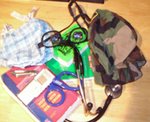
The neurological examination is the most fun to perform and write up. I found myself collecting an odd assortment of instruments to test sensations of hot and cold (I used capped test tubes filled with tap water); vibration (tuning fork), smell (alcohol pads, nail polish remover pads); color sensation (photos); light touch (feathers of various colors) and sharp versus dull (paper clip). I had a small bell and a small stuffed kitten as objects for my patients to name. I also collected a tape measure for lesions and an assortment of cotton swabs and tongue blades for cranial nerve testing.
I learned to perform my history while I was performing my physical examination. I would start with the head and ask about problems with headache, earache and vision. I would examine the eyes and nose while asking about sinus problems. I went from head to toe asking questions as I moved along. I always save invasive exams like pelvic and rectal for the end of the exam. While the patient is getting dressed, I would jot down my pertinent positive findings and spend the rest of the time chatting with the patient and explaining my findings. At this point, my preceptor would usually join me and we would discuss the treatment plans for the patient together.
The most important thing that I learned in this class was the value of communicating with your patient. I probably learned more from my patients than they learned from me. I learned to listen to their words and put their words and my physical findings into a cogent clinical plan for treatment. I also learned the importance of just getting to my patient’s fears, concerns, likes and dislikes. When a physician touches a patient, there is a relationship of trust that is begun. Your patient trusts that you will use everything that you have learned in biochemistry, anatomy, pathology, pharmacology and physiology to figure out what you can do to get them healthy and keep them healthy. There is a puzzle and the pieces must be fit together for the good of the patient.
I also came to appreciate the sanctity of the apprentice-mentor relationship that I had developed with my preceptor. In no other profession is that relationship so important than the attending physician/medical student. My preceptor was indeed a master and I was a very willing student. He led me through the maze of various patient encounters and kept me coming back for more. It was truly magical in many ways.
Finally, I mastered that opthalmoscope during the last week of my Physical Diagnosis class. I was quite comfortable with my exam and I appreciate the art of being able to make a diagnosis. While this class seemed to be quite intimidating at first, it became one the the sentinel courses in my medical school experience. After five plus years of practice and thousands of patients later, I wonder if my preceptor knows how many thousands of patients he has touched through all of his students.
05 August 2007
Gross Anatomy (Revisited)


01 July 2007
Orientation Week
Orientation Week usually starts out with some type of "check-in". In my case, the Dean of Students called names from a roll. We had previously been warned that if we were not present for roll call, our "seat" would be given to the next person on the wait list. Needless to say, everyone was present and accounted-for that morning. Following roll call, there was the obligatory introduction of the Deans. This was followed by a speech given by a speaker that was chosen by the second-year students the year before.
By the time the introductions and speeches were over, the greater part of the morning had disappeared. There was a meeting of your second-year advisers (second-year medical students) who would share their advice on navigating the curriculum. This meet-and-greet was filled with horror stories about certain professors and warnings about behaviors to avoid. With some of the tales of woe, I wondered how anyone survived the first year and made it into second year.
My own second-year adviser was a lovely but quite young lady. She was the daughter of a registered nurse and was very enthusiastic about all of the adventures that she had experienced in first year. She and her tight-knit group of friends, gathered us together and spoke to us (their advisees) as a group. We were able to get the benefit of a collective experience rather than single reports. This turned out to be a blessing. My second-year adviser also led me to her car where she presented me with a cardboard box of old exam, used and filled-in course syllabi and her books from first year. "I started putting this together for year after my first exams last year", she said almost apologetically. I was speechless but thanked her profusely. That box turned out to be one of the major keys to my success during my first year. I happily passed on her stuff and mine to my two advisees when I became a second-year student.
After our meetings with our second-year advisers, it was time to get our photographs done for the student directory. We lined up and had out photos taken by the medical photography service. Following the photo for the student directory, we were taken to the Student Services building for photo identification cards. Our physical examination papers were collected along with our immunization records as we moved from Student Services to student health. Once we had accepted admission to medical school, we were told to bring proof of immunization and undergo a physical examination by a physician. (My uncle took care of this for me, had his office staff copy my records and put together a nice package).
During the evening of our first day, we were bused and car-pooled to a local park where the second-year students had prepared a cookout for us. This was our first introduction to the wonderful world of "free-food" in medical school. Our first day of orientation ended around 8pm.
On the second day, we were introduced to our microscopes and course syllabi. Each of us was issued a microscope (if you didn't have your own as I did ) and were issued thick syllabi for Biochemistry, Gross Anatomy, Introduction to the Practice of Medicine and Psychiatry. In addition, we were given a couple of hours to purchase books (already furnished by my second-year adviser). We also had lockers issued (I could actually stand in my huge locker) where we could store our necessities. On this day, the student health department singled out students whose records were not complete and gave them strategies for getting their immunizations and records done. This meant downtime for me. At the end of the day, free pizza courtesy of one of the student organizations.
On the third day, which turned out to be a Thursday, we were treated to a morning meeting with Financial Aid and Student Organizations. The Student Organizations had set up tables with sign-up sheets for us to join groups. I signed up for the American Medical Association and new organization called "Students with Families" (a non-traditional student organization). The afternoon was spent organizing our class and electing temporary class officers. We elected temporary officers because we actually didn't know anyone and would elect permanent officers later in the year. I actually volunteered to become the Vice-President for Education in charge of note-service because I had some experience from graduate school with running a note service.
The Dean's Reception was held on the evening of the third day. This is where I met my best friend from medical school. Over the four years, we would share triumphs and tragedies but it was at this reception that we met the various Deans up close and shared a line or two of conversation. In addition, there was more free food and an opportunity to wear something other than our jeans and T-Shir's that had become our orientation outfit.
On our last full day of orientation, we had information sessions from the chairmen of various departments. This gave us an opportunity to mingle with the faculty. We were also introduced to the school's computing system and issued laptop computers if we didn't already own a suitable laptop. Again, that locker was getting full. For students who were not immune to Hepatitis B, there was the first in a series of three Hep B vaccination shots (thankfully, I could bypass this step too). On the evening of our last day of orientation, there was a White Coat Ceremony where we were cloaked in our white coats by graduates of our medical school and issued the Hippocratic Oath.
Orientation had taken the better part of a week. Many of us were not ready to just get down to the business of attending classes and adjusting to the course schedule. Our syllabi need to be filled in and mastered, our textbooks read and highlighted. On the next Monday, we would be "going live" in terms of our classwork.
Over the first week, I came to have a list of things that I could not do without. These things were carried in my backpack and spread on my table in front of me during lectures. These were:
- My laptop computer for downloading power-points and the professors writing on the "smart board".
- My pens of four colors: black for notes, red for emphasis, green for projects and blue for notes from the text book.
- My Easy Reader book stand that held my looseleaf notebook that contained pages from my textbooks that were cut and 3-hole punched.
- My highlighters in four colors: bright yellow, pink, green and blue.
- A micro tape recorder (now replaced by a digital tape recorder) for making sure I didn't miss anything if I fell asleep in class.
- A sweatshirt as the lecture room was always freezing even if the outside temperature was above 100F.
- My travel coffee mug and a thermos of fresh coffee (Starbucks was a short walk from the lecture hall).
- A liter-bottle of water (kept me awake in the afternoon).
- My Walkman (now replaced by an MP-3 player).
These were my daily companions during first and second year of medical school. Even today, I always read and study with my pens and highlighters handy. My Easy Reader book stand is also with me as is my Sony Viao laptop computer for making notes and reading the myriad of PDF documents that I have downloaded.
Other things that I would learn but not mentioned during Orientation Week, was not to worry so much about not doing well on my first set of exams. I more than passed every exam but I saw many of my classmates head into a "tail-spin" after receiving their first failing grades. On our first Gross Anatomy exam, 85% of the class failed the exam. For some students, this was their first failure ever and they had difficulty shaking it off and moving on. In my case, I remembered that my wonderful second-year adviser had said, "You are going to encounter something that will give you problems, ask for help and put your failures behind you fast.". She also encouraged me to help my fellow students who as she said, would "become colleagues that I would refer patients to in the future". She was right because the more I helped my fellow students, the higher my grades became.
We all survived that first semester but we lost a couple of students at the end of second semester. One of my classmates decided that he wasn't going to spend another moment doing that much studying for anything. Another had illnesses and just wasn't able to keep up with the material. In the end, we all experienced the molding that would mark us as physicians.
25 June 2007
White Coat Ceremony
There is usually a nationally recognized speaker - for my year is was Benjamin Carson, M.D., chief of pediatric neurosurgery at Johns Hopkins- who sets the tone of the entire program. I have heard White Coat Ceremony speeches by Former Surgeon General Jocelyn Elders and other nationally known physicians. Every time I attend one of these White Coat Ceremonies, I am reminded of why I went into medicine in the first place and the "humanism" of my practice.
Even today, in 2007, the infant mortality in Mississippi is higher than in many third-world countries. In New Orleans, many patients with chronic diseases such as hypertension and diabetes face an uphill battle to find adequate primary medical care for simple maintenance of their conditions after Hurricane Katrina wiped out many clinics in the poorer neighborhoods. In Appalachia, the complications from untreated hypertension have left many without renal function who have to rely on hemodialysis three times each week.
We still have a health care system in this country that shuts out large populations who either do not have jobs that provide health insurance or jobs with health insurance benefits that are woefully inadequate. Many of these people avoid seeing a physician when early intervention could likely make the difference between remaining healthy or progressing to a chronic state of illness that will be life-changing.
Obesity is rampant in all segments of our population yet the morbidly obese face discrimination and ridicule by hospital staff, physicians and large segments of society who see them as lazy and responsible for their condition. In most cases, morbid obesity comes from lack of access to foods that are lower in fat and higher in nutrition because of cost or lack of knowledge. After gaining a large amount of weight, even walking around the block becomes more than many of these people are able to achieve.
When I think about attending the White Coat Ceremony at my medical school this year, my focus will be on how we can raise the quality of delivery of health care across all segments of our society. It is my belief that preventive medicine needs to be practiced more than interventional medicine. The poor, the morbidly obese, and those who lack knowledge are among the most difficult patients that any physician will ever treat.
The morbidly obese are a rapidly growing segment of our collective patient populations with problems such as non-healing venous stasis ulcers, lymphatic dysfunction, obstructive sleep apnea, early congestive heart failure, depression, Type II diabetes of the young and predisposition to thromboembolism. Even a relatively minor surgical procedure such as an appendectomy becomes a major undertaking in a person who weighs more than 300 pounds let alone 400 - 500 pounds. I have watched my colleagues deliberately avoid treating morbidly obese patients who have sought their care because they didn't want to deal with the possible complications.
Morbid obesity is showing up in middle school, junior high and high school with some individuals weighing so much, they become unable to attend school. In the cases where these morbidly obese individuals are able to attend schools, many physical education classes are unable to accommodate these children who desperately need to learn how to exercise and eat properly in order to undo 200-300 pounds of weight. In most cases, these children do not need to be subjected to gastric bypass surgery but need simple education and good food choices along with making aerobic exercise a regular activity.
With every patient, we as physicians, need to look toward preventive medicine and patient education. To do otherwise, keeps us on a path where health care costs will continue to sky rocket and soon, too costly for most people to be able to afford. It is up to us, as physicians, to lead this country back to basic good health for every segment of our population.
25 May 2007
Study Skills Part II
First of all, today's my birthday and I have the day completely off. I have been basking in the warm sunshine (by the pool) and thinking about this post.
Study Skills
Learning Style
One of the most useful things that I did was figure out my learning style. I am a very visual learner. I love to color-code information and I never go anywhere without my different colored highlighters and multi-colored pens. When I am studying, I use my highlighters to circle information, rather than highlighting words. Each color has a particular significance such as blue represents the main headings, pink represents the words that must be defined and all important concepts are circled in yellow. Green is my check-off color as I check off things as I study. This lets me know what I have accomplished.
Visual learners like to sit in the front of the classroom for less distractions. During my first and second year of medical school, I sat on the end of the third row so that I could see. I was not a front-row person (too easy to get covered in saliva) and I would only sit in the back if I was doing something else (like reviewing another subject because I wasn't particularly interested in this lecture).
Aural learners will typically sit in the back. These folks thrive on hearing the information and are not easily distracted. They need a good seat where they can see if they need to but most of the time, they don't look up from their notebook or computer. Aural learners are good at pacing and reciting concepts back to themselves. They are also excellent study group members because they process information as quickly as they hear it. The biggest challenge for the aural learner is making sure that information gets into their "long-term" memory.
Many folks are a combination of both of the above. This is not a bad combination for medicine and medical school. As visual as I am, I tended to make drill tapes for listening when I am doing something like jogging on a treadmill or riding the subway. Sometimes it is nice to hear information organized rather than to keep staring at a page. I would often make a large concept map (on my white board) and then make a drill tape from that concept map.
Tools
Digital Tape Recorder
One of my best purchases was a digital tape recorder. This device enables me to record lectures, notes and thoughts and then download then to my computer. My device is the Olympus WS-100 which allows me to store up to 27 hours of recording. These files are stored as .wma files but I can easily convert them to mp3 for listening on my MP3 player.
Laptop Computer
My laptop accompanied me to class daily. I could download my instructor's power point lectures and have them ready for adding my notes. This was especially helpful for subjects like pathology and physiology. Couple the power points with digital recordings of the lecture or my own digital summaries and I had a visual and aural review. I purchased a motion detector alarm for my laptop so that it didn't develop "legs" and walk off.
Cut Text Books
I would take my textbooks to Kinkos after I had removed the front and back covers. I would have them cut the binding and punch three holes in the sheets so that I could place the pages in a three-ringed binder. I would removed only the pages that pertained to what I was studying for a particular lecture or week and place them in a separate (small binder) that was divided by subject. I would leave the rest of my textbook at home. My small 3-ring binder would have each subject for the day, the pages of text and the appropriate syllabus pages. I would preview each lecture the night before and add what I thought I would need for the day.
Multiple Highlighters
I love nice highlighters but I used them as I outlined above. I would circle things; highlight a single word or use them for checking things off. I really didn't do much highlighting in my textbooks. I kept a pencil box with my highlighters, colored pencils and pens ready for my use.
MP3 Player
This device is as necessary to my studying as my notes. I love to have some music playing in the background when I study. My player has video and radio so I can take a break, catch up on the news and listen to good radio when I am in the mood. I have my favorite songs for every mood and situation. My player is good for drowning out background noise such as subway noise. I generally keep the volume low so as not to damage my hearing.
Study Tactics
Sometimes I can pace and study. I take my notes and just recite to myself out loud. This is especially helpful when I don't understand something. Sometimes just listening to myself read the concept out loud or paraphrase it, can help me to remember it.
I also question myself or imagine how my instructor will question a particular concept. Some things just lend themselves to multiple choice questions. All of the following are branches of the external carotid artery EXCEPT. Other things lend themselves to True-False or Matching.
My attention span is about 50 minutes so I would set a kitchen timer for 50 minutes. I would study my notes for that 50 minutes and take a 10-minute break. On my break, I would get a drink, move around, get a breath of fresh air but I would do anything except continue to sit and look at a page of notes. When I returned from my break, my mind would be ready to focus.
In terms of avoiding distractions, I would study in Starbucks or study in the undergraduate library. I would be less likely to be interrupted in locations outside of the medical library or in a classroom at my medical school. I tended not to study at home because I wanted my home to be a sanctuary where I could completely relax. I never, never studied in the bedroom. My bed was for sleeping (or extra curricular activities) but not a place to study.
Finally, I got rid of the telly. This device can be a huge time-waster. If you have telly programs that you must watch, tape them and watch them when you have free time. I know that folks are hooked on Gray's Anatomy, ER and the like, but tape the show and set aside some time on a Saturday or Sunday to watch. This can be your reward for getting the week's studying done.
15 March 2007
Biochemistry Revisited

My prevaling theme in all medical school classes is to keep up with the material. I cannot emphasize this more because good medical students find themselves failing because something (illness, family illness, emergency) interferes with their studies and they fall far enough behind and are unable to catch up or keep up. Biochemistry can be one of the most "unforgiving" courses if you fall behind. This class ranks right up there with Gross Anatomy in terms of volume of subject matter. It is vitally important that you do everything that you can, not to fall behind. If you do fall behind, you must catch up the very next weekend. Again, weekends are catch up days so don't use weekdays to catch up. Go immediately to where the class is and keep moving until Saturday.
Biochemisty is the "chemistry " of large molecules. These molecules are proteins, lipids, carbohydrates and nucleic acids. Since you are dealing with chemistry, you have to remember the subject matter of chemistry. This includes polar versus nonpolar, molecular shape, molecular funtion and chemical reactions. Most of the biomolecules are composed of carbon, hydrogen, oxygen and nitrogen and thus you need to be fairly familiar with the chemistry and characteristics of these elements. You also need to be familiar with the effects of water, pH and electronegativity. Throw in some enzyme kinetics and some equilibrium chemistry and you have the basis of biochemistry. The rest is application of the above characteristics and principles.
Biochemistry is NOT organic chemistry though we are a "carbon-based" life form. You need to understand carbon in terms of its covalent bonding and simularity in electronegativity when it is hooked to hydrogen but get rid of sp3, sp2 and sp1 bonding, free radicals and all of those synthetic schemes that you memorized in organic chemistry. In biochemistry, you are studying how reactions take place not why these reactions take place. They are already there but you have to put them together. Most of the reaction pathways in biochemistry involve hydrolysis, dehydration, hydration, oxidataion and reduction. You also need to know enzyme catalysis and you will be largely set.
Carbohydrates are polyhydroxy (poly alcohol) aldehydes and ketones. Amino acids have the amino and carboxyl characteristics (weak acid and base) and nucleic acids are based on their sequences, formation and degration. Lipids are non-polar and thus have the simpliest chemistry and function. That's the essence of the biomolecules.
Now all of these biomolecules have pathways, locations and functions. You can sit down and rote memorize the pathways but it is far more effective to ask yourself, "What are the substrates of these pathways?" "Where is the pathway located?" "Why does the body need this pathway?" and finally "What are the products of this pathway?" From that lauching pad, you can look at the individual reactions and enzyme characteristices (oxidation, reduction, hydrolysis, hydration, dehydration) and figure out where the regulation points are found. "Is the body building up a macromolecule?" or "Is the body tearing down a macromolecule for storage, ATP production or production of reducing equivalents?".
Other subjects of biochemistry are signal transduction pathways, hormones and functional characteristics of important molecules like hemoglobin, collagen and elastin. You will also study post translational modifications of proteins and how these relate to their function. Always remember to link structure with function when you are studying macromolecules. Think about glycogen and its function as a storage form of glucose. Glycogen is made up of multiple molecules of glucose and thus the pathway for its formation and degradation is going to involve glucose molecules. You need to know where other sugars feed into this pathway (where they feed into glucose metabolism), etc. You need to know where glycogen is stored (muscle and liver) and what the regulatory points of glycogen synthesis and degradation are. After that, you can look at the individual reactions of glycogen synthesis and glycogen storage in relation to the regulatory points of each pathway.
Bottom line for biochemistry is that you need to see the "big" picture and fill in the details. Never lose complete sight of the ultimate reason why you are studying the details. This is why my method of scanning the syllabus at the beginning of the semester (gives you an overview of how the course is organized), pre-viewing the next days lecture and reviewing the previous day's lecture before you study and learn the present lecture is very important. Again, you have to organize the material so that you can learn it efficiently.
Finally, a good review book like Harvy & Champe's Biochemistry is good to have but it cannot be the major source of your study. The best use of this book (also known commonly as Lippincott's Biochemistry) can help you summarize things or put things together but cannot substitute for your class notes or text book. Review books do reviews and you cannot "review" what you have not "learned " in the first place. Don't make a major mistake of believing that you can memorize a review book and that is what you will need to do well in your coursework. Review books can be good adjuncts to study but cannot replace your text, syllabus and notes. You can use your review book as a means of pre-viewing your lecture but your syllabus and the objectives that it contains are you guides in mastery of the material.
There are loads of new terms that will be introduced to you in your medical biochemistry course. You do not need to have taken undergraduate or graduate biochemistry before medical school. If you have throughly mastered your undergraduate pre-med chemistry coursework (that is general chemistry and organic chemistry), you have more than enough tools to master medical biochemistry. Do not fall into the trap of taking an undergraduate biochemistry or graduate biochemistry course unless you have plenty of time to master these courses or a passionate interest in the subject matter. If your medical school requires undergraduate/graduate biochemistry, then you have to take the course to meet a pre-req but most medical students are able to do well and pass this course without a previous biochemistry course. Also, most organic chemistry texts contain a very nice introduction to biochemistry that will get you on your way.
Do not fear Biochemistry because like the rest of medical school, its mastery depends more on organization and diligent mastery. In that first week (as soon as you get the syllabus in hand), start making out your study schedule. Never go to class unprepared (you can at least skim the syllabus) meaning that you know what the important points of the lecture will be and you know what is in the book so you are not trying to listen to the lecture cold. Don't forget to review the previous lecture (you have already studied and learned it at this point) before you tackle study and learning of the present lecture. A review book is an adjunct to your lecture material and not a substitute. Use a review book to review and supplement your class lectures if you like.
07 March 2007
As Match Day Approaches...
During your third year of medical school, as you moved through your clinical rotations, you should have been collecting your letters of recommendation from your clinical preceptors. At my medical school, these letters were sent to the Dean of Students for inclusion in your file and made available for you to designate when you filled out your ERAS application. (ERAS is Electronic Residency Application Service). It was up to you to ask for the letters and up to you to make sure that the letters were in your file by the appropriate deadlines.
I had the added advantage of making sure that my personal statement, CV and letters were done very early. I had to apply for one of my away-rotations which had an early deadline. This rotation application needed the exact same content as my residency application so I was done long before I needed to be done. My application for this away rotation netted me a full-scholarship to cover travel costs and housing costs at my rotation location. During third year, investigate some possible away rotations that have scholarships attached. This does cut down on expenses during travel season.
As Match Day approaches, there is a tendancy to listen to all kinds of rumors that abound. Some people will try to say that you need 15 interviews in order to insure a match. If you are a marginal applicant to a competitive speciality, you might need 50 and still not match. If you are limited by geography and have a solid relationship established with a program, you actually only need one interview especially if you are a strong candidate for that program.
If you do not match, the Monday before Match Day, you will receive an e-mail that lets you know that you did not match. If you find that you are the recipient of this e-mail, you should contact your Dean's office immediately and find out what services are going to be availble for you during the Scramble.
The Scramble allows unmatched applicants to apply to any unfilled positions in any programs across the United States. In order to receive the list, you have to be unmatched, and in order to make sure that you application is ready to be faxed or e-mailed to programs with openings, you need to have all of your materials. You can print out a copy of your ERAS CV but you will need copies of your Dean's Letter and LORs which you should be able to get at your Dean's office. In addition, you need to have copies of your USMLE score reports and you need a copy of your personal statement.
A great advantage of being in your Deans office is that there are usually plenty of phone lines and fax machines available for you. If a program has an opening, they usually notify Dean's offices and your Dean can speak directly to a program director on your behalf. In any event, scramble from your Dean's office if at all possible. You can also find plenty of great classmates to help you man the fax machine and speak to program directors for you. (I helped a couple of classmates scramble and thus I learned loads about the process). Another advantage of being in the Deans office is that the Dean gets the unfilled list 30 minutes before it is available to the unmatched candidates. This gives you a 30-minute head start on getting your materials loaded in the fax machine and ready to go at nooon.
If you matched, you have to wait another three days to find out where you have matched. This can be more unnerving than finding finding out that you didn't match. On Match Day, many people have so much emotion pent up that they end up crying or depressed. I can tell you that as soon as you find out where you are going, you need to start looking for a place to live unless you have interviewed at places in the same location as your medical school and know that you don't have to move.
My medical school held a Long White Coat Ceremony on Match Day. On that day, we all received letters that told us where we would be going. At noon, we could open those letters and thus, we waited until everyone had letter in hand. We also received a Long White Coat with our names and the specialty that we had matched into. For some folks, they didn't know the specialty so they ended up with a nice long white coat that had their name and M.D. In any event, it was a great ceremony. We all open champagne and celebrated for the rest of the day. The first and second year students got the afternoon off so that they could participate in out fun too. I must say, that every year, I always enjoyed Match Day but I enjoyed it more when I was the "Matchee".
Match Day is a time of high emotions and expectations. It's far more charged than graduation day. On graduation day, everyone is just happy to have the whole situation over and done with. On Match Day, the anticipation is very high and we really do not know what to expect. The whole Match algorithm makes little sense and it is difficult to know why you ended up in the position that you ended up in. It's great to get your top choice but ask anyone who has scrambled and they will tell you that it is good to get any match at all. If you planned on going into a competitive specialty and found that you did not match, it can be pretty unsettling to end up in a preliminary position in a town or city that you did not plan to move to with the prospect of going back into the Match next year.
I have to say that going into the Match for fellowship is much better than residency. If I don't match into a fellowship, then I know for sure that I at least will be able to practice my specialty. It's a small victory but it's a victory.
21 February 2007
Age and Medicine
I am a person of ideas and questions. I am always looking for a new "take" on a problem or some new aspect to an old problem. I was always curious about anything and everything that had to do with observations of the world. My Mum noticed as early on, when I was a toddler, that I could amuse myself by examining the world around me. I started out with anything that was placed in my hands and from there proceeded to catalog all of the plants in our gardens on the grounds of our farm.
She said that even before primary school, I would spend countless hours watching frog's eggs develop in the stream near the back of our house or I would sleep in the barn with my father when it was time for one of the mares to foal so that I could be awake for the birth. Our farm provided a living laboratory where I honed my powers of observation. In addition, the Encyclopedia Britannica, a gift from my father, provided a wealth of information at my fingertips that encouraged more observations.
One of my first "experiements" was the isolating Belladona, a cholinergic stimulator, from the May Apple Plants that grew wild in the fields. I ground up the plants and did the extraction following instructions from a scientist friend who lived nearby. He was totally surprised when I was able to obtain small amounts of atropine from the plants. He knew that I had succeeded when I appeared at his doorstep with dilated pupils at the age of seven. I guess I was on my way to being a chemist.
I was also intrigued when my Mum would kill and evicerate a chicken for dinner. It wasn't the meat that was of prime interest to me but the dissection of the heart and the identification of the structures in the heart. I dissected liver, made slides and examined the tissues with my small light microscope that had a mirror as a light source. I even used iodine as my primary stain for many tissues that I sectioned from the entrails of those chickens.
When I headed off to university, post secondary school at the age of 15, I didn't realize that by being as young as I was, that I was a bit different from my classmates who were all 18. To me, it was three years but to them, it was a generation. I spent most of my "downtime" hanging out with a couple of mates who were from New England. We listened to music and solved most of the world's problems from our limited perspectives. I also had a part-time job in the chemistry laboratory preparing experiments and making compounds. From atropine to nickel-complexed bioorganic substances. I had arrived.
I decided at the end of my freshman year, that I would be a research scientist. I was interested in analytical chemistry and getting to know all of the instruments in the lab. They were my friends and companions for most of the day. In the evenings, I would accompany my research advisor and his wife to the symphony (I was a great fan of Baroque music). I also played any wind instrument and wrote some short compositions. Even to this day, there is no genre of music that I do not enjoy. My music collection contains everything from classical to rap to country to jazz to new age to indie. I love to listen to everything.
When I was a junior, I had already decided that analytical biochemistry was going to be my career. The science of large biomolecules, especially proteins and their analysis, was of great interest. I had been analyzing some mushroom toxins (see, I really love those plants) and moved into working with snake venoms. These venoms were my first venture into the world of systemic pharmaceutical effects. I loved what I was working on.
I also worked in the lab of an analytical chemist who further nurtured my interests in just figuring out how things worked. He was a pioneer of computer modeling and was adept at making very complex mathematical descriptions and models of energy changes in the manner that compounds interacted with each other. I loved working with the graduate students and seeing how his ideas and theories developed. He also make me understand how mathematics was a great tool of the scientist.
My interest in medicine was awakened just before I began to study for my comprehensive exams in graduate school. My best friend in the graduate program was a Brazilian neurosurgeon who was working on his Ph.D in Biochemistry. We studied together and shared information often. In addition, we talked about medicine and the differences in practice between the United States and Brazil. Some of the best times were when he would bring his 8-year-old daughter to the lab so that she could hang out with us. She reminded me of myself at her age and what could be better than hanging around in the lab.
Right after comprehensives and defense in June, I knew that I was scheduled to take the MCAT that August. I had already filed my AMCAS application and had designated six schools (including the one where I was a graduate student). I also knew that I would be evaluated later because of the August MCAT but I didn't have a choice. It was in May that I even decided to apply to medical school so I had already missed the April MCAT. I would file everything that I could and then have my scores catch up with the rest of my application.
Well, the rest was done. I took the MCAT and the application was done. I was so busy working on my lectures for the next year, that I didn't really expect that I would get into medical school. After all, I was 45 year old but had tons of energy and an interest in everything. I recall reading one of my letters of recommendation and wondering if I was even suited for the practice of medicine. My letter writer, a cardiologist, wrote of my incredible insight into pathology and physiology of diseases. For me, these were just more things to study, explain and catalog, something that I had been doing all of my life.
My MCAT scores were released to my prospective medical schools that October. I had my first invitations to interview by the end of October and went on my first interview the first week in November. Most of the other folks who had come to interview thought I was faculty and were fairly surprised when I said that I was an applicant. One guy even laughed because he said that no medical school would "waste a seat" on someone that was as old as me. This comment was a source of humor throughout the entire process when I received the first of my six acceptances.
As I went through medical school, I noted few differences between myself and my younger colleagues. I was the third oldest person in my class. I was single so I would party with the single folks but I enjoyed the kids of my classmates because children are just neat. There are no sharp divisions between non-traditional and traditional medical students. We all have to master the same amount of material and just get the job done. Medical school is a great equalizer.
As I headed into residency, I still found little difference between myself and my younger colleagues. My gray hair (been gray since age 24 like Taylor Hicks) afforded me instant rapport with my patients but I was no more tired after a night on call than my younger colleagues. I slept little, answered every page, and always loved to operate through the night with one of my chief residents. As soon as I hit the OR, I was always wide awake and ready to work.
The long hours now make me appreciate little amenities like sitting in the hot tub or going for an early morning swim before getting to the hospital on weekends for that extra energy boost. I love the world of getting to the hospital before the sun comes up and seeing the progress of my patients. I also love reading and discovering new treatments and therapies.
If nothing else, my age allows me to appreciate this great platform from which I can observe the world. I just doing the same things that I did back when I cataloged all of those plants in our backyard.
05 February 2007
What I learned from BK
When I was a pediatric respiratory therapist, my specialty was the respiratory care of the patients in the Pediatric Intensive Care Unit. I preferred pediatric respiratory patients because they were unlikely to continue smoking after spending days in the intensive care unit or hospital. I also liked the challenge of delivering medications by inhalation to children. I had to gain their trust and deliver their medications at the same time. Often this would take the form of having a pediatric post op patient blow feathers across a table or perform incentive spirometry and light up a clown's nose. I also enjoyed the artistry needed to mechanically ventilate children of various sizes and needs. Pediatric Critical care was a wondeful method of practicing respiratory therapy and seeing respiratory physiology in action on a daily basis.
One of my most memoriable patients was a child who had been born prematurely to a set of much older parents. BK was born at 24 weeks gestation (normal is 38-40 weeks) and had spent the first five months of their life in the neonatal intensive care unit. At the time (late 1980s) inhaled pulmonary surfactanct had not been available for administration into children born this early. As a result, BK, who had been on mechanical ventilation because of extreme lung immaturity, developed bronchopulmonary dysplasia.
Children with bronchopulmonary dysplasia (BPD), a result of ventilation with relatively high levels of positive pressure, developed changes in their lungs that closely resembled the changes seen in adult patients with emphysema as a result of smoking many years. These children were chronically susceptible to pneumonias and were often oxygen-dependent, and bronchospastic when they were weaned from positive pressure ventilation. With the advent of artificial pulmonary surfactanct, BPD, is far less common today than in the late 1980s.
BK had been weaned from mechanical ventilation but remained oxygen dependent. This child also had problems with growth and nutrition but had a spirit that was a thousand times larger than its tiny body. BK also had parents who loved every second of their child's existance, even the touch-and-go, up-and-down character of getting a small premature infant into the catch-up phase of life. They had spent countless hours of the first five month's of their child's life at the bedside in a neonatal intensive care as they saw the sheer determination of this child's will to live.
BK was discharged from the hospital at age 5 months. Going home meant going home with an oxygen tank, respiratory medications and an infant apnea monitor. It also meant careful attention to feedings and nutrition but BK's parents were joyful and happy to have their child home. BK also had two nurses that assisted Mom with daily care and feedings.
BK was home for three weeks before a viral upper respiratory infection called Respiratory Syncitial Virus or RSV caused increased work of breathing and a trip to the pediatrician's office. Later BK was admitted to my Pediatric Intensive Care Unit. Because of the highly infectious nature of RSV, BK was placed in an isolation room and placed back on mechanical ventilation with administration of a medication to treat the RSV infection.
When I first saw BK, I saw a tiny child with huge blue eyes that saw straight into my heart. This child never smiled but took in my every move from a vantage point in an isolette. At first, my care of BK consisted of delivery of the medication to treat the viral infection. Later, my care consisted of delivery of inhaled medications and extra oxygen within the isolette. At times, BK needed to have nebulation therapy every hour.
During our 15 minute treatment sessions, I would gently support BK's head and chat with the child through the isolette. Most six-month-olds will mirror your smile and heartily respond to your touch but not BK. Those huge blue eyes would blink and watch but no smile. For two weeks, I spent most of my shift taking care of BK in terms of the delivery of respiratory care. In those two weeks, I developed a great relationship with BKs mother and father who doted on their child at every turn.
After three weeks, BK was able to come out of the isolette for "love and hug" therapy by Mom. It was a wonder to see the great relationship between Mom, Dad and little BK. Still those huge blue eyes followed everything and everyone. If BK had any respiratory difficulties, I was close by and ready to administer what was needed. BK also gained some weight and seemed to be thriving.
One afternoon, we had difficulty keeping BK's oxygen saturation levels up. At this point, the "holding and hugging" sessions had to be sharpy curtailed. Finally, BK needed to go back on the pediatric ventilator for some positive pressure therapy. Still those huge blue eyes never betrayed the struggle that this tiny child was going though. BK's Mom brought in nursery rhymes that she had taped and music for the isolette to drown out the sound of the positive pressure.
After three days, little BKs continued to deteriorate and finally late one afternoon, BKs parents made the heartbreaking decision that their child would not be subjected to mechanical ventilaton again. At this point, we delivered almost continuous nebulization therapy which provided some decreased in BK's struggle to breath. Finally, we placed BK in Mom's and Dad's arms. At this point, those huge saucer blue eyes were peacefully closed and little BK breathed the last breath surrounded by family and extended family of the PICU who had grown to love this little warrior.
Five years later, when I dropped in to visit the pediatric critical care pulmonologist that I had worked with so closely when I was covering the pediatric intensive care unit, we took a tour of the new pediatric hosptial and the new units. By this time, I had left respiratory therapy had had just received my first acceptance to medical school. I had wanted to surprise my pediatric pulmonologist and he was just so proud of me. As we walked by the doors of the old pediatric intensive care unit, now housing offices, we both looked at the last room at the end of the hall and said, "BK's room" at the same time.
I learned so much in the six weeks that I knew BK and family. I don't know if BKs parents every realized how much their child had touched all of us and how we never forget the struggles of such a young child. BK did not see a first birthday but brought so much joy even though we never saw a smile.
To this day, my patients and their struggle keep me going in that 30th hour. My patients never "give up" and I never "give up" on my patients. This job is difficult but to have a chance to meet and experience patients like BK, every difficult task is work the effort.