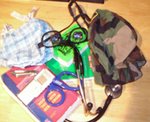
I thought I would take this opportunity to spend some time listing some helpful hints to moving through your surgical clerkship seamlessly. Surgery is one the the third-year “required” clerkships during medical school. It doesn’t matter if you are interested in surgery or not, you still need to master this important portion of your medical school training. Many student look at surgery as something to be dreaded but this approach will not serve you well in surgery (or any class or clerkship). It is most useful to go into this clerkship with an open mind and a willingness to learn and master what you need from this required clerkship to become an excellent physician.
As a third-year surgical student, you will be required to keep honing and using your Physical Diagnosis skills. Your acumen with the abdominal history and physical exam will be sharpened. In addition, you can pick up some valuable procedures and skills that will serve you well on any rotation regardless of specialty such as scrubbing and interaction with a sterile field, central venous access, suturing and simple skin closure. As a third-year surgical student, you ARE part of the team and you can either “carry your weight” or “drop the ball” but 95% of what you get out of this and any clinical rotation will be directly related to your attitude. In short, open your mind (and your ears) so that you get the most for your experience and money.
Surgical patients may present at any time of the day and from various sources such as the clinic, the emergency department or from your preceptor’s private office. In general, you will be assigned to a team (trauma, general surgical, surgical specialty) where you can expect patients from the above sources. You will be expected to take overnight “call” along with the interns and residents since many surgical patients will present in the middle of the night with emergencies. Your surgical clerkship is a very nice opportunity to interact with the “late-shift” personnel in various departments such as radiology, lab and nursing so that you can learn who to see when you need to get something done or when you need information.
The intern (PGY-1) is your first point person. Try to learn the scope of their role on the surgical team and how you can assist this person. The intern will usually be the busiest person but remember, that regardless of specialty, in two years, you will be in their position. Watch how the intern performs their job and learn how to function as an intern. During your fourth year “acting” internships or (AIs), you will want to have mastered time management and multi-tasking. It is great to have a good relationship with your intern and learn as much as possible and become as helpful as possible.
Being helpful does not mean that you become the person to “go fetch” coffee, radiographs and laundry but it does mean that you know more about your assigned patients than anyone on the team. You will pick up three to four patients on each rotation (more if you are efficient) that you will follow through their hospital course. It is your responsibility to follow-up on all orders, consults, labs and studies on your patient. The intern on your service will be covering every patient on the service so the more closely you can work with your intern the better. This means reading in your surgical text about your patients’ pathology and the surgical treatment of that pathology. This means reviewing and following up on every order, medication, dressing change and complication.
Typically, you will enter the hospital early in the morning to pre-round. In some cases, pre-rounding means heading over to a computer to gather any laboratory work, checking in with the overnight (post-call team) and reading any nurses notes/checking with the nurses who have been on duty overnight. Armed with this information, you should quickly check the previous 24 hours of vitals, intake and output. Finally (if this is allowed), you should do a quick (no more than 5-10-minute) focused physical exam on your patient. Armed with this information you can prepare your AM presentation which should make up the bulk of your AM progress note. If you encounter any problems, discuss these with your intern and be prepared to present this patient to the AM rounding team.
On AM rounds, the chief (or most senior resident) will listen to your report presentation. If you are not ready, the intern will present the patient but you should step up and have your presentation ready. Other good things to do will be to be at the bedside with things like extra bandages, scissors and tape if needed for your patient. I learned very early, how to “peek” under a dressing without removing it. In general, dressings may be removed at 48 hours but never remove a dressing unless you have cleared it with your intern. You can peek and examine the wound to figure out if it is intact. Also, be sure to note any dressing drainage (dry or fresh) and note if nursing has been reinforcing the dressing overnight (or since surgery). If you are on the vascular service, one of your tasks will be to “take down” your patient’s dressing so that the team may examine the wounds on rounds. You may be asked to replace the dressing (great skill to learn) by your resident. Get help from the intern (or nursing) if you have difficulty or questions with this.
If you have read about your patients’ pathology and surgical treatment, you should know (or learn) what complications to look for and how to monitor your patient. For example, you should know what to do if your patient develops a post-op fever at 8 hours, 24 hours, 36 hours or 72 hours. You should have a differential of things to check and monitor. You should know what to do if your patient has an extreme amount of pain that is unrelieved by their current analgesic regimen. You should know how to monitor electrolytes and when to replace them. You should keep your intern informed of the results of all consultants and any studies that have been ordered. In short, you micromanage the patient and you keep on top of things.
Another wonderful experience of your surgical clerkship is assisting in the operating room. I am going to devote an entire essay to this very important task. You will be performing tasks such as retracting tissue, driving camera (on laparoscopic cases) and closing skin. Do not underestimate the importance of these duties and do not underestimate the importance of thoroughly mastering the surgical anatomy of the cases that you scrub. Here again, is a great opportunity for you to show what you know and hone what you learned in Gross Anatomy and physiology. During many of your cases, you are going to be questioned by the senior resident/attending surgeon about the anatomy, physiology or procedure on which you are assisting. I will give you some tips to make you shine and guide you through this process.
Textbooks for your surgical clerkship: The big “three” texts for General Surgery are Greenfield’s, Sabiston’s and Schwartz. You need not purchase these texts (even if you are going into surgery) as they are readily available in your library (medical school or hospital) for research and consultation for presentations and projects. My favorite clerkship text is the Lawrence text for both General Surgery and the text for the Surgical Specialties. This book (or one like it) should constitute the bulk of your reading on this clerkship. In addition, you may want to invest in a smaller “pocket-type” book such as Surgical Recall that you can keep in your pocket for downtime during cases. Other good books in addition to your main clerkship text (Lawrence or something else) are NMS Surgery and NMS Surgery Casebook which contain excellent and compact information.
With Lawrence, NMS and the NMS Casebook, I cut the bindings off [FedEx/Kinko’s] and placed these in binders. I could then take pages with me and keep up with my reading between cases. The pages were held together by a ring and would fit in my jacket pocket or back pocket of my scrubs. I always had something to read with me be it Surgical Recall or my pages. This was the easiest way to keep reading and prepare for your surgical shelf exam. Surgical Recall was great for pointing out the surgical anatomy, surgical instrumentation and other answers to “pimp” questions for a particular procedure or pathology.
In my next essay, I will review scrubbing and assisting in the OR. In addition, I will comment on being a great third-year on call and keeping yourself “in the game” when you are exhausted and ready to “give up”. In my last essay on the Surgical Clerkship, I will point out some strategies for when things go wrong and how to prevent getting into situations where things can go wrong.
Showing posts with label success in medical school. Show all posts
Showing posts with label success in medical school. Show all posts
10 August 2007


15 March 2007
Biochemistry Revisited

I thought I would spend a bit of an essay discussing the nuts and bolts of Biochemistry. This class is usually taken along with Gross Anatomy and thus it can be a problem for some students.
My prevaling theme in all medical school classes is to keep up with the material. I cannot emphasize this more because good medical students find themselves failing because something (illness, family illness, emergency) interferes with their studies and they fall far enough behind and are unable to catch up or keep up. Biochemistry can be one of the most "unforgiving" courses if you fall behind. This class ranks right up there with Gross Anatomy in terms of volume of subject matter. It is vitally important that you do everything that you can, not to fall behind. If you do fall behind, you must catch up the very next weekend. Again, weekends are catch up days so don't use weekdays to catch up. Go immediately to where the class is and keep moving until Saturday.
Biochemisty is the "chemistry " of large molecules. These molecules are proteins, lipids, carbohydrates and nucleic acids. Since you are dealing with chemistry, you have to remember the subject matter of chemistry. This includes polar versus nonpolar, molecular shape, molecular funtion and chemical reactions. Most of the biomolecules are composed of carbon, hydrogen, oxygen and nitrogen and thus you need to be fairly familiar with the chemistry and characteristics of these elements. You also need to be familiar with the effects of water, pH and electronegativity. Throw in some enzyme kinetics and some equilibrium chemistry and you have the basis of biochemistry. The rest is application of the above characteristics and principles.
Biochemistry is NOT organic chemistry though we are a "carbon-based" life form. You need to understand carbon in terms of its covalent bonding and simularity in electronegativity when it is hooked to hydrogen but get rid of sp3, sp2 and sp1 bonding, free radicals and all of those synthetic schemes that you memorized in organic chemistry. In biochemistry, you are studying how reactions take place not why these reactions take place. They are already there but you have to put them together. Most of the reaction pathways in biochemistry involve hydrolysis, dehydration, hydration, oxidataion and reduction. You also need to know enzyme catalysis and you will be largely set.
Carbohydrates are polyhydroxy (poly alcohol) aldehydes and ketones. Amino acids have the amino and carboxyl characteristics (weak acid and base) and nucleic acids are based on their sequences, formation and degration. Lipids are non-polar and thus have the simpliest chemistry and function. That's the essence of the biomolecules.
Now all of these biomolecules have pathways, locations and functions. You can sit down and rote memorize the pathways but it is far more effective to ask yourself, "What are the substrates of these pathways?" "Where is the pathway located?" "Why does the body need this pathway?" and finally "What are the products of this pathway?" From that lauching pad, you can look at the individual reactions and enzyme characteristices (oxidation, reduction, hydrolysis, hydration, dehydration) and figure out where the regulation points are found. "Is the body building up a macromolecule?" or "Is the body tearing down a macromolecule for storage, ATP production or production of reducing equivalents?".
Other subjects of biochemistry are signal transduction pathways, hormones and functional characteristics of important molecules like hemoglobin, collagen and elastin. You will also study post translational modifications of proteins and how these relate to their function. Always remember to link structure with function when you are studying macromolecules. Think about glycogen and its function as a storage form of glucose. Glycogen is made up of multiple molecules of glucose and thus the pathway for its formation and degradation is going to involve glucose molecules. You need to know where other sugars feed into this pathway (where they feed into glucose metabolism), etc. You need to know where glycogen is stored (muscle and liver) and what the regulatory points of glycogen synthesis and degradation are. After that, you can look at the individual reactions of glycogen synthesis and glycogen storage in relation to the regulatory points of each pathway.
Bottom line for biochemistry is that you need to see the "big" picture and fill in the details. Never lose complete sight of the ultimate reason why you are studying the details. This is why my method of scanning the syllabus at the beginning of the semester (gives you an overview of how the course is organized), pre-viewing the next days lecture and reviewing the previous day's lecture before you study and learn the present lecture is very important. Again, you have to organize the material so that you can learn it efficiently.
Finally, a good review book like Harvy & Champe's Biochemistry is good to have but it cannot be the major source of your study. The best use of this book (also known commonly as Lippincott's Biochemistry) can help you summarize things or put things together but cannot substitute for your class notes or text book. Review books do reviews and you cannot "review" what you have not "learned " in the first place. Don't make a major mistake of believing that you can memorize a review book and that is what you will need to do well in your coursework. Review books can be good adjuncts to study but cannot replace your text, syllabus and notes. You can use your review book as a means of pre-viewing your lecture but your syllabus and the objectives that it contains are you guides in mastery of the material.
There are loads of new terms that will be introduced to you in your medical biochemistry course. You do not need to have taken undergraduate or graduate biochemistry before medical school. If you have throughly mastered your undergraduate pre-med chemistry coursework (that is general chemistry and organic chemistry), you have more than enough tools to master medical biochemistry. Do not fall into the trap of taking an undergraduate biochemistry or graduate biochemistry course unless you have plenty of time to master these courses or a passionate interest in the subject matter. If your medical school requires undergraduate/graduate biochemistry, then you have to take the course to meet a pre-req but most medical students are able to do well and pass this course without a previous biochemistry course. Also, most organic chemistry texts contain a very nice introduction to biochemistry that will get you on your way.
Do not fear Biochemistry because like the rest of medical school, its mastery depends more on organization and diligent mastery. In that first week (as soon as you get the syllabus in hand), start making out your study schedule. Never go to class unprepared (you can at least skim the syllabus) meaning that you know what the important points of the lecture will be and you know what is in the book so you are not trying to listen to the lecture cold. Don't forget to review the previous lecture (you have already studied and learned it at this point) before you tackle study and learning of the present lecture. A review book is an adjunct to your lecture material and not a substitute. Use a review book to review and supplement your class lectures if you like.
My prevaling theme in all medical school classes is to keep up with the material. I cannot emphasize this more because good medical students find themselves failing because something (illness, family illness, emergency) interferes with their studies and they fall far enough behind and are unable to catch up or keep up. Biochemistry can be one of the most "unforgiving" courses if you fall behind. This class ranks right up there with Gross Anatomy in terms of volume of subject matter. It is vitally important that you do everything that you can, not to fall behind. If you do fall behind, you must catch up the very next weekend. Again, weekends are catch up days so don't use weekdays to catch up. Go immediately to where the class is and keep moving until Saturday.
Biochemisty is the "chemistry " of large molecules. These molecules are proteins, lipids, carbohydrates and nucleic acids. Since you are dealing with chemistry, you have to remember the subject matter of chemistry. This includes polar versus nonpolar, molecular shape, molecular funtion and chemical reactions. Most of the biomolecules are composed of carbon, hydrogen, oxygen and nitrogen and thus you need to be fairly familiar with the chemistry and characteristics of these elements. You also need to be familiar with the effects of water, pH and electronegativity. Throw in some enzyme kinetics and some equilibrium chemistry and you have the basis of biochemistry. The rest is application of the above characteristics and principles.
Biochemistry is NOT organic chemistry though we are a "carbon-based" life form. You need to understand carbon in terms of its covalent bonding and simularity in electronegativity when it is hooked to hydrogen but get rid of sp3, sp2 and sp1 bonding, free radicals and all of those synthetic schemes that you memorized in organic chemistry. In biochemistry, you are studying how reactions take place not why these reactions take place. They are already there but you have to put them together. Most of the reaction pathways in biochemistry involve hydrolysis, dehydration, hydration, oxidataion and reduction. You also need to know enzyme catalysis and you will be largely set.
Carbohydrates are polyhydroxy (poly alcohol) aldehydes and ketones. Amino acids have the amino and carboxyl characteristics (weak acid and base) and nucleic acids are based on their sequences, formation and degration. Lipids are non-polar and thus have the simpliest chemistry and function. That's the essence of the biomolecules.
Now all of these biomolecules have pathways, locations and functions. You can sit down and rote memorize the pathways but it is far more effective to ask yourself, "What are the substrates of these pathways?" "Where is the pathway located?" "Why does the body need this pathway?" and finally "What are the products of this pathway?" From that lauching pad, you can look at the individual reactions and enzyme characteristices (oxidation, reduction, hydrolysis, hydration, dehydration) and figure out where the regulation points are found. "Is the body building up a macromolecule?" or "Is the body tearing down a macromolecule for storage, ATP production or production of reducing equivalents?".
Other subjects of biochemistry are signal transduction pathways, hormones and functional characteristics of important molecules like hemoglobin, collagen and elastin. You will also study post translational modifications of proteins and how these relate to their function. Always remember to link structure with function when you are studying macromolecules. Think about glycogen and its function as a storage form of glucose. Glycogen is made up of multiple molecules of glucose and thus the pathway for its formation and degradation is going to involve glucose molecules. You need to know where other sugars feed into this pathway (where they feed into glucose metabolism), etc. You need to know where glycogen is stored (muscle and liver) and what the regulatory points of glycogen synthesis and degradation are. After that, you can look at the individual reactions of glycogen synthesis and glycogen storage in relation to the regulatory points of each pathway.
Bottom line for biochemistry is that you need to see the "big" picture and fill in the details. Never lose complete sight of the ultimate reason why you are studying the details. This is why my method of scanning the syllabus at the beginning of the semester (gives you an overview of how the course is organized), pre-viewing the next days lecture and reviewing the previous day's lecture before you study and learn the present lecture is very important. Again, you have to organize the material so that you can learn it efficiently.
Finally, a good review book like Harvy & Champe's Biochemistry is good to have but it cannot be the major source of your study. The best use of this book (also known commonly as Lippincott's Biochemistry) can help you summarize things or put things together but cannot substitute for your class notes or text book. Review books do reviews and you cannot "review" what you have not "learned " in the first place. Don't make a major mistake of believing that you can memorize a review book and that is what you will need to do well in your coursework. Review books can be good adjuncts to study but cannot replace your text, syllabus and notes. You can use your review book as a means of pre-viewing your lecture but your syllabus and the objectives that it contains are you guides in mastery of the material.
There are loads of new terms that will be introduced to you in your medical biochemistry course. You do not need to have taken undergraduate or graduate biochemistry before medical school. If you have throughly mastered your undergraduate pre-med chemistry coursework (that is general chemistry and organic chemistry), you have more than enough tools to master medical biochemistry. Do not fall into the trap of taking an undergraduate biochemistry or graduate biochemistry course unless you have plenty of time to master these courses or a passionate interest in the subject matter. If your medical school requires undergraduate/graduate biochemistry, then you have to take the course to meet a pre-req but most medical students are able to do well and pass this course without a previous biochemistry course. Also, most organic chemistry texts contain a very nice introduction to biochemistry that will get you on your way.
Do not fear Biochemistry because like the rest of medical school, its mastery depends more on organization and diligent mastery. In that first week (as soon as you get the syllabus in hand), start making out your study schedule. Never go to class unprepared (you can at least skim the syllabus) meaning that you know what the important points of the lecture will be and you know what is in the book so you are not trying to listen to the lecture cold. Don't forget to review the previous lecture (you have already studied and learned it at this point) before you tackle study and learning of the present lecture. A review book is an adjunct to your lecture material and not a substitute. Use a review book to review and supplement your class lectures if you like.
Subscribe to:
Posts (Atom)