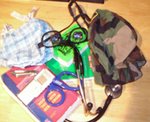
Typical Wound Rounds
It was one of those typical wound rounds days at our VA Hospital. We made our (the complete vascular surgical team) over to the long-term care wing of the hospital to do our weekly check of patients who didn't have formal vascular clinic appointments or who were bedridden with chronic wounds. The mid-level practitioners would put names of patients on a list at the nurses station for us to check. The patients who were ambulatory or wheel-chair bound would return to their rooms so that we could check them as we made our way down a T-shaped hallway with two long wings. The entire process generally took from 2-4 hours depending on how many patients to see and how extensive the wounds were and what care was needed.
The hallways
Most of the rooms down these hallways were semi-private (2 vets to a room) with a ward (4 vets to a room) at the proximal ends. At the end of the hallway were the private rooms for those vets who were in isolation for infections or for those who were too loud or ventilated and would not be amenable to sharing a room with another vet. The rooms at the far end of the hallway, though private, had views from the window that rivaled any 4-star hotel. They overlooked the front grounds of the hospital and the baseball diamond. Flying in the breeze was the state flag, the POW-MIA flag and the flag of the United States. The entire VA complex sat upon a hill that overlooked the surrounding town and mountains in the distance. No matter what time of year, the views were spectacular and I always paused to admire nature's show for these men who had given so much.
Chronic Wounds
We made our way from room to room. Many of these patients were post toe amputations and needed wound checks. Others were diabetic with foot ulcers from poorly fitting shoes or injuries that they could not feel and thus the wounds had become infected. Many of the vets were long-time smokers and diabetics with peripheral vascular disease from smoking and neurovascular disease from their diabetes. Some were despirately trying to "keep their feet" while others had both lower extremities amputated starting with the toes, then the feet and finally the leg above the knee. With each room change, there came a new challenge or a new evaluation. We removed dressings, evaluated vascular supply and made recommendations for each patient. With each week, I grew to know these patients and to learn to predict whether the wounds would heal, or an intervention was needed, or progression to limb amputation. Sometimes it wasn't wonderful to tell a patient that he would lose his foot but a good amputation with a well-healed stump could mean a return to ambulation and increased freedom. It was the progression of things each week.
Moving toward the end of the hall
This week, we decided to divide the duties with the interns doing post op checks and the more senior residents examining those patients who needed evaluation for possible surgical interventions. I elected to see the last two patients who were bedridden and in isolation for MRSA (meth resistant stap aureus). I knew that these guys had extensive wounds that would take some time inspect, debride and re-dress. I loaded my pockets with enough bandages for the dressing change and left my coat on the cart outside of the door as I donned the yellow isolation gown, a mask , gloves and shoe covers. I greeted my first patient and set to work removing the old dressings. We had ordered that dressings be changed every six hours on this patient but it was clear that his dressings were being changed daily instead of three times daily. How was this wound going to heal? It's the wet to dry dressings that debride the wound and help to clear the necrotic tissue that would promote healing. I chatted with "George" as I completed the inspection and dressing change. I left my initials, the date and time on the outside of the dressing. If this was still here in the AM (I had planned to stop in early and check), I would be writing an incident report. If George was to keep his leg, this dressing needed to be changed. For George, a very pleasant gentleman who was post stroke, this was limb salvage.
The last room
I moved into Fred's room after I cleaned up and washed my hands from George's wounds. It was now well past dinner time and the sun was low in the sky. Fred's bed was facing the beautiful setting sun. Fred had congestive heart failure, diabetes and emphysema. He was a small thing gentleman with bright blue eyes that still held a twinkle when you greeted him with "Semper Fi". Fred had been a marine and by his looks, a real scrappy guy. I always chatted about baseball with him and he loved the company. Sometimes he sang "Take Me Out to the Ballgame" off key as I worked on his infected decubitus ulcers. Twice we had taken Fred to the OR for surgical debridement where we cleared away foul-smelling dead tissue down to the bone. Fred had little tissue left on any of his pressure points and had been failing rapidly.
Today, Fred appeared to be dozing quietly in the setting sun. I touched his hand which was wrinkled and warm. I noticed that Fred wasn't breathing and had likely died a few minutes earlier. He looked peaceful and happy as the sun's last rays of the day were settling on him. On the ball field, one of the local town teams was finishing up a game. Most likely, the last thing that Fred saw was his beloved baseball and a beautiful May sunset. To the man who had given so much so that I could come and dress his wounds, God had given one last baseball game in sunset.
There are thousands of veterans in hospitals around the country presently. They love company and they don't care if you are not related to them. They are very appreciative of everything that we do for them. Many times, the interns and medical students would complain about wound checks but for me, they are the highlight of my week. I might make a difference that will allow a vet to keep his feet or I might be reminded of how special these guys are and why I love what I do and have the opportunity to do it because of them
Showing posts with label surgery. Show all posts
Showing posts with label surgery. Show all posts
25 May 2009


12 August 2007
Surgical Clerkship 101 (Part 3)
This is the last in my series about surgical clerkship. In this essay, I thought I would address some of the things that can go wrong and present some strategies to fix them or do “damage control”.
Misunderstandings or Miscommunication - Communication in medicine - any specialty- is a key component. Learning to listen carefully to your patients, your colleagues and your teachers is of paramount importance. Sometimes anxiety or time prevents you from actually “hearing” the message. This happens to everyone and especially to people who are trying to juggle several tasks at the same time. If you make a mistake, own up to it, apologize and move on. Don’t internalize and don’t personalize anything on any clinical rotation. It is very easy to miscommunicate when you are under pressure and in unfamiliar territory. When you find that you have misunderstood something or that someone has misunderstood you, acknowledge the mistake and keep moving forward. Forgive yourself, forgive others and move on as misunderstandings/mis-communications are part of being human.
Not telling the Truth - This goes along with miscommunication and mistakes. Don’t lie about anything. If you didn’t check something, acknowledge your mistake and let it go. Make a note to yourself not to repeat the mistake and leave it at that. Many times, especially when you are tired, you will forget something. Again, make notes to yourself if you forget something or did not do something but don’t lie about anything that you did or did not accomplish. Your ”word” in medicine is golden and your career, your patients’ lives and you colleagues trust all depend on your word and its truthfulness.
Grave errors - I remember an incident when I was an intern. A fourth-year medical student was attempting to re-wire a central line and made a fatal error that caused the death of a patient. In the defense of the fourth-year student, he/she was not supervised and wasn’t familiar with central line rewiring. In defense of the resident on whose service this student was rotating, he/she did not know that the student had not performed the procedure unsupervised. In this case, the student and resident was reprimanded but both owned up to this grave error.
The worst problem is that this student will carry this incident for the rest of his/her life.
In short, never ever perform a task or procedure unsupervised unless you are sure of what you are doing. In any procedure, especially the invasive ones, you should be able to explain the procedure to the person who is supervising you along with any complications that can arise and how you will handle them. When you are learning procedures, learn them from preparation, performance, complications and management of complications. The learning curve for things like central lines is usually 10 supervised before you do the procedure unsupervised.
Personality Conflicts - There will be people on your team (nursing personnel, fellow students, interns, attending physicians) that you will not get along with. In my opinion, personality conflicts have no role in medicine as they are counterproductive to good patient care. When I have encountered a personality conflict, I will defer my feelings as long as the care of my patient is not compromised. In short, my business and my job is to be able to work with each member of the team as professionally as possible for the benefit of the patient. As I have said in other essays, the clock ticks and you will not be around this person for the rest of your life. Be sure that you don’t burn any bridges behind you.
Another rule of mine is that I never discuss my colleagues with anyone except the person that I am having the conflict with. I don’t have time for gossip and I never allow negative comments about my colleagues from nursing or other people. One of my jobs as I have moved through residency has been to evaluate others. In these evaluations, I have readily admitted when I have a personality conflict and tried not to allow this to interfere with my evaluation. If I place something negative on an evaluation, I always cite the reason and what I believe the person can do to improve the situation. I also do not place negative information on an evaluation unless I have warned the person and asked them to correct the behavior which is the object of an evaluation in the first place. In short, check your ego at the door when it comes to patient care.
Time Management - There are 24-hours in a day and you do need rest at some point. Don’t try to ignore your body’s signals when you are tired. Manage your time so that you get some rest (it’s never going to be enough) and take care of your physical needs (eating, hydration). When you start a new rotation, you won’t be as efficient as when you end the rotation because you don’t know the procedures. Pay close attention to your interns and residents and ask for help. Never be too proud or too afraid to admit when you are overwhelmed. Also, avoid drugs to “keep you going” as these often bring on personality changes that can cause problems.
Most chief residents and interns will allow you to rest when there is nothing of educational value going on. If you are told to leave (go home), do what you are told to do. Don’t hang around the hospital but leave. If you are not tired, go to the library and study or go home and study but don’t hang around. You won’t get too many opportunities to “leave early” on most surgery rotations. If something is going on that you want to observe, ask your intern or resident before you go off and observe. Don’t ever leave one service to “hang out” with another without permission from your intern/resident and the agreement of the intern/resident of the service that you are “hanging out” with.
Helping Your Fellow Students - If your are efficient at getting your work done, help your fellow students if they need it. Your fellow students are your colleagues and sometimes they just need a hand at some small chore. If you are able to lend this hand, do so. Share information with your fellow students if you have something that is useful to the team. Your fellow students are not your competition at this point. Try to do what you can for the good of everyone. If someone has an emergency, offer to switch their call (let your chief resident know) and do so if you can. You never know when you might need the favor returned.
If one of your fellow students mistakenly keeps trying to manage your patients, show off to the residents and attendings, speak to this person about their behavior. If they continue in this aggressive behavior, let the intern/resident know what is going on. I can tell you from experience that quite often, the chief resident is aware of what is happening and will deal with the problem.
Your job on any clerkship is to learn as much as you can. If someone, fellow student or resident, is interfering with this process, the clerkship manager/dean should be made aware of the situation. Ask for a meeting and come prepared with examples of how your education is being compromised. Offer solutions to the problem too. As I said above, personality conflicts have no role in medicine but nothing should interfere with your learning. Make sure that you outline that problem and depersonalize it before you present it. Most of the time, learning interference problems can be solved by good and honest communication as opposed to “running to the clerkship manager/dean”. Reserve going outside the team for things that you cannot solve within the team.
Beware of the fellow student who is “going into surgery” and feels the need to scrub any cases that he/she deems interesting. Do the cases that are assigned to you and don’t let your fellow students take your cases. If this is happening on a regular basis, that is, you have scrubbed 15 hernias and nothing else while your colleagues are getting all of the interesting cases, check with your chief resident. On the other hand, if you are just scrubbing the “easier cases” so that your inpatient list is short, your grade may suffer. Don’t be afraid to tackle a complex patient and a complex case. You will be surprised at how much you can learn by digging in and taking on the assignment.
Attitude - I have said that attitude is everything in clinical medicine. Approach each rotation with the attitude that you will master what you need. You don’t have to “love” everything that you are doing but you do need to be able to give your patients your best work regardless of whether or not you love the rotation or anticipate entering the specialty.
Ask for feedback early and often. No one was born knowing how to perform on a rotation. A five-minute “how am I doing conference” with your intern and resident is not a bad idea early in the rotation. Listen to what they have to say and make notes of what you need to improve. Practice your skills and add to them. Keep a running list of procedures that you have done complete with the names of patients, date of procedure and supervising physician.
Problems in the OR - Don’t get into a ”pissing match” with any of the Operating Room personnel. If a scrub person tells you that you are contaminated, step away from the field and take care of it with a “thanks for pointing this out” attitude. I can tell you from personal experience that some OR personnel will try to ”get to you” because you are male, female, human, and other characteristics. Let this stuff go as long as they are not interfering with your knowledge. As an assigned medical student, you have a role in every case that you scrub. You are not to be ”pushed out of the way” by anyone. If this happens, discuss it with your attending or chief resident after the case but don’t get into a shoving match during a case. This rotation is part of your medical school education and you are paying good money for this experience. Don’t allow anyone to compromise your learning experience.
If you feel “faint” in the OR, step back from the table. You can just say, “I need step back” and everyone knows what is happening. The circulator will usually stick a stool under your before you fall. It also goes without saying that you should never go into a case with a full bladder or an empty stomach. Keep some kind of a snack in your coat pocket and keep hydrated too. If you are feeling ill, don’t scrub especially if you have a fever. Explain the situation to your resident/attending and don’t scrub the case. If you are “sick” for every case, your grade may suffer but on at least one occasion, students DO get sick and should not be in the OR.
Remember that too much caffeine will make your hands shake. I have found from experience that caffeine doesn’t alleviate fatigue and doesn’t make you more alert if you are exhausted. Things that help me fight fatigue are rest, hydration, good physical conditioning and fresh air. A cup or two of coffee/tea is not going to hurt you but downing cases of cola or pots of coffee/tea will not help you and may compromise your health, not to mention the diuretic effect of caffeine. Use this drug with caution and avoid overuse.
Grades - You should know ahead of time, how your grade is going to be calculated for any rotation. Be sure that you are not neglecting the projects and performance objectives of your rotation. Go back and look at your clerkship objectives weekly to be sure that you are accomplishing what you need to accomplish. If you have been assigned to a Cardiothoracic team, be sure that you are not neglecting your reading when it comes to hepatobiliary conditions. Your shelf exam is going to cover all aspects of general surgery, trauma, critical care, orthopedics and cardiothoracic surgery. Be sure that you neglect nothing.
Be sure that you continue to hone your diagnostic skills. Even if you are going into primary care, you need to be thoroughly familiar with the diagnosis and treatment of the acute abdomen. In short, you need to be totally familiar with the instances where you need to “consult” surgery. Every case of abdominal pain does not require a surgical consult and you will quickly lose the respect of your surgical colleagues if you consult them before you have done a complete work-up. Be sure that you know why and what you need from any consultant and are not using them to do your work.
Physical Limitations - If you have physical limitations that do not permit you to scrub the longer cases, the let you chief resident know ahead of time. If you have a chronic condition such as diabetes, multiple sclerosis, cerebral palsy or other physical limitations, these should have been discussed with your clerkship preceptors and the residents should have been made aware of your condition. These should not be done in front of the rest of the team but you should make sure that the people who need to be aware of your condition are aware.
This is especially true if you are pregnant and are having complications. If you become pregnant during your surgical rotation, be sure that your preceptors knows what is happening and is made aware of any problems that encounter. Again, this rotation should not place you (or your/your unborn child’s health) in jeopardy. I have had medical students who were physically challenged who contributed more to the success of my surgical team than some students who didn’t have these limitations. In these cases, I didn’t run the stairs with the team or make that person scrub the ten-hour cases without a break. In the end, it all evens out.
Remember that your chief resident and attending physician preceptor are not your enemies. You need to have a good working relationship with them and good communication with them. You also need to be proactive about your learning by keeping up with your reading and adding to your skills whenever possible. General Surgery often moves very quickly and decisions must be made with incomplete data gathering. If you don’t understand how a decision was reached, ask the resident to go through this with you.
Have the attitude that you are going to be a valued team player because you are. You are not the “scut person” and you are not on a team to be the “butt of jokes” by your residents or fellow students. Pitch in and refuse to be alienated by things like occasional “locker room humor”. Don’t personalize anything and learn from your mistakes.
Misunderstandings or Miscommunication - Communication in medicine - any specialty- is a key component. Learning to listen carefully to your patients, your colleagues and your teachers is of paramount importance. Sometimes anxiety or time prevents you from actually “hearing” the message. This happens to everyone and especially to people who are trying to juggle several tasks at the same time. If you make a mistake, own up to it, apologize and move on. Don’t internalize and don’t personalize anything on any clinical rotation. It is very easy to miscommunicate when you are under pressure and in unfamiliar territory. When you find that you have misunderstood something or that someone has misunderstood you, acknowledge the mistake and keep moving forward. Forgive yourself, forgive others and move on as misunderstandings/mis-communications are part of being human.
Not telling the Truth - This goes along with miscommunication and mistakes. Don’t lie about anything. If you didn’t check something, acknowledge your mistake and let it go. Make a note to yourself not to repeat the mistake and leave it at that. Many times, especially when you are tired, you will forget something. Again, make notes to yourself if you forget something or did not do something but don’t lie about anything that you did or did not accomplish. Your ”word” in medicine is golden and your career, your patients’ lives and you colleagues trust all depend on your word and its truthfulness.
Grave errors - I remember an incident when I was an intern. A fourth-year medical student was attempting to re-wire a central line and made a fatal error that caused the death of a patient. In the defense of the fourth-year student, he/she was not supervised and wasn’t familiar with central line rewiring. In defense of the resident on whose service this student was rotating, he/she did not know that the student had not performed the procedure unsupervised. In this case, the student and resident was reprimanded but both owned up to this grave error.
The worst problem is that this student will carry this incident for the rest of his/her life.
In short, never ever perform a task or procedure unsupervised unless you are sure of what you are doing. In any procedure, especially the invasive ones, you should be able to explain the procedure to the person who is supervising you along with any complications that can arise and how you will handle them. When you are learning procedures, learn them from preparation, performance, complications and management of complications. The learning curve for things like central lines is usually 10 supervised before you do the procedure unsupervised.
Personality Conflicts - There will be people on your team (nursing personnel, fellow students, interns, attending physicians) that you will not get along with. In my opinion, personality conflicts have no role in medicine as they are counterproductive to good patient care. When I have encountered a personality conflict, I will defer my feelings as long as the care of my patient is not compromised. In short, my business and my job is to be able to work with each member of the team as professionally as possible for the benefit of the patient. As I have said in other essays, the clock ticks and you will not be around this person for the rest of your life. Be sure that you don’t burn any bridges behind you.
Another rule of mine is that I never discuss my colleagues with anyone except the person that I am having the conflict with. I don’t have time for gossip and I never allow negative comments about my colleagues from nursing or other people. One of my jobs as I have moved through residency has been to evaluate others. In these evaluations, I have readily admitted when I have a personality conflict and tried not to allow this to interfere with my evaluation. If I place something negative on an evaluation, I always cite the reason and what I believe the person can do to improve the situation. I also do not place negative information on an evaluation unless I have warned the person and asked them to correct the behavior which is the object of an evaluation in the first place. In short, check your ego at the door when it comes to patient care.
Time Management - There are 24-hours in a day and you do need rest at some point. Don’t try to ignore your body’s signals when you are tired. Manage your time so that you get some rest (it’s never going to be enough) and take care of your physical needs (eating, hydration). When you start a new rotation, you won’t be as efficient as when you end the rotation because you don’t know the procedures. Pay close attention to your interns and residents and ask for help. Never be too proud or too afraid to admit when you are overwhelmed. Also, avoid drugs to “keep you going” as these often bring on personality changes that can cause problems.
Most chief residents and interns will allow you to rest when there is nothing of educational value going on. If you are told to leave (go home), do what you are told to do. Don’t hang around the hospital but leave. If you are not tired, go to the library and study or go home and study but don’t hang around. You won’t get too many opportunities to “leave early” on most surgery rotations. If something is going on that you want to observe, ask your intern or resident before you go off and observe. Don’t ever leave one service to “hang out” with another without permission from your intern/resident and the agreement of the intern/resident of the service that you are “hanging out” with.
Helping Your Fellow Students - If your are efficient at getting your work done, help your fellow students if they need it. Your fellow students are your colleagues and sometimes they just need a hand at some small chore. If you are able to lend this hand, do so. Share information with your fellow students if you have something that is useful to the team. Your fellow students are not your competition at this point. Try to do what you can for the good of everyone. If someone has an emergency, offer to switch their call (let your chief resident know) and do so if you can. You never know when you might need the favor returned.
If one of your fellow students mistakenly keeps trying to manage your patients, show off to the residents and attendings, speak to this person about their behavior. If they continue in this aggressive behavior, let the intern/resident know what is going on. I can tell you from experience that quite often, the chief resident is aware of what is happening and will deal with the problem.
Your job on any clerkship is to learn as much as you can. If someone, fellow student or resident, is interfering with this process, the clerkship manager/dean should be made aware of the situation. Ask for a meeting and come prepared with examples of how your education is being compromised. Offer solutions to the problem too. As I said above, personality conflicts have no role in medicine but nothing should interfere with your learning. Make sure that you outline that problem and depersonalize it before you present it. Most of the time, learning interference problems can be solved by good and honest communication as opposed to “running to the clerkship manager/dean”. Reserve going outside the team for things that you cannot solve within the team.
Beware of the fellow student who is “going into surgery” and feels the need to scrub any cases that he/she deems interesting. Do the cases that are assigned to you and don’t let your fellow students take your cases. If this is happening on a regular basis, that is, you have scrubbed 15 hernias and nothing else while your colleagues are getting all of the interesting cases, check with your chief resident. On the other hand, if you are just scrubbing the “easier cases” so that your inpatient list is short, your grade may suffer. Don’t be afraid to tackle a complex patient and a complex case. You will be surprised at how much you can learn by digging in and taking on the assignment.
Attitude - I have said that attitude is everything in clinical medicine. Approach each rotation with the attitude that you will master what you need. You don’t have to “love” everything that you are doing but you do need to be able to give your patients your best work regardless of whether or not you love the rotation or anticipate entering the specialty.
Ask for feedback early and often. No one was born knowing how to perform on a rotation. A five-minute “how am I doing conference” with your intern and resident is not a bad idea early in the rotation. Listen to what they have to say and make notes of what you need to improve. Practice your skills and add to them. Keep a running list of procedures that you have done complete with the names of patients, date of procedure and supervising physician.
Problems in the OR - Don’t get into a ”pissing match” with any of the Operating Room personnel. If a scrub person tells you that you are contaminated, step away from the field and take care of it with a “thanks for pointing this out” attitude. I can tell you from personal experience that some OR personnel will try to ”get to you” because you are male, female, human, and other characteristics. Let this stuff go as long as they are not interfering with your knowledge. As an assigned medical student, you have a role in every case that you scrub. You are not to be ”pushed out of the way” by anyone. If this happens, discuss it with your attending or chief resident after the case but don’t get into a shoving match during a case. This rotation is part of your medical school education and you are paying good money for this experience. Don’t allow anyone to compromise your learning experience.
If you feel “faint” in the OR, step back from the table. You can just say, “I need step back” and everyone knows what is happening. The circulator will usually stick a stool under your before you fall. It also goes without saying that you should never go into a case with a full bladder or an empty stomach. Keep some kind of a snack in your coat pocket and keep hydrated too. If you are feeling ill, don’t scrub especially if you have a fever. Explain the situation to your resident/attending and don’t scrub the case. If you are “sick” for every case, your grade may suffer but on at least one occasion, students DO get sick and should not be in the OR.
Remember that too much caffeine will make your hands shake. I have found from experience that caffeine doesn’t alleviate fatigue and doesn’t make you more alert if you are exhausted. Things that help me fight fatigue are rest, hydration, good physical conditioning and fresh air. A cup or two of coffee/tea is not going to hurt you but downing cases of cola or pots of coffee/tea will not help you and may compromise your health, not to mention the diuretic effect of caffeine. Use this drug with caution and avoid overuse.
Grades - You should know ahead of time, how your grade is going to be calculated for any rotation. Be sure that you are not neglecting the projects and performance objectives of your rotation. Go back and look at your clerkship objectives weekly to be sure that you are accomplishing what you need to accomplish. If you have been assigned to a Cardiothoracic team, be sure that you are not neglecting your reading when it comes to hepatobiliary conditions. Your shelf exam is going to cover all aspects of general surgery, trauma, critical care, orthopedics and cardiothoracic surgery. Be sure that you neglect nothing.
Be sure that you continue to hone your diagnostic skills. Even if you are going into primary care, you need to be thoroughly familiar with the diagnosis and treatment of the acute abdomen. In short, you need to be totally familiar with the instances where you need to “consult” surgery. Every case of abdominal pain does not require a surgical consult and you will quickly lose the respect of your surgical colleagues if you consult them before you have done a complete work-up. Be sure that you know why and what you need from any consultant and are not using them to do your work.
Physical Limitations - If you have physical limitations that do not permit you to scrub the longer cases, the let you chief resident know ahead of time. If you have a chronic condition such as diabetes, multiple sclerosis, cerebral palsy or other physical limitations, these should have been discussed with your clerkship preceptors and the residents should have been made aware of your condition. These should not be done in front of the rest of the team but you should make sure that the people who need to be aware of your condition are aware.
This is especially true if you are pregnant and are having complications. If you become pregnant during your surgical rotation, be sure that your preceptors knows what is happening and is made aware of any problems that encounter. Again, this rotation should not place you (or your/your unborn child’s health) in jeopardy. I have had medical students who were physically challenged who contributed more to the success of my surgical team than some students who didn’t have these limitations. In these cases, I didn’t run the stairs with the team or make that person scrub the ten-hour cases without a break. In the end, it all evens out.
Remember that your chief resident and attending physician preceptor are not your enemies. You need to have a good working relationship with them and good communication with them. You also need to be proactive about your learning by keeping up with your reading and adding to your skills whenever possible. General Surgery often moves very quickly and decisions must be made with incomplete data gathering. If you don’t understand how a decision was reached, ask the resident to go through this with you.
Have the attitude that you are going to be a valued team player because you are. You are not the “scut person” and you are not on a team to be the “butt of jokes” by your residents or fellow students. Pitch in and refuse to be alienated by things like occasional “locker room humor”. Don’t personalize anything and learn from your mistakes.
10 August 2007
Surgical Clerkship 101 (Part 1)
I thought I would take this opportunity to spend some time listing some helpful hints to moving through your surgical clerkship seamlessly. Surgery is one the the third-year “required” clerkships during medical school. It doesn’t matter if you are interested in surgery or not, you still need to master this important portion of your medical school training. Many student look at surgery as something to be dreaded but this approach will not serve you well in surgery (or any class or clerkship). It is most useful to go into this clerkship with an open mind and a willingness to learn and master what you need from this required clerkship to become an excellent physician.
As a third-year surgical student, you will be required to keep honing and using your Physical Diagnosis skills. Your acumen with the abdominal history and physical exam will be sharpened. In addition, you can pick up some valuable procedures and skills that will serve you well on any rotation regardless of specialty such as scrubbing and interaction with a sterile field, central venous access, suturing and simple skin closure. As a third-year surgical student, you ARE part of the team and you can either “carry your weight” or “drop the ball” but 95% of what you get out of this and any clinical rotation will be directly related to your attitude. In short, open your mind (and your ears) so that you get the most for your experience and money.
Surgical patients may present at any time of the day and from various sources such as the clinic, the emergency department or from your preceptor’s private office. In general, you will be assigned to a team (trauma, general surgical, surgical specialty) where you can expect patients from the above sources. You will be expected to take overnight “call” along with the interns and residents since many surgical patients will present in the middle of the night with emergencies. Your surgical clerkship is a very nice opportunity to interact with the “late-shift” personnel in various departments such as radiology, lab and nursing so that you can learn who to see when you need to get something done or when you need information.
The intern (PGY-1) is your first point person. Try to learn the scope of their role on the surgical team and how you can assist this person. The intern will usually be the busiest person but remember, that regardless of specialty, in two years, you will be in their position. Watch how the intern performs their job and learn how to function as an intern. During your fourth year “acting” internships or (AIs), you will want to have mastered time management and multi-tasking. It is great to have a good relationship with your intern and learn as much as possible and become as helpful as possible.
Being helpful does not mean that you become the person to “go fetch” coffee, radiographs and laundry but it does mean that you know more about your assigned patients than anyone on the team. You will pick up three to four patients on each rotation (more if you are efficient) that you will follow through their hospital course. It is your responsibility to follow-up on all orders, consults, labs and studies on your patient. The intern on your service will be covering every patient on the service so the more closely you can work with your intern the better. This means reading in your surgical text about your patients’ pathology and the surgical treatment of that pathology. This means reviewing and following up on every order, medication, dressing change and complication.
Typically, you will enter the hospital early in the morning to pre-round. In some cases, pre-rounding means heading over to a computer to gather any laboratory work, checking in with the overnight (post-call team) and reading any nurses notes/checking with the nurses who have been on duty overnight. Armed with this information, you should quickly check the previous 24 hours of vitals, intake and output. Finally (if this is allowed), you should do a quick (no more than 5-10-minute) focused physical exam on your patient. Armed with this information you can prepare your AM presentation which should make up the bulk of your AM progress note. If you encounter any problems, discuss these with your intern and be prepared to present this patient to the AM rounding team.
On AM rounds, the chief (or most senior resident) will listen to your report presentation. If you are not ready, the intern will present the patient but you should step up and have your presentation ready. Other good things to do will be to be at the bedside with things like extra bandages, scissors and tape if needed for your patient. I learned very early, how to “peek” under a dressing without removing it. In general, dressings may be removed at 48 hours but never remove a dressing unless you have cleared it with your intern. You can peek and examine the wound to figure out if it is intact. Also, be sure to note any dressing drainage (dry or fresh) and note if nursing has been reinforcing the dressing overnight (or since surgery). If you are on the vascular service, one of your tasks will be to “take down” your patient’s dressing so that the team may examine the wounds on rounds. You may be asked to replace the dressing (great skill to learn) by your resident. Get help from the intern (or nursing) if you have difficulty or questions with this.
If you have read about your patients’ pathology and surgical treatment, you should know (or learn) what complications to look for and how to monitor your patient. For example, you should know what to do if your patient develops a post-op fever at 8 hours, 24 hours, 36 hours or 72 hours. You should have a differential of things to check and monitor. You should know what to do if your patient has an extreme amount of pain that is unrelieved by their current analgesic regimen. You should know how to monitor electrolytes and when to replace them. You should keep your intern informed of the results of all consultants and any studies that have been ordered. In short, you micromanage the patient and you keep on top of things.
Another wonderful experience of your surgical clerkship is assisting in the operating room. I am going to devote an entire essay to this very important task. You will be performing tasks such as retracting tissue, driving camera (on laparoscopic cases) and closing skin. Do not underestimate the importance of these duties and do not underestimate the importance of thoroughly mastering the surgical anatomy of the cases that you scrub. Here again, is a great opportunity for you to show what you know and hone what you learned in Gross Anatomy and physiology. During many of your cases, you are going to be questioned by the senior resident/attending surgeon about the anatomy, physiology or procedure on which you are assisting. I will give you some tips to make you shine and guide you through this process.
Textbooks for your surgical clerkship: The big “three” texts for General Surgery are Greenfield’s, Sabiston’s and Schwartz. You need not purchase these texts (even if you are going into surgery) as they are readily available in your library (medical school or hospital) for research and consultation for presentations and projects. My favorite clerkship text is the Lawrence text for both General Surgery and the text for the Surgical Specialties. This book (or one like it) should constitute the bulk of your reading on this clerkship. In addition, you may want to invest in a smaller “pocket-type” book such as Surgical Recall that you can keep in your pocket for downtime during cases. Other good books in addition to your main clerkship text (Lawrence or something else) are NMS Surgery and NMS Surgery Casebook which contain excellent and compact information.
With Lawrence, NMS and the NMS Casebook, I cut the bindings off [FedEx/Kinko’s] and placed these in binders. I could then take pages with me and keep up with my reading between cases. The pages were held together by a ring and would fit in my jacket pocket or back pocket of my scrubs. I always had something to read with me be it Surgical Recall or my pages. This was the easiest way to keep reading and prepare for your surgical shelf exam. Surgical Recall was great for pointing out the surgical anatomy, surgical instrumentation and other answers to “pimp” questions for a particular procedure or pathology.
In my next essay, I will review scrubbing and assisting in the OR. In addition, I will comment on being a great third-year on call and keeping yourself “in the game” when you are exhausted and ready to “give up”. In my last essay on the Surgical Clerkship, I will point out some strategies for when things go wrong and how to prevent getting into situations where things can go wrong.
As a third-year surgical student, you will be required to keep honing and using your Physical Diagnosis skills. Your acumen with the abdominal history and physical exam will be sharpened. In addition, you can pick up some valuable procedures and skills that will serve you well on any rotation regardless of specialty such as scrubbing and interaction with a sterile field, central venous access, suturing and simple skin closure. As a third-year surgical student, you ARE part of the team and you can either “carry your weight” or “drop the ball” but 95% of what you get out of this and any clinical rotation will be directly related to your attitude. In short, open your mind (and your ears) so that you get the most for your experience and money.
Surgical patients may present at any time of the day and from various sources such as the clinic, the emergency department or from your preceptor’s private office. In general, you will be assigned to a team (trauma, general surgical, surgical specialty) where you can expect patients from the above sources. You will be expected to take overnight “call” along with the interns and residents since many surgical patients will present in the middle of the night with emergencies. Your surgical clerkship is a very nice opportunity to interact with the “late-shift” personnel in various departments such as radiology, lab and nursing so that you can learn who to see when you need to get something done or when you need information.
The intern (PGY-1) is your first point person. Try to learn the scope of their role on the surgical team and how you can assist this person. The intern will usually be the busiest person but remember, that regardless of specialty, in two years, you will be in their position. Watch how the intern performs their job and learn how to function as an intern. During your fourth year “acting” internships or (AIs), you will want to have mastered time management and multi-tasking. It is great to have a good relationship with your intern and learn as much as possible and become as helpful as possible.
Being helpful does not mean that you become the person to “go fetch” coffee, radiographs and laundry but it does mean that you know more about your assigned patients than anyone on the team. You will pick up three to four patients on each rotation (more if you are efficient) that you will follow through their hospital course. It is your responsibility to follow-up on all orders, consults, labs and studies on your patient. The intern on your service will be covering every patient on the service so the more closely you can work with your intern the better. This means reading in your surgical text about your patients’ pathology and the surgical treatment of that pathology. This means reviewing and following up on every order, medication, dressing change and complication.
Typically, you will enter the hospital early in the morning to pre-round. In some cases, pre-rounding means heading over to a computer to gather any laboratory work, checking in with the overnight (post-call team) and reading any nurses notes/checking with the nurses who have been on duty overnight. Armed with this information, you should quickly check the previous 24 hours of vitals, intake and output. Finally (if this is allowed), you should do a quick (no more than 5-10-minute) focused physical exam on your patient. Armed with this information you can prepare your AM presentation which should make up the bulk of your AM progress note. If you encounter any problems, discuss these with your intern and be prepared to present this patient to the AM rounding team.
On AM rounds, the chief (or most senior resident) will listen to your report presentation. If you are not ready, the intern will present the patient but you should step up and have your presentation ready. Other good things to do will be to be at the bedside with things like extra bandages, scissors and tape if needed for your patient. I learned very early, how to “peek” under a dressing without removing it. In general, dressings may be removed at 48 hours but never remove a dressing unless you have cleared it with your intern. You can peek and examine the wound to figure out if it is intact. Also, be sure to note any dressing drainage (dry or fresh) and note if nursing has been reinforcing the dressing overnight (or since surgery). If you are on the vascular service, one of your tasks will be to “take down” your patient’s dressing so that the team may examine the wounds on rounds. You may be asked to replace the dressing (great skill to learn) by your resident. Get help from the intern (or nursing) if you have difficulty or questions with this.
If you have read about your patients’ pathology and surgical treatment, you should know (or learn) what complications to look for and how to monitor your patient. For example, you should know what to do if your patient develops a post-op fever at 8 hours, 24 hours, 36 hours or 72 hours. You should have a differential of things to check and monitor. You should know what to do if your patient has an extreme amount of pain that is unrelieved by their current analgesic regimen. You should know how to monitor electrolytes and when to replace them. You should keep your intern informed of the results of all consultants and any studies that have been ordered. In short, you micromanage the patient and you keep on top of things.
Another wonderful experience of your surgical clerkship is assisting in the operating room. I am going to devote an entire essay to this very important task. You will be performing tasks such as retracting tissue, driving camera (on laparoscopic cases) and closing skin. Do not underestimate the importance of these duties and do not underestimate the importance of thoroughly mastering the surgical anatomy of the cases that you scrub. Here again, is a great opportunity for you to show what you know and hone what you learned in Gross Anatomy and physiology. During many of your cases, you are going to be questioned by the senior resident/attending surgeon about the anatomy, physiology or procedure on which you are assisting. I will give you some tips to make you shine and guide you through this process.
Textbooks for your surgical clerkship: The big “three” texts for General Surgery are Greenfield’s, Sabiston’s and Schwartz. You need not purchase these texts (even if you are going into surgery) as they are readily available in your library (medical school or hospital) for research and consultation for presentations and projects. My favorite clerkship text is the Lawrence text for both General Surgery and the text for the Surgical Specialties. This book (or one like it) should constitute the bulk of your reading on this clerkship. In addition, you may want to invest in a smaller “pocket-type” book such as Surgical Recall that you can keep in your pocket for downtime during cases. Other good books in addition to your main clerkship text (Lawrence or something else) are NMS Surgery and NMS Surgery Casebook which contain excellent and compact information.
With Lawrence, NMS and the NMS Casebook, I cut the bindings off [FedEx/Kinko’s] and placed these in binders. I could then take pages with me and keep up with my reading between cases. The pages were held together by a ring and would fit in my jacket pocket or back pocket of my scrubs. I always had something to read with me be it Surgical Recall or my pages. This was the easiest way to keep reading and prepare for your surgical shelf exam. Surgical Recall was great for pointing out the surgical anatomy, surgical instrumentation and other answers to “pimp” questions for a particular procedure or pathology.
In my next essay, I will review scrubbing and assisting in the OR. In addition, I will comment on being a great third-year on call and keeping yourself “in the game” when you are exhausted and ready to “give up”. In my last essay on the Surgical Clerkship, I will point out some strategies for when things go wrong and how to prevent getting into situations where things can go wrong.
06 January 2007
Internship or PGY-1
After graduation was complete and I had finished filling out all of those thank-you notes for presents and good thoughts, I turned my attention to making preparations for my move to my residency location. Over my four years of medical school, I had accumulated loads of books and papers. The first thing that I did was toss out any papers that would not be helpful to my little sibs back at medical school. The next thing I did was get rid of the rest of my books and USMLE Prep materials. My little sibs split the lot of them.
We started packing on a small scale but quickly realized that we still had too much "junk". I even had boxes of things that I had accumulated and had left unpacked for my previous move that had taken place at the beginning of my third year of medical school. I had moved to be located closer to the clinical affiliated hospitals to shorten my commute. A forty-five minute commute was OK for medical school because I could study on the subway but I wanted to spend no more than 20 minutes if I was going to drive.
I made a couple of trips to the location of my residency. I took one of my best friends so that we could scout out some great places to live. She helped me pick out a wonderful three-bedroom home that was located in a wooded area with plenty of jogging and bike trails. Since I have a couple of dogs, I wanted a spot where they could get some exercise and I could get outside. I found the perfect place and I loved living about 1,000 feet from a beautiful lake with woods and streams all around.
After the move, I had one day to get to orientation. I was still in the midst to unpacking on orientation day. I had completed my criminal background check and drug testing. I had also finished completing the materials for my license and smooth move to the local medical society. Orientation started early with mugs of strong coffee and plenty of folks who looked as scared as I was. We received our pagers, our lab coats and our directories. The second day of orientation is where we received our departmental information including our rotation schedule.
I started with Vascular Surgery. These patients are among the sickest in the hospital. I quickly got into the routine of rounding in the early morning (0400h), getting my notes written and then getting ready for rounding with the team. The team, which consisted of the fellows, the surgical chief resident, a mid-level resident, two interns and four medical students would then round. It was the duty of the interns to write every order and plan after we presented our pre-round findings to the fellow and chief.
The residents and students would head off to the operating room while the interns would get orders and discharges done. We would follow up on all labs and studies and then get the discharges completed. I quickly learned to "pre-discharge", get the orders ready and then make one click to send them to the computer. The computer would print all instructions and prescriptions for me to sign. My dictations would be done at that time too.
Once the daily ward work was underway, one of us would try to get some OR cases while the other intern waited for new admissions and post-ops back from the OR. We would also follow up on all information that came from consultants and all studies as the patients returned. When the patients came back from the OR, it was my job to get them settled in and follow up on what had taken place during surgery. I would look at the OR reports, anesthesia notes and any history and physical information. I would also start a note sheet for tomorrow's note and check all orders.
By the evening, the fellow would leave and I would report all studies and findings to the chief resident. He or she would add orders or give me the plans for the next day. If anyone was headed for surgery, they would need to have preoperative orders placed for things like nothing by mouth after midnight. Periodically during the day, I would visit each room and find out how the patient was getting along. I would also do things like debride (clean off dead tissue) wounds and follow vital signs and labs. If I was not on call, I would leave the hospital around 6pm after reporting to the on-call intern. If I was on-call, I would receive report from the services that I covered.
I had the unique opportunity of covering cardiac, thoracic and vascular when I was on call. The other interns only covered one other service and their own. At first, the cardiac patients were scary but later, I fell into taking care of them just as I took care of my own vascular patients. My patients were the sickest patients on the three services and I knew them best.
After vascular, I rotated as intern through surgical oncology and colo-rectal surgery. My program director was very impressed with my work so he decided to change my schedule to include a month as Surgical Intensive Care Unit resident. Usually, this rotation would go to a second year resident but a couple of interns managed to get this rotation. I was fortunate because the other two residents on this rotation with me were second year anesthesia residents. They taught me how to place internal jugular central lines and to float Swan-Ganz catheters. The nephrology fellow taught me to place temporary hemodialysis catheters and how to calculate fluid balance. I already know loads about mechanical ventilation but I learned even more from the critical care specialists. It was a great month for me.
I was then invited to spend a couple of months at the Veterans hospital. This was an away rotation that was totally awesome because there was so much operative experience. I honed my surgical skills and could hold my own in the ICU. My chief resident was very comfortable with my work and left me in charge of the service (as an intern no less) when he needed to go out of town. At first, it was scary but I learned that I could trust my instincts. My attending physicians were great teachers and things hummed along for me.
I went through another rotation on Vascular and then Thoracic. I made a deal with the other interns in that I would do all of the dictations and discharges if they would pull chest tubes and work out discharge planning. They hated to dictate and I had become very efficient at getting these things taken care of thanks to the VA hospital. My fellows were great to work with also. I was very comfortable calling them at home and updating. One of the most demanding fellows turned out to be one of my best teachers. He showed me how to sew down grafts.
I finished my year as Night Float intern. I covered all of the General surgery patients. There was an intern for Trauma who took care of the Trauma patients and did all admissions. If he or she was busy, I would admit patients and follow up on studies. I learned to anticipate problems and get them taken care of. I also learned to do make things happen that needed to happen. I made great friends with the night radiography technicians who would get studies completed for me and placed in front of the radiologists before I could get down to the department. They were great folks to work with.
As I headed into second year, I knew that second year would be my worst year. As a more senior resident, I would expected to play bigger role in keeping the service running. Since I would still somewhat junior, I still had a huge learning curve too. All in all, my intern year was great. Some of my chief residents and fellows were very difficult to work with but I always stepped up to the plate and got the job done.
Being a good intern is being anal about every detail of your patient's care. It took a few months to learn the "ins and outs" of good patient care but I took careful notes and operated every chance that I could. The nursing staff also gave me high marks for getting things done and keeping the services under control. The hours are long and sometimes the work seemed endless but there was a learning point to every task. Intern year went quickly but I felt in control of my learning.
We started packing on a small scale but quickly realized that we still had too much "junk". I even had boxes of things that I had accumulated and had left unpacked for my previous move that had taken place at the beginning of my third year of medical school. I had moved to be located closer to the clinical affiliated hospitals to shorten my commute. A forty-five minute commute was OK for medical school because I could study on the subway but I wanted to spend no more than 20 minutes if I was going to drive.
I made a couple of trips to the location of my residency. I took one of my best friends so that we could scout out some great places to live. She helped me pick out a wonderful three-bedroom home that was located in a wooded area with plenty of jogging and bike trails. Since I have a couple of dogs, I wanted a spot where they could get some exercise and I could get outside. I found the perfect place and I loved living about 1,000 feet from a beautiful lake with woods and streams all around.
After the move, I had one day to get to orientation. I was still in the midst to unpacking on orientation day. I had completed my criminal background check and drug testing. I had also finished completing the materials for my license and smooth move to the local medical society. Orientation started early with mugs of strong coffee and plenty of folks who looked as scared as I was. We received our pagers, our lab coats and our directories. The second day of orientation is where we received our departmental information including our rotation schedule.
I started with Vascular Surgery. These patients are among the sickest in the hospital. I quickly got into the routine of rounding in the early morning (0400h), getting my notes written and then getting ready for rounding with the team. The team, which consisted of the fellows, the surgical chief resident, a mid-level resident, two interns and four medical students would then round. It was the duty of the interns to write every order and plan after we presented our pre-round findings to the fellow and chief.
The residents and students would head off to the operating room while the interns would get orders and discharges done. We would follow up on all labs and studies and then get the discharges completed. I quickly learned to "pre-discharge", get the orders ready and then make one click to send them to the computer. The computer would print all instructions and prescriptions for me to sign. My dictations would be done at that time too.
Once the daily ward work was underway, one of us would try to get some OR cases while the other intern waited for new admissions and post-ops back from the OR. We would also follow up on all information that came from consultants and all studies as the patients returned. When the patients came back from the OR, it was my job to get them settled in and follow up on what had taken place during surgery. I would look at the OR reports, anesthesia notes and any history and physical information. I would also start a note sheet for tomorrow's note and check all orders.
By the evening, the fellow would leave and I would report all studies and findings to the chief resident. He or she would add orders or give me the plans for the next day. If anyone was headed for surgery, they would need to have preoperative orders placed for things like nothing by mouth after midnight. Periodically during the day, I would visit each room and find out how the patient was getting along. I would also do things like debride (clean off dead tissue) wounds and follow vital signs and labs. If I was not on call, I would leave the hospital around 6pm after reporting to the on-call intern. If I was on-call, I would receive report from the services that I covered.
I had the unique opportunity of covering cardiac, thoracic and vascular when I was on call. The other interns only covered one other service and their own. At first, the cardiac patients were scary but later, I fell into taking care of them just as I took care of my own vascular patients. My patients were the sickest patients on the three services and I knew them best.
After vascular, I rotated as intern through surgical oncology and colo-rectal surgery. My program director was very impressed with my work so he decided to change my schedule to include a month as Surgical Intensive Care Unit resident. Usually, this rotation would go to a second year resident but a couple of interns managed to get this rotation. I was fortunate because the other two residents on this rotation with me were second year anesthesia residents. They taught me how to place internal jugular central lines and to float Swan-Ganz catheters. The nephrology fellow taught me to place temporary hemodialysis catheters and how to calculate fluid balance. I already know loads about mechanical ventilation but I learned even more from the critical care specialists. It was a great month for me.
I was then invited to spend a couple of months at the Veterans hospital. This was an away rotation that was totally awesome because there was so much operative experience. I honed my surgical skills and could hold my own in the ICU. My chief resident was very comfortable with my work and left me in charge of the service (as an intern no less) when he needed to go out of town. At first, it was scary but I learned that I could trust my instincts. My attending physicians were great teachers and things hummed along for me.
I went through another rotation on Vascular and then Thoracic. I made a deal with the other interns in that I would do all of the dictations and discharges if they would pull chest tubes and work out discharge planning. They hated to dictate and I had become very efficient at getting these things taken care of thanks to the VA hospital. My fellows were great to work with also. I was very comfortable calling them at home and updating. One of the most demanding fellows turned out to be one of my best teachers. He showed me how to sew down grafts.
I finished my year as Night Float intern. I covered all of the General surgery patients. There was an intern for Trauma who took care of the Trauma patients and did all admissions. If he or she was busy, I would admit patients and follow up on studies. I learned to anticipate problems and get them taken care of. I also learned to do make things happen that needed to happen. I made great friends with the night radiography technicians who would get studies completed for me and placed in front of the radiologists before I could get down to the department. They were great folks to work with.
As I headed into second year, I knew that second year would be my worst year. As a more senior resident, I would expected to play bigger role in keeping the service running. Since I would still somewhat junior, I still had a huge learning curve too. All in all, my intern year was great. Some of my chief residents and fellows were very difficult to work with but I always stepped up to the plate and got the job done.
Being a good intern is being anal about every detail of your patient's care. It took a few months to learn the "ins and outs" of good patient care but I took careful notes and operated every chance that I could. The nursing staff also gave me high marks for getting things done and keeping the services under control. The hours are long and sometimes the work seemed endless but there was a learning point to every task. Intern year went quickly but I felt in control of my learning.
20 December 2006
My first case in the Trauma Bay
Here I was, fresh from my course in Advanced Trauma Life Support (ATLS). The trauma pager had gone off while I was finishing up my final sign-out note. I quickly jotted down my last thought and headed down to the Emergency Department to the main Trauma bay.
"Whose the chief surgery resident?" shouted the Emergency Physician. "I am" and I stated my name for the recording nurse to add to the sheet along with my time of arrival. I slipped my lab coat off and slipped into my trauma gown. I pulled my OR cap out of my hip pocket and placed my goggles in place before I donned my two pairs of surgical gloves.
I quickly surveyed the equipment in the room. Airway tray check; thoracostomy tray check, central line tray, check. I was set. My intern arrived and stood on the other side of the bay. He was ready to assume his place and insert a central line. The large bore IV lines were hanging hooked to the fluid warmer.
The Emergency physician told me that the paramedics were in route with a 30 year old man with a gunshot wound to the head. He had been intubated in the field and had two 16 guage IV lines in place. He was found in the bathroom by his wife who was preparing their evening meal when she heard the gunshot. She found him on the bathroom floor and dialed 911. The paramedics were across the street having dinner when the call came in. They were on the scene within 3 minutes of receiving the call.
My patient arrived being ventilated with a resuscitation bag. I quickly listened for breath sounds and noted that there were none on the left side. I pulled back the endotrachael tube and heard breath sounds on the left. Both IVs were infusing with lactated Ringers solution and the patient had received 500 ml in each arm. The paramedics reported a blood pressure of 80/60, wrapped the head while inserting IVs and intubating. They scooped and headed for my hospital. The patient lost blood pressure in route but quickly regained pressure with CPR and wide open IV fluids. Approximately 15 minutes had passed since the call went out.
I instructed the nurses to place the IV bags on pressure and infuse wide open. I noted a single large gaping wound in the right side of my patient's head in the frontal area. I unwrapped the head and found the exit wound just behind the left ear. There was brain tissue and blood oozing from the exit wound. The patient's blood pressure was now 110/80 with a heart rate of 100. The patient's right eye was swollen and blackened. Neither pupil was reactive. The rest of the physical exam showed no other injuries.
C-spine radiographs and chest radiographs were taken and bloods were sent from the central line that the intern had deftly inserted in the patients right femoral vein. The C-spine came back negative and the chest film showed that the endotrachael tube was in good position with no pneumothorax present.
By this time, the trauma attanding surgeon had arrived and we headed for the CT scanner for a CT of the head. The patient's vital signs had remained stable after 2 liters of IV fluids so I cut back on the infusion rates. The attending physician went out to deliver the grave prognosis to the patient's wife. By this time, 20 minutes had passed since the patient first arrived in the trauma bay.
The CT scan showed that the bullet had passed through the brain and left massive damage. The patient showed no reflexes but vital signs were stable, urine output was excellent. The neurosurgeon arrived and agreed with our assessment that the gunshot wound was fatal. "Was there an organ donor card", he asked.
When the patient's weeping wife came into the trauma bay, the first thing that she said was that he wanted to donate any organs that he could donate. His drivers license confirmed what his wife had said. She said that she had notified their children who were at their grandmothers house and that they would be on the way. My attending physician notified the Organ Donation System and thus the process began.
My patient had given no outward signs that his wife could remember of his impending intention to shoot himself. She said that he had been joking with her about her overuse of garlic in the marinara sauce that she was preparing for their evening meal. She said that he had come home from work about 30 minutes earlier and showed no signs of distress. She also indicated that she didn't even know that he owned a gun and had never recalled him even discussing owning a gun.
When the family left to speak with patient registration, I informed the Trauma Intensive Care Unit that this patient would be coming up and would be prepared for organ donation. The bed was ready and the organ donation coordinator was ready to speak with the family. As we moved the patient up to the ICU, the family met with the organ donation coordinator.
My attending instructed me to perform an apnea test (a test to gather evidence of brain death). A neurologist, after examining this patient, confirmed that our patient was indeed brain dead after examining the findings of my test and others. The neurosurgeon concurred with the findings and the organ transplant coordinator took over the care of this patient. Brain death was established within 4 hours of admission to the Trauma Intensive Care Unit.
The patient's heart, liver, pancreas, kidneys and lungs were harvested and went to patients that were in our hospital. It turned out that this patient ended up donating tissues and organs that eventually helped more than 20 people. His skin and bones were also harvested and sent to tissue banks. His eyes provided cornea transplants for two people who had been waiting for corneas.
My patient has been laid off from his job the week before he shot himself. He had been leaving his house every day and had not told his wife that he no longer held a job. He had purchased the gun the day before he took his own life. He had never been depressed and had never spoked of taking his life or feeling hopeless. He had worked at the same company since graduating from college at age 21 and had moved up to the rank of assistant manager.
According to his wife, he had been instrumental at his company in getting many of his fellow employees to sign organ donor cards. He felt strongly about organ donation and many of his fellow employees had come to the hospital when they heard of his injuries. The waiting room was filled with friends and relatives who spilled out into the hallway and in front of the elevator.
One by one, they filed into his hospital room to say goodbye.
My first trauma as trauma chief will always stick with me for many reasons. First, this man apparantly made the decision to take his life shortly after being laid off from work. He quietly went about the planning and execution stage of this act. Second, the paramedic crew was directly across the street from his house when he shot himself. One of the paramedics believes that he may have heard the shot but is not sure. They were one the scence very quickly. Third, this was a well-loved man who was generous in death after committing the ultimate selfish act, that is taking his life.
For many weeks, I would pass the Trauma Bay and I could still see him lying there with head bandaged, right eye swollen and bruised but the rest of his body in perfect condition.
"Whose the chief surgery resident?" shouted the Emergency Physician. "I am" and I stated my name for the recording nurse to add to the sheet along with my time of arrival. I slipped my lab coat off and slipped into my trauma gown. I pulled my OR cap out of my hip pocket and placed my goggles in place before I donned my two pairs of surgical gloves.
I quickly surveyed the equipment in the room. Airway tray check; thoracostomy tray check, central line tray, check. I was set. My intern arrived and stood on the other side of the bay. He was ready to assume his place and insert a central line. The large bore IV lines were hanging hooked to the fluid warmer.
The Emergency physician told me that the paramedics were in route with a 30 year old man with a gunshot wound to the head. He had been intubated in the field and had two 16 guage IV lines in place. He was found in the bathroom by his wife who was preparing their evening meal when she heard the gunshot. She found him on the bathroom floor and dialed 911. The paramedics were across the street having dinner when the call came in. They were on the scene within 3 minutes of receiving the call.
My patient arrived being ventilated with a resuscitation bag. I quickly listened for breath sounds and noted that there were none on the left side. I pulled back the endotrachael tube and heard breath sounds on the left. Both IVs were infusing with lactated Ringers solution and the patient had received 500 ml in each arm. The paramedics reported a blood pressure of 80/60, wrapped the head while inserting IVs and intubating. They scooped and headed for my hospital. The patient lost blood pressure in route but quickly regained pressure with CPR and wide open IV fluids. Approximately 15 minutes had passed since the call went out.
I instructed the nurses to place the IV bags on pressure and infuse wide open. I noted a single large gaping wound in the right side of my patient's head in the frontal area. I unwrapped the head and found the exit wound just behind the left ear. There was brain tissue and blood oozing from the exit wound. The patient's blood pressure was now 110/80 with a heart rate of 100. The patient's right eye was swollen and blackened. Neither pupil was reactive. The rest of the physical exam showed no other injuries.
C-spine radiographs and chest radiographs were taken and bloods were sent from the central line that the intern had deftly inserted in the patients right femoral vein. The C-spine came back negative and the chest film showed that the endotrachael tube was in good position with no pneumothorax present.
By this time, the trauma attanding surgeon had arrived and we headed for the CT scanner for a CT of the head. The patient's vital signs had remained stable after 2 liters of IV fluids so I cut back on the infusion rates. The attending physician went out to deliver the grave prognosis to the patient's wife. By this time, 20 minutes had passed since the patient first arrived in the trauma bay.
The CT scan showed that the bullet had passed through the brain and left massive damage. The patient showed no reflexes but vital signs were stable, urine output was excellent. The neurosurgeon arrived and agreed with our assessment that the gunshot wound was fatal. "Was there an organ donor card", he asked.
When the patient's weeping wife came into the trauma bay, the first thing that she said was that he wanted to donate any organs that he could donate. His drivers license confirmed what his wife had said. She said that she had notified their children who were at their grandmothers house and that they would be on the way. My attending physician notified the Organ Donation System and thus the process began.
My patient had given no outward signs that his wife could remember of his impending intention to shoot himself. She said that he had been joking with her about her overuse of garlic in the marinara sauce that she was preparing for their evening meal. She said that he had come home from work about 30 minutes earlier and showed no signs of distress. She also indicated that she didn't even know that he owned a gun and had never recalled him even discussing owning a gun.
When the family left to speak with patient registration, I informed the Trauma Intensive Care Unit that this patient would be coming up and would be prepared for organ donation. The bed was ready and the organ donation coordinator was ready to speak with the family. As we moved the patient up to the ICU, the family met with the organ donation coordinator.
My attending instructed me to perform an apnea test (a test to gather evidence of brain death). A neurologist, after examining this patient, confirmed that our patient was indeed brain dead after examining the findings of my test and others. The neurosurgeon concurred with the findings and the organ transplant coordinator took over the care of this patient. Brain death was established within 4 hours of admission to the Trauma Intensive Care Unit.
The patient's heart, liver, pancreas, kidneys and lungs were harvested and went to patients that were in our hospital. It turned out that this patient ended up donating tissues and organs that eventually helped more than 20 people. His skin and bones were also harvested and sent to tissue banks. His eyes provided cornea transplants for two people who had been waiting for corneas.
My patient has been laid off from his job the week before he shot himself. He had been leaving his house every day and had not told his wife that he no longer held a job. He had purchased the gun the day before he took his own life. He had never been depressed and had never spoked of taking his life or feeling hopeless. He had worked at the same company since graduating from college at age 21 and had moved up to the rank of assistant manager.
According to his wife, he had been instrumental at his company in getting many of his fellow employees to sign organ donor cards. He felt strongly about organ donation and many of his fellow employees had come to the hospital when they heard of his injuries. The waiting room was filled with friends and relatives who spilled out into the hallway and in front of the elevator.
One by one, they filed into his hospital room to say goodbye.
My first trauma as trauma chief will always stick with me for many reasons. First, this man apparantly made the decision to take his life shortly after being laid off from work. He quietly went about the planning and execution stage of this act. Second, the paramedic crew was directly across the street from his house when he shot himself. One of the paramedics believes that he may have heard the shot but is not sure. They were one the scence very quickly. Third, this was a well-loved man who was generous in death after committing the ultimate selfish act, that is taking his life.
For many weeks, I would pass the Trauma Bay and I could still see him lying there with head bandaged, right eye swollen and bruised but the rest of his body in perfect condition.
10 December 2006
How I chose surgery

I can vividly remember starting my third year of medical school. My school chose our third-year schedules for us and I remember some of the angst of my fellow classmates when our schedules were posted during the summer between our second and third years. I was in the midst of a wonderful Pathology fellowship that I had received for scoring very high in my Pathology course. I was assigned to various Medical Examiners offices and to the Pathology Departements of a couple of very large teaching hospitals. I had been spending the summer doing everything from crime scene investigation to transfusion medicine to bone marrow transplant. It had been a great summer. I was very strongly considering Pathology and Transfusion Medicine as my specialty.
I stopped by my Dean of Academic Affairs office and was told to wait for my USMLE Step I scores. The school had received them before I had received them. I took a deep breath because I really hadn't prepared myself for facing the prospect that I might have failed that test. I sat in a chair outside the Dean's inner office and ran a couple of scenarios as to what I would do if I had failed. I would quickly sign up for a retest and I would only miss one rotation at the start of third year. Since I was doing Pathology, I could study in between cases and get my preceptors to help me with covering the material.
The Dean came out and handed me a sheet of paper. I had to just sit there in disbelief. Not only had I passed, I had done extremely well. I was on my way. It was hard to hold back the tears of joy because I had studied about two and a half weeks for Step I. My fellowship had the requirement that I take Step I by the second week in May and my last exam from second year was on April 28th. I would be starting third year and I would be starting third year on Pediatrics with one of my best friends as my rotation partner. Life was good... I found out later that two people from my class did not pass USMLE Step I. It was very sad because one girl ran down the hall screaming and sobbing when she received her score. That put loads of people on edge.
I started third year on Pediatrics. It was a good rotation and I received Honors. I really enjoyed taking care of patients and I was very popular with the residents because I could place IVs and draw blood. I had also spent loads of time with an excellent pediatric pathologist so I knew my congenital defects inside and out. I could interpret cath reports and I was quite comfortable in the Pediatric Intensive Care Unit. I had been a Pediatric-Perinatal Respiratory Therapist before starting medical school so the interns found me quite useful.
My second rotation was Psychiatry. This was one of my best required clerkships. I knew that I wasn't going into Psychiatry (you know these things early) so I was free to enjoy the rotation and pick up anything that I could. My preceptor was an excellent Consultation-Liasion Psychiatrist who exposed us to everything from the wards for the criminally insane to hard-core substance abusers to schizophrenics and other stuff. I earned another Honors grade and got some excellent experience. I learned above all that I was not crazy, my friends are not crazy because I spent loads of "quality time" around people who were genuine crazy.
My third rotation was Family Medicine. I had a great preceptor who even delivered babies. This rotatation was entirely office based but I learned to do prenatal exams and care for entire families. I also learned how and when to refer which is great stuff to know. My preceptor was extremely brainy and "pimped" me on just about everything. Turns out this was a good test for USMLE Step II because we either discussed or I had to report on most everything in Family Medicine that was on the shelf exam or on USMLE Step II. I received Honors for this rotation but decided that I really did not enjoy being out of the hospital too often. I also did not enjoy the slow pace of the office.
Holiday break came and I was happy to be done with shelf exams and rotations for five weeks. I knew that Surgery was coming up and my friends had warned me to be ready for two months of pure hell. The rotation is designed so that you spend your first month on General Surgery on one of two services: Trauma or General Surgery. I drew Trauma out of the hat and I received the condolances of my classmates. I figured, "you can do anything that you want with me but you can't stop that clock." No matter how bad, in four weeks, it would be over.
I was hooked on Surgery from my first case. It was a total colectomy with four females operating. My chief resident was female, the junior resident was female, the attending was female and I was female. We talked about shoes and Chanel suits during the case. I tied tons of knots and helped the junior resident close the incision. It was heaven. I found out that I loved Trauma and I couldn't wait to be on call every third day. I had the time of my life and I loved everything about surgery.
My next month was spent on ENT and then on Cardio-thoracic and Vascular Surgery. I scrubbed every case that was assigned to me and many cases that were assigned to some of my colleagues. I becamed hooked on Vascular Surgery during that rotation. I loved the detective atmosphere on Vascular and loved taking care of the patients. My chief resident on Vascular taught me some great pearls about making sure that even with an amputatation, fashioning a well-constructed stump can make the difference between ambulating and not ambulating for the patient. It was great stuff.
After Surgery, I rotated through OB-Gyn. I hated everything about this specialty. This rotation became my only High Pass during third year. I just couldn't get into delivering babies and I wasn't thrilled with tubal ligations. I wasn't thrilled with spending too much time in the clinics and offices. The one bright spot was the Gyn surgeries which I excelled at. I learned the surgical anatomy like a sponge but I knew that this was not going to be the specialty for me.
I finished up on Medicine and Neurology. This would be my final sixteen weeks of third year. I was fortunate to have medicine last because this made study for USMLE Step II a snap. I totally enjoyed Medicine and Neurology but my heart was back in surgery. All of my Pathology experience really paid off because I aced these rotations and moved onto fourth year.
My faculty advisor was chairman of surgery and helped pave the way for my entry into this specialty. I was also co-president of the Surgical Society during my fourth year which also helped. My USMLE scores were good so this helped too. I had some awesome interviews and I landed at a great residency program. My experiencs began there and they keep on.
As I continue to write, I will be posting more of my experiences.
Subscribe to:
Posts (Atom)