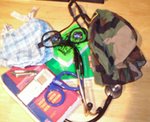
Well, it a S-L-O-W call day even though it's a Saturday. Please note that I spell that word and don't write it or (gulp) say it. As soon as I say or write that word, all he-- will break loose and the trauma bay will fill up. I do love a good trauma but I am sitting here after a nice lunch of Pho (Vietnamese beef noodle soup) and there' s a little food coma about to set in. I mused with turning on the TV to see if I could catch an Orioles' game but I just don't want to wrap my head around anything. It would be cool to just nap for 20 minutes and then check a couple of patients.
My junior residents are not busy so I don't feel obligated to micromanage them. All of my senior residents have signed out to me and our services are Q-U-I-E-T (another word I don't say write). My attending on call, has just checked in to say that he's going to afternoon lunch with his wife and would like to let me know that he is on Mobile. I love it when they do that. It saves me the trouble of paging and waiting for a call back. I can go right to the source.
So far, I have rounded on my service and discharged just about everyone who could go. I elected to keep one gentleman over the weekend because no one is home to be with him and he is a 75-year-old recovering from a sigmoid resection. His daughter will arrive on Sunday night and he can go home Monday morning. Besides, a couple of extra days of watching especially since I am not happy with his food intake will be good for his recovery. My attending agreed with my assessment.
I am also contemplating doing a stairwell walk to get some exercise. When I start to feel the afternoon slump, I walk up the 10-stories from basement to top floor and back to my digs on the fifth floor. Then I look for a fresh cup of coffee or grab a diet Pepsi. There are fountain soft drinks on every floor at the nursing station that feature, colas, iced tea, lemonade and water. The coffee has to come from the coffee bar that is in the cafeteria. Since Saturday lunches are usually not too great, I had my fiance bring in some Pho so that I wasn't drowning in grease this afternoon. The bad thing is that I can be pretty hungry around 5pm so I need a good protein dinner.
I am also thinking about the logistics of getting to the White Coat Ceremony that my medical school will be having for the incoming medical students. There is usually a nationally recognized speaker and then the name of each incoming student is called. A member of the physician graduates will then cloak the incoming student. We all take the Hippocratic Oath again just to remind us of what being a physician is all about. It's a great day and loads of fun to see the newest class and catch up with some of my classmates and professors. It's always a good time. This year, I am going to be buff so I really want to go. The bad news is that I will be making the schedule so I have to be totally fair with time off, if I leave town.
I spent an hour this morning preparing one of my pathology review lectures. I am amazed at the depth of information that I can burn out in a PowerPoint in about 60 minutes. My teaching experience has really helped me in putting together presentations. I am hoping to have all of my lectures done just in case something comes up and I am not able to teach n the days that I have been scheduled. Sometimes a case can run later or a complication will develop and thus, I have my work ready to go.
One of my junior residents just beeped me to ask about making a patient NPO (nothing by mouth). Since this patient is low-risk for surgery today, I opted for "sips and chips" meaning sips of clear liquids (no carbonation and limited to 30 ccs per hour) plus ice chips. If we do end up operating emergently, we can do so after "sips and chips". One of my attendings allows hard candy with "sips and chips" but I leave this up to the patient. If there is any hint of nausea or vomiting, back to NPO and I will increase the IV rate.
Well, that's a glimpse of my world at present. I have to get back to studying for my board exams. I have a strict reading schedule that I am adhering to complete with check offs. I may yet do the stairs and take a nice hot shower before the evening rush. On a Saturday night, I can expect some trauma work.
Showing posts with label trauma. Show all posts
Showing posts with label trauma. Show all posts
23 May 2007


20 December 2006
My first case in the Trauma Bay
Here I was, fresh from my course in Advanced Trauma Life Support (ATLS). The trauma pager had gone off while I was finishing up my final sign-out note. I quickly jotted down my last thought and headed down to the Emergency Department to the main Trauma bay.
"Whose the chief surgery resident?" shouted the Emergency Physician. "I am" and I stated my name for the recording nurse to add to the sheet along with my time of arrival. I slipped my lab coat off and slipped into my trauma gown. I pulled my OR cap out of my hip pocket and placed my goggles in place before I donned my two pairs of surgical gloves.
I quickly surveyed the equipment in the room. Airway tray check; thoracostomy tray check, central line tray, check. I was set. My intern arrived and stood on the other side of the bay. He was ready to assume his place and insert a central line. The large bore IV lines were hanging hooked to the fluid warmer.
The Emergency physician told me that the paramedics were in route with a 30 year old man with a gunshot wound to the head. He had been intubated in the field and had two 16 guage IV lines in place. He was found in the bathroom by his wife who was preparing their evening meal when she heard the gunshot. She found him on the bathroom floor and dialed 911. The paramedics were across the street having dinner when the call came in. They were on the scene within 3 minutes of receiving the call.
My patient arrived being ventilated with a resuscitation bag. I quickly listened for breath sounds and noted that there were none on the left side. I pulled back the endotrachael tube and heard breath sounds on the left. Both IVs were infusing with lactated Ringers solution and the patient had received 500 ml in each arm. The paramedics reported a blood pressure of 80/60, wrapped the head while inserting IVs and intubating. They scooped and headed for my hospital. The patient lost blood pressure in route but quickly regained pressure with CPR and wide open IV fluids. Approximately 15 minutes had passed since the call went out.
I instructed the nurses to place the IV bags on pressure and infuse wide open. I noted a single large gaping wound in the right side of my patient's head in the frontal area. I unwrapped the head and found the exit wound just behind the left ear. There was brain tissue and blood oozing from the exit wound. The patient's blood pressure was now 110/80 with a heart rate of 100. The patient's right eye was swollen and blackened. Neither pupil was reactive. The rest of the physical exam showed no other injuries.
C-spine radiographs and chest radiographs were taken and bloods were sent from the central line that the intern had deftly inserted in the patients right femoral vein. The C-spine came back negative and the chest film showed that the endotrachael tube was in good position with no pneumothorax present.
By this time, the trauma attanding surgeon had arrived and we headed for the CT scanner for a CT of the head. The patient's vital signs had remained stable after 2 liters of IV fluids so I cut back on the infusion rates. The attending physician went out to deliver the grave prognosis to the patient's wife. By this time, 20 minutes had passed since the patient first arrived in the trauma bay.
The CT scan showed that the bullet had passed through the brain and left massive damage. The patient showed no reflexes but vital signs were stable, urine output was excellent. The neurosurgeon arrived and agreed with our assessment that the gunshot wound was fatal. "Was there an organ donor card", he asked.
When the patient's weeping wife came into the trauma bay, the first thing that she said was that he wanted to donate any organs that he could donate. His drivers license confirmed what his wife had said. She said that she had notified their children who were at their grandmothers house and that they would be on the way. My attending physician notified the Organ Donation System and thus the process began.
My patient had given no outward signs that his wife could remember of his impending intention to shoot himself. She said that he had been joking with her about her overuse of garlic in the marinara sauce that she was preparing for their evening meal. She said that he had come home from work about 30 minutes earlier and showed no signs of distress. She also indicated that she didn't even know that he owned a gun and had never recalled him even discussing owning a gun.
When the family left to speak with patient registration, I informed the Trauma Intensive Care Unit that this patient would be coming up and would be prepared for organ donation. The bed was ready and the organ donation coordinator was ready to speak with the family. As we moved the patient up to the ICU, the family met with the organ donation coordinator.
My attending instructed me to perform an apnea test (a test to gather evidence of brain death). A neurologist, after examining this patient, confirmed that our patient was indeed brain dead after examining the findings of my test and others. The neurosurgeon concurred with the findings and the organ transplant coordinator took over the care of this patient. Brain death was established within 4 hours of admission to the Trauma Intensive Care Unit.
The patient's heart, liver, pancreas, kidneys and lungs were harvested and went to patients that were in our hospital. It turned out that this patient ended up donating tissues and organs that eventually helped more than 20 people. His skin and bones were also harvested and sent to tissue banks. His eyes provided cornea transplants for two people who had been waiting for corneas.
My patient has been laid off from his job the week before he shot himself. He had been leaving his house every day and had not told his wife that he no longer held a job. He had purchased the gun the day before he took his own life. He had never been depressed and had never spoked of taking his life or feeling hopeless. He had worked at the same company since graduating from college at age 21 and had moved up to the rank of assistant manager.
According to his wife, he had been instrumental at his company in getting many of his fellow employees to sign organ donor cards. He felt strongly about organ donation and many of his fellow employees had come to the hospital when they heard of his injuries. The waiting room was filled with friends and relatives who spilled out into the hallway and in front of the elevator.
One by one, they filed into his hospital room to say goodbye.
My first trauma as trauma chief will always stick with me for many reasons. First, this man apparantly made the decision to take his life shortly after being laid off from work. He quietly went about the planning and execution stage of this act. Second, the paramedic crew was directly across the street from his house when he shot himself. One of the paramedics believes that he may have heard the shot but is not sure. They were one the scence very quickly. Third, this was a well-loved man who was generous in death after committing the ultimate selfish act, that is taking his life.
For many weeks, I would pass the Trauma Bay and I could still see him lying there with head bandaged, right eye swollen and bruised but the rest of his body in perfect condition.
Subscribe to:
Posts (Atom)