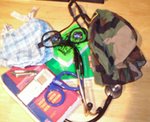
I am going to relate some of my practices as a new intern. I certainly learned from the best (my love and infinite respect to J-Ro wherever he is) and have generally kept up with the solid patient care practices that I learn from day one on the job.
Lists
Every good intern needs to have some kind of list procedure and I was no exception. Placing those little square boxes beside things to do and frequently checking my list became the "bane" of my existence on the wards. As a newly minted intern, my principle job was to make sure that every facet of patient care was done and assessed in a timely manner. I developed the practice of carrying both a clipboard (clip kept small pieces of paper from falling out) and blank sheets of paper. I would have a master list of patients that were under my care with Post-It sticky notes for things that I had to add to the lists in a hurry.
Daily Routine
When I first arrived in the morning, I pulled up my patient list and busied myself with checking the latest lab values. I scheduled my hospital arrival time based on service and the number of patients that I had signed out the night before. I knew that I would get at least one or more new patients and thus, on a service that contained a large number of patients with complicated diagnoses (or needs), I arrived earlier and on services with more long-term patients, I could arrive a bit later.
I would list my labs, check any imaging studies from the day before (or the middle of the night) and circle them in red (I always carried a 4-color pen or bright pink highlighter). I would want to make sure that the results and plans from these results were in my notes and orders for the day. Sometimes, lab results and imagining study results would indicate the need to change plans for the patients for the day. This is why these were the first things on my list.
My next tasks were generally to check with the night charge nurse for the things that needed immediate attention. Since the charge nurse knew that I was usually the first on the wards, he/she didn't have any problems letting me know anything that needed immediate intern attention from overnight. In general, the intern that was covering would also have reported to me but occasionally, there was a slight difference in the reports between these two people. I also make a concerted effort to get sign-out from the covering intern as soon as I could so that they could take care of their own patient load and I could get "cracking" on my daily duties. This is a good characteristic to have.
By the time my chief resident (and fellow on some services) arrived on the floor, I could hand them a patient list with the immediate problems (and my handling of them) circled in red. We could then start morning rounds with me (or a medical student) presenting the patient outside of the door, going inside for a look at the wound/incision, and any additional care options that the chief might want to add. These things were carefully noted and checked by me as I was responsible for everything aspect of bedside care on the service. A medical student could follow a patient or two but the intern has to be sure that everything is checked, double-checked and done.
Right after rounds
As soon as rounds were finished, I would quickly enter any orders that needed to be entered and head off to the OR for cases that had been assigned to me by the chief resident. Usually, unless there were loads of ward patient care duties, I could get to the operating room to do a case or two. I would check the schedule the night before to make sure that I had done my anatomy and surgical atlas work for any of the PGY-1 level cases. I didn't want to miss any of the "pimp" questions that I was bound to be asked over the incision during these cases.
If patients were likely to be discharged, I developed the habit of dictating a pre-discharge note that I only had to dictate an addendum to when the patient actually left. This meant that I could enter my discharge orders and scripts, pre-dictate the discharge and then release all of the information and scripts as the patient was leaving the hospital. Since these decisions were made during morning rounds or shortly after discussion with the attending, this turned out to be a great practice but one had to keep good records of patient numbers and what had been pre-written/dictated. There was nothing that prevented me from grabbing an order sheet, writing some discharge orders and keeping those orders on my clipboard (dating them when needed).
I also made it a point to go and observe any studies that were being carried out on my patients whenever possible. There were procedures like gastrografin swallow studies and upper gastrointestinal studies that were great to observe in "real time" along with the radiologist. I also made sure that I reviewed all of the CT Scans, cath reports, angiography studies and other studies of patients that were admitted the night before for surgery. I reviewed as much as possible in terms of their care in clinic and why the decisions had been made to take them to surgery. In short, I wanted to be there and get to the bottom of every patient detail as much as possible. Much of this type of investigation work was done on call based on my notes from clinic.
Do you actually know the most about your patients?
I have to say in all honesty, that my best skill as an intern was to know more about what was happening with my patients than anyone else on the service. Most of the time, the nursing staff would call me when a patient went to radiography so that I could slip over and look at their studies. The radiography techs and transporters were also happy to let me know when they had picked up a patient, especially at night. I always wanted to get in and see for myself, what the studies looked like even if it meant that I would lose some sleep. I knew that I would rest better when I had tracked down my studies; knew the results and had discussed them with the chief that was on call so that any plans could be done.
Sign Out
One of my colleagues replaced my folded paper system with an Excel system that I still use today. On this system, we kept a running log of patients, locations and things to do and check. An intern covering my system could easily check the sign-out sheet (done by printing out Excel sheet) or check our files on the service computer. I always kept this backed up on a jump drive too.
I never signed out anything that I could do or check before leaving. I knew that the night float intern would have a huge patient load ergo, I made sure that all admissions and post-operative checks were done by the time I left. Unless a patient was still in recovery (in which case, I checked on them anyway to fill anticipated needs), I didn't sign out discharges or new admissions. If I had to stay a bit longer, then I stayed a bit longer (signed out earlier) and updated the night float just as I left the hospital.
There is no substitute for making your own rounds and checks in the late morning between cases, in the afternoon to see that everyone got home OK and just before signing out to the night float (or receiving sign-out if you are on call). It is things that are signed out that are most often missed. On-call folks get busy and emergencies come in that will delay things. In short, I tried not to sign out anything that I could do by phone or that was routine (should have been done earlier in the day). My regular walking around solo rounds usually kept me on top of things.
Going off service
Another very nice thing that I always accomplished was an "off service" note that summarized the care of a long-term patient. There were many times when a patient (especially a burn patient) had been hospitalized for months. When I received such a patient, I wrote a summary of care up to when I started and a summary of the care while I was on service. If the patient died or was discharged a couple of days after I left the service, my "off service note" would assist the new intern in doing an accurate dictation on that patient. This type of note would also help them get up to speed when they came on too. I always appreciated when someone did this for me and readily returned the favor. An "off-service" note is one of the best things for good continuity of patient care.
Showing posts with label on-call. Show all posts
Showing posts with label on-call. Show all posts
24 December 2009


13 March 2008
Dealing with patients you might not "like" for whatever reason.
I received a call about a consult for placement of a temporary dialysis catheter in the Medical Intensive Care Unit. When I arrived I quickly scanned the chart (coagulation profile, patient’s medical information etc.) and entered the room of the patient who needed the temporary dialysis catheter. Just before I entered the room, one of the resident physicians pulled me aside and said, “This guy weighs 500 pounds and let himself get to this point. On top of that, he smells. I just want to warn you to have your gas mask ready”. He laughed and I “thanked” him for the information and entered the room.
Lying in the bed was a 500+ pound gentleman who was restrained and mechanically ventilated. In one hand was an intravenous line which was leaking intravenous fluid. He had a very large abdominal pannus (apron of adipose tissue), multiple scars on both arms and both legs with both legs having open venous stasis ulcers that had become infected. I walked up to the bed and spoke to this patient to explain to him that his kidneys were failing and that he was going to need to have a dialysis catheter to help them along. He nodded to me but I wasn’t sure he could understand. I explained what I was going to do and that it might be uncomfortable but I would use as much local anesthetic as needed.
The nurse told me that the small intravenous line in his hand was not going to be adequate and that it was the only source of IV access that the patient had. It was tenuous at best. I asked if the patients family was present and the nurse said that they were in the waiting room. I told the nurse to gather the equipment for both a central venous line and a temporary hemodialysis catheter insertion while I went to speak with the patient’s family.
The patient’s wife was sitting in the waiting room with her daughter. She was tearful and spoke lovingly about her husband. She said that as he gained more and more weight, he became immobile. Finally, she said that nothing could get him out of his room and that she had difficulty getting him to comply with medications for diabetes and hypertension. She said that he would become angry and depressed when she attempted to help him with his personal hygiene or care of his venous stasis ulcers. I explained the need for the central venous line and the temporary hemodialysis catheter. I also explained the risks and benefits of the placement of these lines so that she could make an informed decision. She asked me to do what I could to help her husband get back to health.
After washing my hands and washing the areas of the patient where I intended to insert the catheters, I used a portable ultrasound machine to locate both the subclavian vein and the femoral vein. Both were fairly deep because of the large amount of subcutaneous fat that was present in this patient. I was able to mark off some landmarks and get to work. With the aid of a couple of nurses, I used adhesive tape to tape as much of the patient’s fat out of my way so that I could get to my intended target. After 30 minutes, I had inserted a central venous line into this patients left subclavian vein after taking about 20 minutes to carefully prepare the site. The more time I spent in prep, the easier it would be to get the line in under the best and most sterile conditions. I also had asked the nurse to give the patient a small amount of sedation so that the whole experience would be a little less alarming.
I then turned my attention to the femoral vein. Since temporary hemodialysis catheters were very large, I chose a long catheter and moved closer to the inguinal ligament as the vein would be larger there. As with the subclavian vein, I used a large amount of adhesive tape and three nurses to hold this gentleman’s large fat pannus out of the way. I inserted the line and had great blood flow and return. I also carefully secured the line with locking tape and sutures. I wanted to make sure that the patient would not be able to easily “pull” the line if he became disoriented and unrestrained. I also gave the local anesthetic plenty of time to take effect as most patients are pretty still if they are comfortable.
After a chest radiograph to confirm that my lines were in good position (with no pneumothorax), I phoned the nurses to let them know that the lines were safe to use. I also had “blocked” the hemodialysis catheter with an anticoagulant and thus I let the hemodialysis department know that this line was ready for use. I spoke with the patient’s family and let them know that the procedures, while taking a couple of hours, had gone well.
For the next three days, I went into the intensive care unit to check on the those lines and make sure that they were working fine. I spoke with the residents who kept congratulating me on “getting the lines in the whale” and laughing about this patient’s body habitus. On the third day, I didn’t see the joke and I didn’t see where calling this man a “hippo”, “whale”, or anything other than a sick patient was necessary. I asked them why they felt obligated to demean this gentleman that they didn’t really know (because he had been intubated) and they were charged with treating.
One of the residents said that he just doesn’t like “fat” people because they don’t take care of themselves and won’t follow his direction. He said that they could follow a good diet, exercise and not end up using up our precious health care resources for something that they “did to themselves”. Another resident said that he could “stand” the smell of the venous stasis ulcers and that he had to get out of the room as quickly as possible. While I appreciated their honesty, I couldn’t help wondering why they didn’t have a problem with treating an alcoholic or a drug addict who had become ill because of self-inflicted abuse of a substance. I had encountered some “skin popper” IV drug abusers who had multiple cutaneous abscesses that smelled far worse than a couple of venous stasis ulcers.
I find it difficult to blame the patient for their disease. In my mind, just as a diabetic can’t make insulin, a morbid obese patient has a metabolic problem that is not under their control. By the time a patient winds up weighing 500 pounds, all personal control is lost. If you couple the massive weight with psychiatric disorders such as depression, one finds a very difficult and challenging patient with multiple problems that need to be addressed. I can’t just afford to “like” or “dislike” any of my patients because they need my help and not my judgment.
Two weeks later, I received a call from the hemodialysis unit secretary. The nephrologist wanted me to stop by the unit so that I could “speak” to this patient. He was off the ventilator and was not going to need hemodialysis as his renal function had greatly improved. When I saw him, he said that he remembered my speaking to him in the ICU. I was amazed that he would remember me with his condition but he remembered how I explained everything that I was going to do for him and how I spoke to him with respect.
I later heard from his attending physician that he entered a rehab center and was on his way to losing 100 pounds. His hypertension was greatly improved and his diabetes was managed by diet. Though he had a long way to go, he was moving along on his journey. Hearing this made me remember why I went into medicine in the first place. It is simply to help people regain their health.
I can’t make judgments on my patients because “there but for the grace of God, go I”. I have been given the privilege and opportunity to touch the lives of thousands of people. I have also been given the trust of those thousands to also have only the best of intentions when I treat them. This is what makes medicine like no other career on earth.
23 May 2007
Saturday Afternoon on Call
Well, it a S-L-O-W call day even though it's a Saturday. Please note that I spell that word and don't write it or (gulp) say it. As soon as I say or write that word, all he-- will break loose and the trauma bay will fill up. I do love a good trauma but I am sitting here after a nice lunch of Pho (Vietnamese beef noodle soup) and there' s a little food coma about to set in. I mused with turning on the TV to see if I could catch an Orioles' game but I just don't want to wrap my head around anything. It would be cool to just nap for 20 minutes and then check a couple of patients.
My junior residents are not busy so I don't feel obligated to micromanage them. All of my senior residents have signed out to me and our services are Q-U-I-E-T (another word I don't say write). My attending on call, has just checked in to say that he's going to afternoon lunch with his wife and would like to let me know that he is on Mobile. I love it when they do that. It saves me the trouble of paging and waiting for a call back. I can go right to the source.
So far, I have rounded on my service and discharged just about everyone who could go. I elected to keep one gentleman over the weekend because no one is home to be with him and he is a 75-year-old recovering from a sigmoid resection. His daughter will arrive on Sunday night and he can go home Monday morning. Besides, a couple of extra days of watching especially since I am not happy with his food intake will be good for his recovery. My attending agreed with my assessment.
I am also contemplating doing a stairwell walk to get some exercise. When I start to feel the afternoon slump, I walk up the 10-stories from basement to top floor and back to my digs on the fifth floor. Then I look for a fresh cup of coffee or grab a diet Pepsi. There are fountain soft drinks on every floor at the nursing station that feature, colas, iced tea, lemonade and water. The coffee has to come from the coffee bar that is in the cafeteria. Since Saturday lunches are usually not too great, I had my fiance bring in some Pho so that I wasn't drowning in grease this afternoon. The bad thing is that I can be pretty hungry around 5pm so I need a good protein dinner.
I am also thinking about the logistics of getting to the White Coat Ceremony that my medical school will be having for the incoming medical students. There is usually a nationally recognized speaker and then the name of each incoming student is called. A member of the physician graduates will then cloak the incoming student. We all take the Hippocratic Oath again just to remind us of what being a physician is all about. It's a great day and loads of fun to see the newest class and catch up with some of my classmates and professors. It's always a good time. This year, I am going to be buff so I really want to go. The bad news is that I will be making the schedule so I have to be totally fair with time off, if I leave town.
I spent an hour this morning preparing one of my pathology review lectures. I am amazed at the depth of information that I can burn out in a PowerPoint in about 60 minutes. My teaching experience has really helped me in putting together presentations. I am hoping to have all of my lectures done just in case something comes up and I am not able to teach n the days that I have been scheduled. Sometimes a case can run later or a complication will develop and thus, I have my work ready to go.
One of my junior residents just beeped me to ask about making a patient NPO (nothing by mouth). Since this patient is low-risk for surgery today, I opted for "sips and chips" meaning sips of clear liquids (no carbonation and limited to 30 ccs per hour) plus ice chips. If we do end up operating emergently, we can do so after "sips and chips". One of my attendings allows hard candy with "sips and chips" but I leave this up to the patient. If there is any hint of nausea or vomiting, back to NPO and I will increase the IV rate.
Well, that's a glimpse of my world at present. I have to get back to studying for my board exams. I have a strict reading schedule that I am adhering to complete with check offs. I may yet do the stairs and take a nice hot shower before the evening rush. On a Saturday night, I can expect some trauma work.
23 February 2007
I just gotta have it!!!
I have been reading Brian Ambrozy's review on Short Media about the Sumo-Omni http://www.short-media.com/articles/sumo_omni chair/lounge/i-don't-know-what-to-call-it/thing and I must have one. As one of his children describes it, this is a "nest" that can be tossed from place to place with impunity. I just have to get one of these to fall into after a long day in the hospital. Take a minute and read Mr. Ambrozy's review and savor the possibilities???
As I see it, I can survey the X-Box 360 from my Sumo-Omni or just park it in front of my patio door (removing a couple of beagles) and enjoy the afternoon sun on a lazy Saturday. I am also expecting that I will spend a fair amount of time removing the beagles from the Sumo-Omni so that I can hang out in this thing. Likely, I will end up buying one for them and one for me. In short, I am about to spend $260 on a couple of beanbags but as I see it, a great investment in getting myself "back to the womb".
Why am I mentioning this? Because one of the greatest lessons that I have learned is that after spending days in the hospital, coming home and tossing myself into a Sumo-Omni with abandon is just my idea of heaven. Keeping some sanity in this profession is all about doing little "nice things" for yourself regularly. This is a $130 daily vacation complete with sunlight on the weekend. Who know? I might have to import this thing into the Chiefs Den for catching a nap between cases.
03 February 2007
Typical Day on Pediatric Surgery
When I was a PGY-3 general surgery resident, I was one of four senior residents on an away pediatric surgery rotation. The pediatric hospital where I rotated for peds surgery was located away from my base hospital. It was a large tertiary referral center for the sickest children from a tri-state area. General Surgery residents from other hospitals and programs rotated with me. This hospital had a burn unit, that was managed by surgery, in addition to all of the other things that a very strong pediatric surgery department would cover like trauma and surgical emergencies.
Pediatric surgery is the one surgical subspecialty that covers every surgical aspect of their population. Pediatric surgeons create fistulas for hemodialysis access in the pediatric population. A pediatric surgeon will ligate a patent ductus arteriosus (persist vessel between the pulmonary artery and aorta). A pediatric surgeon will perform hepatic resections and resections of choledochal cysts in addition to removing lung tumors and repairing chest wall abnormalities. Pediatric surgeons will also remove thyroglossal cysts and cystic hygromas (neck malformations). Pediatric surgeons will perform skin grafts, tracheotomies and transplants in infants and children. In short, pediatric surgeons perform procedures in children that would be performed by surgical subspecialists in adults.
A pediatric surgeon first completes five years of a General Surgical residency. Most complete two years of dedicated research in addition to the five years of residency making a total of seven years of training just to get to the pediatric surgical fellowship. In addition, the fellowship is two additional years making a total of 7-9 years of training beyond medical school to enter pediatric surgery.
Landing a pediatric surgical fellowship is no easy task either. There are presently about 23 fellowships nationally which means that applicants for pediatric surgical fellowship will apply to all fellowship programs and hope for enough interviews to be able to land a fellowship. Criteria for selection are scores on the American Board of Surgery In-Traning Examination (ABSITE) and a high level of performance in general surgical residency. The small number of fellowships nationwide in addition to the fairly large candidate population makes obtaining a pediatric surgical fellowship one of the most competitive if not the most competitive that any physician can obtain. In short, pediatric surgeons are the elite among all surgeons.
My pediatric surgery attendings fit the mold of pediatric surgeons completely. All four did fellowship in top programs in the United States and Canada. They all were extraordinary teachers and all had amazing surgical technique. It was a joy to stand across the table and see not a single wasted motion or miscue. They were equally gifted in teaching both the craft and the art of all aspects of surgery not to mention being some of the most professional folks to work with in the operating room. They treated the OR staff and the resident staff with great respect and made learning quite enjoyable. Here were four individuals who were the absolute best of the best among surgeons and they were just wonderful to learn from and work with and were the "least malignant" personalities I have ever met. Some of my best times in the OR were on the pediatric surgery service as both intern and chief resident.
On a typical day, after finishing up cases in the OR (around 4pm) I would receive sign-out from the folks who were not on call. I would be responsible for checking all post operative patients to make sure that they did not have problems urinating or had adequate pain control. I also carefully checked all vital signs and dressings to make sure that there were no problems that needed to be taken back to the OR. In addition, the attending surgeon that was on call with me would check in before he left for the day, just to make sure that the house was good for the night. If there was an impending admission, he would let me know when the patient would arrive.
I could generally grab a bit of dinner from the cafe and then head off to check the burn unit and emergency department. I would also check for any patient who might need pre-operative orders. Most surgical patients were either emergency admissions, who would go to surgery that night or AM admissions who were still at home. Many nights, trauma patients would be flown in by helicopter from neighboring counties and thus would have to be cared for by my service (me alone after 5pm). The best thing was that most children are not out after 10 pm so traumas after 10pm were rare in pediatric hospitals and more common in adult hospitals.
By midnight, I would be napping in the call room. My naps would be punctuated by calls and questions from the nursing staff. In general, few things needed my presence at bedside if I had done my post op checks thoroughly. Usually, questions would be renewals of orders or an extra pain medication dose. I usually covered my post operative patients with something for nausea with a call to me before it was administered.
Often a first-year pediatric resident and a couple of medical students would take call with me. It was my duty to be sure that this resident and the medical students got the best experience. If I received a routine call from the emergency department, I generally didn't awaken my staff unless there was something that was going to the OR that night. I preferred to perform my own history and physical exams but I always gave the students a chance to check and observe the incoming pathology.
Patients who had been burned would be sent directly to the Burn Triage area and would not stop in the Emergency Department. Usually the Burn Triage nurse would let me know if a patient was coming. I would check over the burns, write the necessary orders and the nurses would take care of the patients. Again, adequate pain management was usually the most important aspect of burn care along with very strict attention to wound care.
My most memorable case was placing a newborn on Extra Corporeal Membrane Oxygenation or ECMO. This patient had been born with a diaphragmatic hernia that allowed abdominal organs to form in the chest cavity causing the patient's lungs not to develop properly. When these children are born, ECMO allows the hypoplastic lung to grow and takes over oxygenation for the child. Two large bore vascular catheters are placed in a neck vein and artery. I jumped at the chance to participate in this procedure because ECMO is rarely used. It had been 2 years before that ECMO had been done at this hospital. The resident that was on call had no interest in the procedure but I was thrilled to do this. Later I participated in the definitive repair of the hernia with a good recovery from a potentially lethal congenital defect. It was awesome.
I also participated in a liver resection in an 8-month old with cancer. Again, I had a chance to participate in a fairly rare case with very interesting pathology. This patient also did well after a week-long stay in the Pediatric Intensive Care Unit. The power of regeneration in the liver is nothing short of remarkable. In a pediatric patient, the physiology of these cases are amazing. Liver anatomy is also very interesting as are the techniques used in liver surgery. My favorite surgical instrument is the Argon Bean Coagulator which is used to coagulate the raw edge of the resected liver. This is literally a plasma scalpel.
By 4am, I am usually up, showered and making my early AM rounds. I try to get my notes written so that work rounds are not rushed before we start AM cases. I am required to be out of the hospital by 12 noon on my post-call day but usually, I am done by 9am. I try to make sure that my patients are taken care so that the incoming call resident is not weighted down carrying my patient load and his. For me, it's all about planning. I usually give a very complete signout with anything that needs to be watched and what I would do if there is a problem. The on-call resident only has to look at my sheet to be able to jump in and do what may be needed.
Another interesting aspect of pediatric surgery is seeing the patients in clinic. In general, the attending who is on call is in office while I am on call at the hospital. This made getting over to clinic more difficult but I did get some clinic time. It is good to see the patient in clinic, do the work-up, perform the surgery and post-op care and then see the patient back in clinic. I love to see how my closures worked and the patient pain-free. Clinic was always interesting.
I thoroughly enjoyed my pediatric surgery rotation because the patients are great fun to take care of and because peds surgery pushes the limits of a surgeon's diagnostic capability. A surgical abdominal problem in a pediatric patient present far differently than in an adult patient. Even hernia repairs in pediatric patients are more fun than adults because the anatomy is seldom distorted.
I also always keep in mind two quotes: One from Alfred Blalock, the late chairman of surgery at Johns Hopkins. He said, "It's takes arrogance to cut open a human being." and the other from one of my pediatric surgical attendings who said, "You wouldn't hand the keys of your car to a total stranger, yet these parents hand over their child to you, the total stranger. You have been given a great trust."
22 December 2006
How Do You Stay Awake?
Many times I have been asked how I stay awake and answer calls overnight. I don't have a specific "system" but I have some things that help me remain alert when I have to remain alert. Being on overnight call is physically and emotionally draining at times. You never know what will be at the other end of each page. For me, not knowing what to expect with every page is one of the more interesting aspects of medical practice.
First, let me dispel some myths. It is a myth that a resident physician in training has to go for 36 hours straight in order to learn how to deal with emergencies. I have had few emergencies when I was on my 36th hour. What may seem as an emergency when presented to a physician who is sleep deprived becomes a major annoyance. One simply cannot do their best work after 36 hours of work without rest. Medicine suffered before the institution of work hour limitations and no amount of complaining by attending physicans who were trained under the "old system" will negate that fact. Most of the times, the residents and the physicans were lucky that they didn't harm more patients because of lack of sleep.
It is a myth that every night on call is a "race against death". Most of my on-call nights are spent dealing with problems that either came in through the emergency department or were left over from other services during the day. With the 80-hour work hour limits, some services are not going to be able to take care of all of their work during the day and get their operative cases done too. It become the work of the on-call resident to finish any needed work in terms of the services that they cover. The patients that I cover overnight are MY patients during my watch. I am happy to take care of their needs and help my fellow residents.
Still, there have been times when I have been so sleep deprived that I bordered on being depressed. I am mostly affected with I am not busy but just waiting for the night to move on and for the frenatic activity of just before dawn to begin. If I am busy, the night goes by rapidly and the exhaustion doesn't hit until I am ready to hit the bed. On nights of extreme exhaustion, I go outside and take some deep breaths of air that has not gone through the HVAC system of the hospital. One of the nicest places to take some deep breaths of fresh air and survey "my kingdom" is the roof of the hospital. If the weather is rainy or misty, the cool moisture against my face is great. If snow is falling, there is a fresh, crisp, and quiet calm that is invigorating. If there is fog, there is an eerieness that is wonderful. Summer, spring, fall or winter, I can't lose on the roof.
There is a certain amount of "sleep deprivation" that you learn to live with. For me, it started in medical school when I quickly learned that I would have to be able to study regularly with less than 6 hours of sleep. The volume of material to be mastered in huge and this mastery takes time. I learned to study when I was tired and I learned to do things such as aerobic exercise that would keep me alert and make my studying more efficient. I also learned that caffeinated drinks like coffee, tea, Mountain Dew and Diet Coke, did not keep me awake but only make me more nervous. Sugar was out too as it gave me a rush but then a drop where I found myself more energy depleted.
Hydration became a goal for me. I found that I felt less tired when I was adequately hydrated. This meant keeping a bottle of water in my lab coat pocket at all times. I also kept a Brita water pitcher in my call room and kept it filled with water. As most hospitals are hot and dry, I found that I have to work to keep myself hydrated and that dehydration is the enemy of efficiency.
I always hear my pager. I don't know why I have always been able to hear the thing beeping but I have never missed a page when my pager was working properly. I also made it a habit of letting the page operator know the number to my call-room in case my pager was not working. He/she always knew how to track me down if the paging system was off. We could sign out our pages to the residents who were in the house overnight or leave a phone number where we could be reached. I just never sleep deeply at the hospital or at home so that I do not hear my pager.
When I have found myself so exhausted that I was just not interested in anything except sleep, I took a nap. First, I would take a brisk walk and then I would nap for 20 minutes in the large lounge chair in the surgical lounge. Those 20 minutes would bring me back refreshed enough to get through the rest of the night. Taking a shower worked well also. I never did morning rounds without a shower, tooth brushing and change of clothes if I had been on call overnight. There have been times that I have literally left the OR, headed for the shower and then to AM rounds. Life just works out that way.
When a nurse pages me, I have always kept a pencil and paper handy to write down the patient's name, the service and jot down the time. I keep a running tally of my calls overnight so that I know exactly when I was paged or how many times I have been paged. These tally sheets have come in handy more than one time during Mortality and Morbidity conference. My first rule has always been to "Go and evaluate the patient if I am not familiar with the problem." Most of my problems these days come from a more junior resident who needs another pair of eyes or hands in terms of evaluating their patient. I am only happy to help as I vividly remember being in their shoes. Most of the time, they have solved the problem before I get there but it is always nice to have a backup when you need a backup.
Most nurses (99.99%) do not call a resident in the middle of the night for things that are "trivial". Occasionally, I will get a call to speak with a patient's family member about the plan for the patient. If I am not the resident on service, I can only offer support and a willingness to pass along the concerns to the service in the morning. If a nurse calls, they have a problem and I appreciate the calls. The nurse is at the bedside and I am usually in the call-room. Most of these calls can be taken care of by phone but many times, I have to go and evaluate the patient. My rule is this, if I think that I "ought" to see the patient, I "go" and see the patient.
When I am on-call, I plan my evening and next morning and write down those patient care plans. I know that I am not going to be doing late cases (unless there is a dire emergency) so I get everything squared away for my service. Before I leave post-call, my junior residents and students know exactly what they need to be doing for the day. The senior on-call resident gets a list of my patients and potential problems with solutions so that they have a better idea of what has been happening on my service. I also chat with my attendings so that they know what I have planned for the day.
With the new limited work hours, we have to have excellent communication with our colleagues and with our attendings. We also have to be able to anticipate what our patients will need and make those provisions. As residents, we have to get to a higher level of efficiency faster than before when we had the luxury of more time in the hospital.
I don't think that I am getting any more sleep these days than in medical school but the work is more interesting. Gone are the days when I could go "drinking with my mates" for an evening or watching the telly for hours. I have loads to read and study most of the time. Still, there are nights when I have to fight to stay awake and fight to keep my concentration. Usually, I take a deep breath and keep on plugging away. That clock never stops and soon my work will end. It takes the same amount of time to do a job well as to do it poorly. I just cannot do anything that involves one of my patients poorly.
Subscribe to:
Posts (Atom)